
Lieferung heute & morgen

Qualitätsgarantie

Willkommens-Angebote freischalten: KOSTENLOSE Lieferung | Bis zu 80 % RABATT | Kostenlose 30-Tage-JoyPlus-Testphase
App herunterladen
The search for suitable toys for children aged three and up can quickly become overwhelming. The term "Montessori," in particular, is often used as a marketing buzzword, making the selection process difficult. Many products promise educational benefits, but not all live up to their claims. This guide will help you identify common pitfalls and make an informed decision that truly benefits your child's development.
As a Joybuy Product Recommendation Officer, I see it as my duty to filter market information and provide you with objective, practical advice so you don't fall for exaggerated advertising claims.
Before we dive into the selection criteria, it's important to understand the typical issues that lead to disappointment and unnecessary expense:
To avoid these pitfalls, you should focus on three objective parameters in your selection. These will help you assess a toy's quality and actual benefit.
The CE mark is a self-declaration by the manufacturer that the product meets EU requirements. Testing according to the EN 71 standard, the European standard for toy safety, is more meaningful. Pay attention to the following points:
A good educational toy should have a clear purpose and promote the child's independence. Instead of overwhelming the child with stimuli, it should target a specific skill.
A toy is a good investment if it remains relevant over a longer period. This is achieved through versatile uses. A set of simple wooden building blocks can be used for building towers, sorting by color, or as props in role-playing games. A magnetic maze for kids can initially be used just for guiding the balls, and later for counting and sorting.
Here are some products that represent a thoughtful choice based on the criteria mentioned above, tailored for different user profiles.
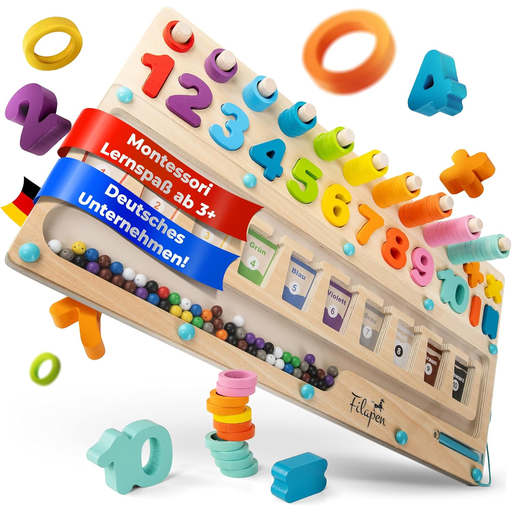
Why This Fits Their Persona: Ideal for parents looking for a multifunctional toy. It combines a wooden magnetic game to promote fine motor skills with the playful learning of numbers and colors, offering a comprehensive educational approach in a single product.
This toy avoids the trap of a short lifespan. It grows with the child—from simple color matching to initial counting exercises—and thus remains relevant for several years.
Combines three core skills (fine motor, colors, numbers) in one durable wooden board. The magnetic pen is permanently attached to the board, preventing parts from getting lost.
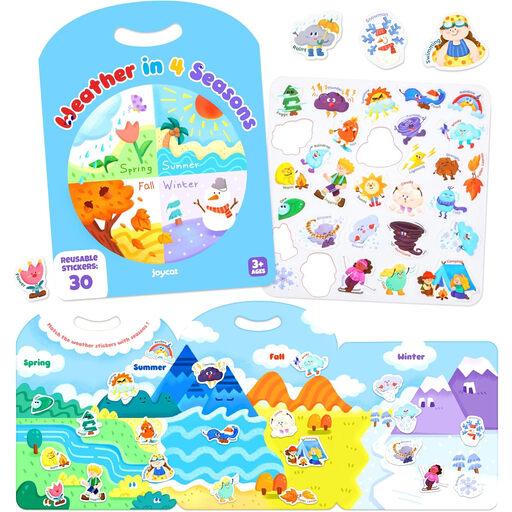
Why This Fits Their Persona: Perfect for parents seeking a simple, focused, and travel-friendly activity. Peeling and placing the gel stickers specifically trains the pincer grasp and hand-eye coordination without overwhelming the child.
This product avoids the misleading "Montessori" label and focuses on a clear benefit: developing fine motor skills. Its reusability offers high play value at a reasonable price.
The stickers are washable and stick to smooth surfaces, enabling creative play. The compact book format with a carrying handle makes it an ideal travel companion.
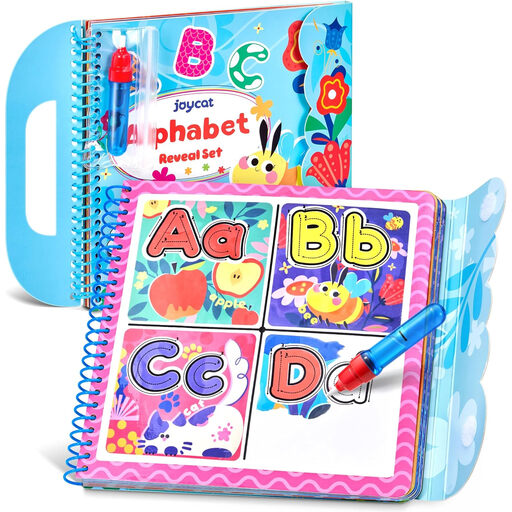
Why This Fits Their Persona: An excellent choice for parents who want to facilitate creative activities without mess or stains. The child can paint with a pure water pen, playfully learning the alphabet and proper pen grip.
Unlike single-use craft kits, this book is infinitely reusable. The pages dry and can be colored again and again, avoiding the short-lived fun trap and conserving resources.
Promotes pen grip and early letter recognition in a clean, safe way. The integrated pen holder and carrying handle make it a practical toy for home and on the go.
We have compiled a complete, up-to-date list of products that fully meet these strict selection criteria and rigorous safety standards.
Genuine Montessori-inspired toys are characterized by several features: they are usually made of natural materials like wood, are realistically designed, and have a clear, isolated function. They avoid unnecessary stimuli like lights or sounds and allow the child to learn through independent action and self-correct errors.
Wood is a natural material and should not be submerged in water or cleaned with harsh chemicals. A slightly damp cloth is usually sufficient for cleaning. For tougher dirt, a mild soap solution can be used. It is important to let the toy air-dry thoroughly afterward to prevent cracks or warping.
A magnetic maze for kids is generally safe when designed for the 3+ age group. The construction is crucial: the magnetic balls must be securely enclosed under a sturdy, shatterproof acrylic panel. The magnetic wand should ideally be attached to the board with a string to prevent it from being lost or swallowed. Always check the manufacturer's age recommendation and ensure the product contains no loose small parts.