
Lieferung heute & morgen

Qualitätsgarantie

Willkommens-Angebote freischalten: KOSTENLOSE Lieferung | Bis zu 80 % RABATT | Kostenlose 30-Tage-JoyPlus-Testphase
App herunterladen
Demand for Montessori toys has surged in recent years. Parents and gift-givers are specifically looking for products that not only entertain but also actively support a child's development. However, the term "Montessori" is often overused in marketing. The result: many products fail to deliver on their promise, leading to disappointment and wasted money.
As your Joybuy Product Recommendation Officer, I'm here to help you separate the wheat from the chaff. This guide will walk you through the most common purchasing pitfalls and provide you with objective criteria to identify durable, educationally valuable toys.
Before we dive into the features of high-quality products, it's crucial to recognise the typical marketing traps that often lead to poor purchasing decisions.
To avoid these traps, you should base your purchasing decision on three objective parameters. These will help you realistically assess a product's quality and utility.
The material is the foundation of durability and safety. For wooden toys, pay close attention to the craftsmanship. Solid wood is generally more robust and durable than MDF or particleboard. However, the crucial factor is certification according to the European standard EN 71. This standard regulates toy safety and includes, among other things:
For products like foam building blocks, in addition to EN 71 certification, washable covers and a non-slip base are important features for hygiene and safety.
Good educational toys are designed to spark a child's curiosity without overwhelming them. They isolate a specific skill—be it fine motor skills, colour recognition, or understanding quantities.
A key feature is the "open-ended play concept." This means the toy doesn't have a single, fixed purpose; instead, it can be used creatively by the child in ever-new ways. A simple set of wooden blocks can become a tower, a wall, an enclosure for animals, or something completely abstract. This type of toy fosters imagination and remains engaging for years.
The Montessori philosophy places great emphasis on a "prepared environment" where the child can act independently. This applies not only to toys but also to the child's room setup. A Montessori shelf that is low enough for a child to reach and put away their own books and toys fosters independence and a sense of order. Furniture and play equipment, like a climbing triangle, should be sized to allow for safe, self-directed use.
Here are some product recommendations based on the objective criteria above, suitable for various developmental goals and age groups.
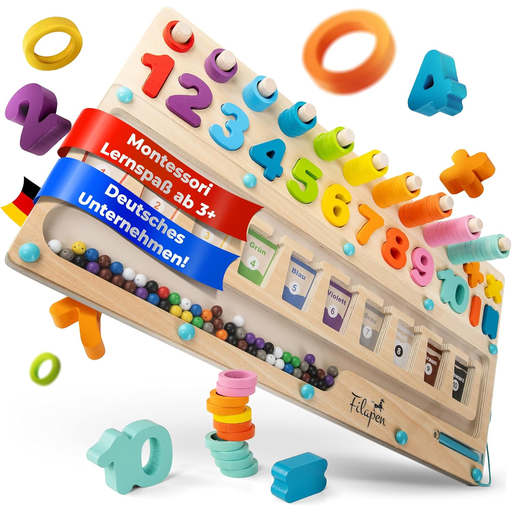
Why This Fits Their Persona: Ideal for parents who want to specifically train their child's hand-eye coordination and initial understanding of numbers and colours. It is a focused learning tool that requires concentration.
This is not a generic product with a Montessori label. It clearly isolates the skills of fine motor control, colour sorting, and number recognition, avoiding any distracting electronics.
Combines three learning areas in one product. Made from durable wood with certified materials.
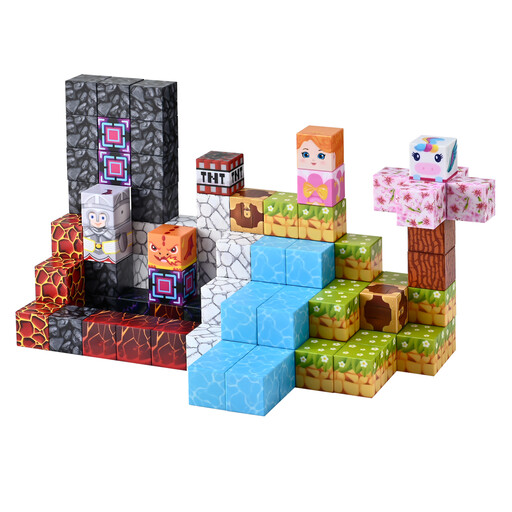
Why This Fits Their Persona: Perfect for children who love to build and create their own worlds. The blocks promote spatial awareness, concentration, and logical thinking in an open-ended, creative way.
This set offers extremely high replay value. Unlike single-function toys, it grows with the child's imagination, preventing it from being cast aside after a short time.
Strong magnets allow for stable, multi-layered 3D constructions. Made from safe ABS plastic with smooth edges.

Why This Fits Their Persona: For families looking to furnish their child's room according to Montessori principles. This shelf allows children independent access to their books, fostering responsibility and order.
This isn't just a decorative piece of furniture, but a functional tool for implementing the "prepared environment." Its design is tailored directly to the needs and size of children.
Child-friendly height of 88 cm for easy access. Rounded corners and an included anti-tip kit provide additional safety in the child's room.
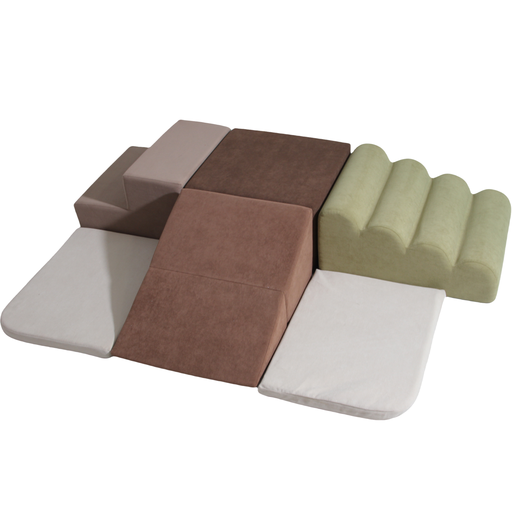
Why This Fits Their Persona: For parents who want to support their children's natural urge to move in a safe home environment. This set promotes gross motor skills, balance, and creativity.
Unlike rigid climbing frames, the soft material minimises the risk of injury. The modules can be combined in various ways, offering long-lasting, safe fun for indoor play.
EN71-certified for guaranteed safety. The covers are removable and machine-washable, making hygiene easy. A non-slip base ensures stability during play.
We have compiled a complete, up-to-date list of products that fully meet these strict selection criteria and safety regulations.
You can recognise good Montessori toys by several features: they are usually made from natural materials like wood, have a simple, clean design without unnecessary distractions, focus on developing a specific skill, and are open-ended to stimulate the child's creativity rather than prescribing a single solution.
The principles of Montessori education can be applied from birth, for example, with high-contrast mobiles for infants. Specific learning toys for ages 2 and up are designed to promote the motor and cognitive skills of toddlers. There are suitable materials for every stage of development, from grasping toys for babies to more complex sorting and building tasks for preschoolers.
Wooden toys should not be submerged in water or cleaned with harsh chemicals, as the wood can swell and the finish can be damaged. A slightly damp cloth is usually sufficient for cleaning. For heavier soiling, a mild soap solution can be used. Afterwards, the toy should be left to air dry thoroughly.