
Lieferung heute & morgen

Qualitätsgarantie

Willkommens-Angebote freischalten: KOSTENLOSE Lieferung | Bis zu 80 % RABATT | Kostenlose 30-Tage-JoyPlus-Testphase
App herunterladen
The search for suitable Montessori toys for 3-year-olds can be a challenge. The market is filled with products advertised as "educationally valuable," but not every toy delivers on its promise. As a Joybuy Product Recommendation Officer, I'm here to help you separate the wheat from the chaff and make an informed decision that truly benefits your child's development.
Many parents invest with the intention of promoting cognitive development and fine motor skills, only to encounter common problems. Here are the three typical traps you should be aware of:
To avoid these pitfalls, you should check three core parameters before buying. These features define a good learning toy for 3-year-olds and ensure you receive a durable and meaningful product.
The quality of the material is non-negotiable. Pay attention to the following points:
A key feature of a good educational toy is the "isolation of the quality." This means the toy focuses on teaching a single, clearly defined skill. Instead of choosing a toy that simultaneously flashes, plays music, and recites letters, it is more effective to offer separate play materials. This allows a child to specifically learn numbers and colours or promote fine motor skills with a special toy without being distracted by other stimuli. This fosters concentration and deeper understanding.
An educationally valuable toy for a three-year-old should present a clear task that is challenging but solvable. A good example is a wooden magnetic maze game, where balls must be guided through tracks with a stylus. It promotes hand-eye coordination and patience. At the same time, the toy should leave room for creativity and not dictate a single, rigid solution.
Based on the criteria above, we have identified some products that are suitable for different needs and profiles.
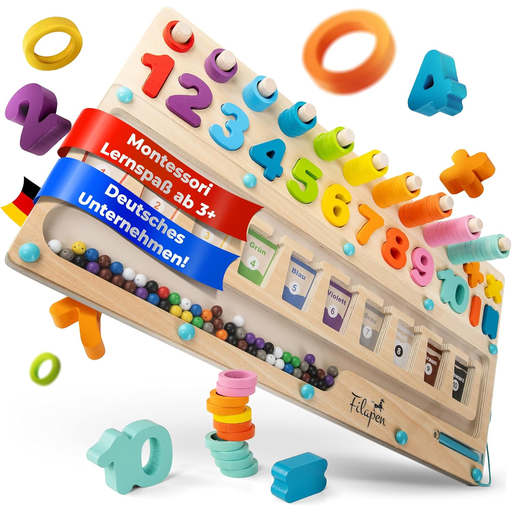
Why This Fits Their Persona: This toy is ideal for parents who value durability, safety, and a clear educational purpose. It combines several core competencies in one high-quality wooden product.
It is made of certified solid wood and clearly focuses on promoting fine motor skills, colour recognition, and an initial understanding of numbers—without distracting electronics.
Combines three learning areas (motor skills, colours, numbers) in one toy. The robust design ensures a long lifespan, lasting for several years.
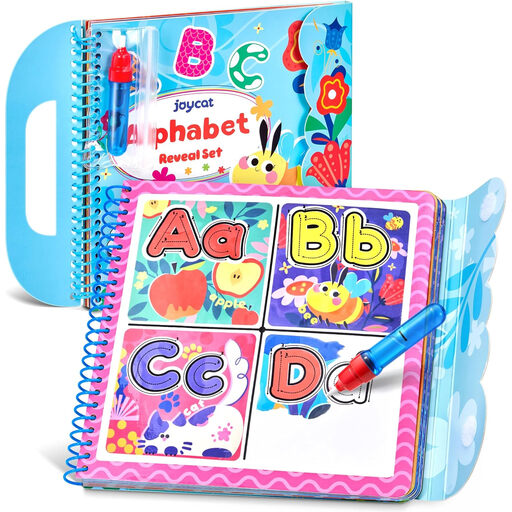
Why This Fits Their Persona: Perfect for families looking for a clean, reusable, and portable activity. It promotes proper pen grip and early letter learning without any stains.
This product isn't a "fake" Montessori toy, but a practical learning tool. It uses only water, thus avoiding any material risks from paints or chemicals.
Completely mess-free and infinitely reusable. The integrated carrying handle and pen holder make it an ideal companion for car rides or the waiting room.

Why This Fits Their Persona: A great choice for children who respond strongly to auditory stimuli. It encourages matching pictures and sounds and is suitable for children from 2 years old due to its soft texture.
The function is clearly isolated: matching a picture to a sound. The soft fabric surface minimises the risk of injury, making it a safe toy for toddlers.
Promotes auditory perception and first attempts at speech through imitation. The large, soft cubes are easy for small hands to grip and throw.
We have compiled a complete, up-to-date list of products that fully meet these strict selection criteria and UK safety regulations.
An educationally valuable toy is distinguished by several features: It is made of high-quality, safe materials (like wood or certified plastics), focuses on promoting a specific skill (e.g., motor skills, sorting, matching), and leaves room for the child's free, creative play. It does not overwhelm with too many stimuli like flashing lights and loud noises.
A wooden magnetic maze game is generally useful from around the age of 3. At this age, children are developing the necessary fine motor skills and concentration to guide the magnetic stylus safely and complete the task. It is important to pay attention to the manufacturer's age recommendation and ensure there are no small parts that can be swallowed.
Proper care is simple and ensures the toy's longevity. Clean wooden motor skills toys with a slightly damp cloth as needed. Do not use aggressive cleaning agents or disinfectant sprays, as these can damage the wood and the finish. The toy should never be submerged or soaked in water. Allow it to air dry completely after cleaning before it is played with again.