
Lieferung heute & morgen

Qualitätsgarantie

Willkommens-Angebote freischalten: KOSTENLOSE Lieferung | Bis zu 80 % RABATT | Kostenlose 30-Tage-JoyPlus-Testphase
App herunterladen
Montessori wooden toys from age 3 should encourage children to play independently while creating practical learning opportunities. For parents, grandparents and educational professionals, however, the wooden look is not the only consideration. The key factors are the recommended age, the size of the pieces, how the toy works, the materials used and whether the product suits the child’s stage of development.
The term “Montessori” does not automatically describe a standardised, tested toy concept. Some products use the name primarily to suggest a natural-coloured design. More meaningful are the specific functions: Can the child match colours, place numbers, control movements independently or complete tasks at several difficulty levels?
A toy for children aged 3 and over may contain small balls, pegs or connecting pieces. The age recommendation is therefore more than just a guideline. The Filapen Montessori toy explicitly warns about small parts; it is not intended for children under 3 and should be used under the direct supervision of an adult.
The information on the packaging also applies to products for older children. A game designed for children aged 5 or 6 and over may be too challenging for a three-year-old, or may contain small parts they cannot yet handle safely.
A product with numerous educational claims is not automatically practical for everyday use. Check whether the idea behind the game is easy to understand and whether the child can use it without constant help. For younger children, manageable tasks such as sorting colours, simple peg activities or guiding a ball are often more accessible than complex 3D mazes.
When buying wooden toys, shoppers should look for a clear description of the materials, sturdy joints and smoothly finished surfaces. The Filapen product is listed as being made from solid wood. According to the product description, certified materials are used and quality checks are also carried out. However, this information does not replace checking the actual item for damaged edges, loose parts or flaking coatings.
Good motor-skills toys for children make the action required clear. With a wooden maze with magnetic pen, the pen should be attached to the product so that it cannot get lost. The child guides coloured balls through the maze and matches them to the corresponding coloured spaces. This provides opportunities to practise hand-eye coordination, controlled movements and colour recognition. It does not, however, guarantee a particular learning outcome.
Children learn colours and children learn numbers best through repeatable, hands-on tasks. The Filapen board contains wooden numbers from 1 to 10, which are placed into the corresponding cut-outs. Depending on the child’s age, this can initially be used as a matching activity and later as a simple counting exercise.
The dimensions affect whether the toy can be used on a table, stored on a shelf or taken out and about. The Filapen toy is listed with a packaging size of approximately 23 × 43,5 × 4 cm. It should be stored in a dry, easily accessible place. After play, it is advisable to check that all balls, pens and numbers are still present.
For children aged 3 to 6, direct supervision is particularly advisable when small parts are involved. You can also check whether the task is suitable for the child without giving them the complete solution.
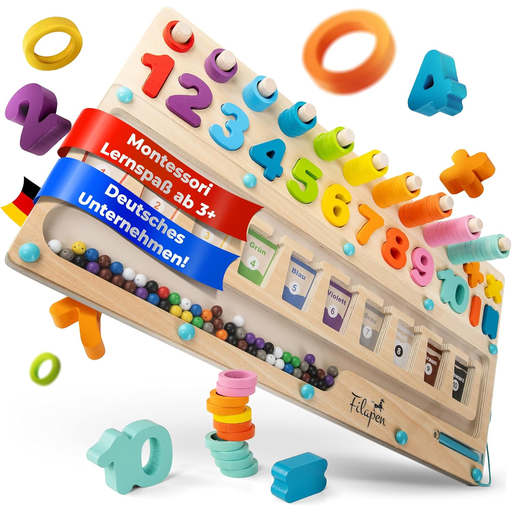
Why this product suits this profile: The board combines a magnetic maze, colour sorting and numbers from 1 to 10 in one product and is listed as suitable for children aged 3 and over.
The learning functions are described specifically, rather than being identified solely by the term Montessori. The age and safety information must still be followed.
Solid wood according to the product information, no batteries required and several activity areas in one game board.
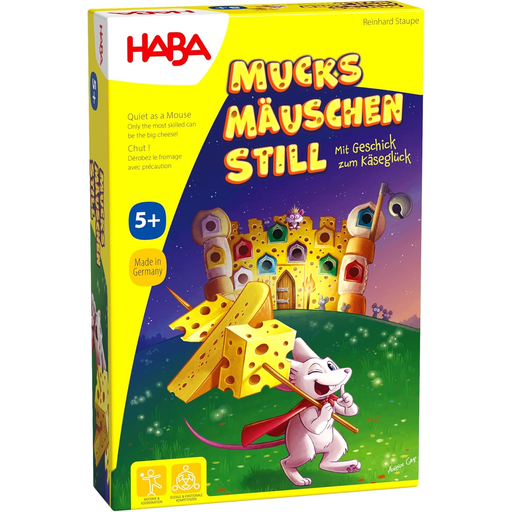
Why this product suits this profile: This wooden game is listed as suitable for children aged 5 and over and combines calm dexterity with a clear objective for 2 to 4 players.
The recommended age group is clearly stated. The game consists of an easy-to-understand dexterity challenge rather than an unclear list of learning functions.
Wood and paper as the listed materials, no batteries and a game for several participants.
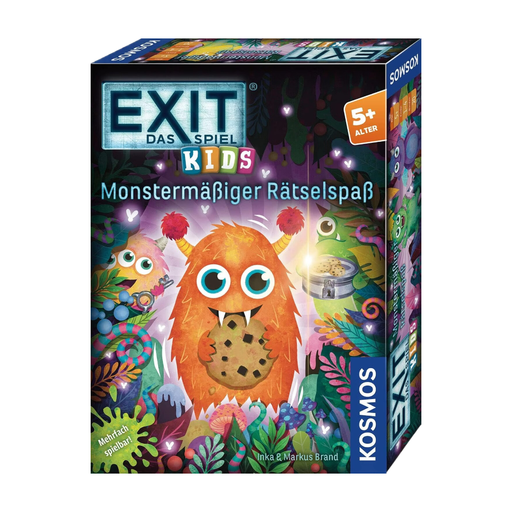
Why this product suits this profile: For children aged 5 and over, this game offers puzzles in a child-friendly format and is suitable for 1 to 4 players, making it ideal for family afternoons.
The age recommendation helps prevent buying it too early. According to the description, the rules are designed for children; adults can provide support if needed.
1 to 4 players, no batteries and an optional app with a timer and hints, according to the product description.
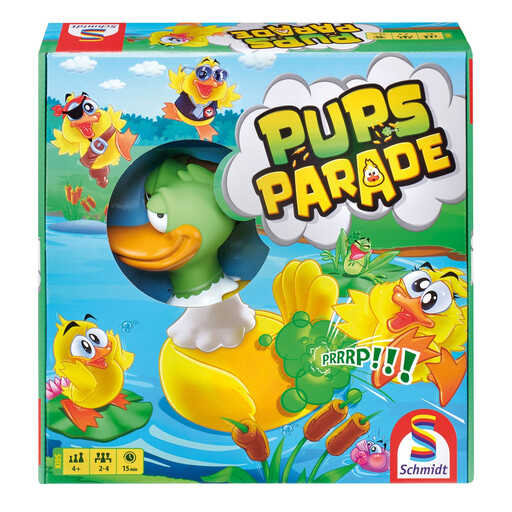
Why this product suits this profile: This board game is intended for children aged 4 and over and is designed for 2 to 4 players. It can be given as a gift to children aged 3 and over once the child has reached the recommended age.
The age limit of 4 and over is not confused with suitability from age 3. This is a family game, not a Montessori learning board.
2 to 4 players, no batteries and simple gameplay with dice and movement elements.
We have put together a complete, regularly updated list of products that fully meet these strict selection criteria and the safety regulations applicable in the EU.
Suitable options include games with clear, manageable tasks and an official age recommendation of 3 and over. A wooden magnetic toy with an attached pen, coloured spaces and number slots can offer several levels of play. Small parts must not be put in the mouth, and the manufacturer’s supervision instructions must be followed.
How long the toy remains useful depends on the materials, workmanship and the child’s developing interests. A toy with several difficulty levels may remain relevant for longer than a one-off activity. According to the product description, the Filapen magnetic maze is initially intended for matching colours and numbers, followed later by simple counting and arithmetic activities. This is a potential use over time, not a guaranteed developmental benefit.
No. The material alone does not determine safety. The important factors are the age recommendation, warnings, sturdy workmanship, suitable surfaces and the size of any detachable parts. Wooden toys can also contain small parts and should be checked regularly for damage.