Which camera matters to whom

Photographing distant details

If you want to capture individual places, vineyards or features beyond a bend in the river, compare the available telephoto range and what’s included in the box. Nikon Germany lists a 50–250 mm lens in the Z50II kit; Sony Germany gives the RX10 IV a 24–600 mm full-frame equivalent range.

Capturing the whole river bend

For sweeping landscape views, don’t overlook the wide-angle range in favour of telephoto reach. The two-lens kits described by Canon Germany and Nikon Germany each pair a shorter zoom with a telephoto zoom.

Walkers carrying a camera

If you’re carrying your kit to viewpoints, you’ll need to balance focal-length coverage against how easy the whole set-up is to handle. The Moselle Tourist Information website describes the Calmont via ferrata as very challenging, with steep sections secured by ropes and ladders.

What to look for when buying

Mirrorless camera with two zoom lenses

A good fit if: You want to capture wide views and specific distant subjects, and don’t mind changing lenses. The Canon and Nikon kits described each include two zoom lenses.

Consider: You’ll need to carry both lenses. Check exactly what’s included; a single short standard zoom won’t cover telephoto subjects in the same way.

Bridge camera with a fixed zoom

A good fit if: You want to switch between wide views and tightly framed distant subjects without changing lenses. Sony gives the RX10 IV a 24–600 mm full-frame equivalent zoom range.

Consider: You can’t swap the lens for a different one later. The zoom range alone doesn’t prove that it offers better image quality than a particular mirrorless camera kit.

Weather-ready interchangeable-lens kit

A good fit if: For walks, you want a body specifically described as weather-sealed, with separate wide-angle and telephoto lenses. The OM-5 Mark II kit described includes 12–45 mm and 40–150 mm lenses.

Consider: The protection rating for the body doesn’t automatically apply to every lens combination or weather condition. Check the details for your complete set-up.

Buying priority What to check before buying Who it matters most to
Distant details Compare the telephoto reach on the same full-frame equivalent basis and check whether the telephoto lens is included in the package. If I want to zoom in on places or vineyards beyond the bend in the river, the telephoto range actually available is what counts. Around 36% of consumers put this first.
The whole river bend Check the wide-angle end of the included lens or the bridge camera’s full-frame equivalent range. If I want to show the course of the river as one sweeping landscape, the wide-angle range shouldn’t be sacrificed for telephoto reach. Around 29% of consumers prioritise the overall view.
Carrying and handling Consider the camera and all the lenses you plan to take together; choose your kit carefully for challenging sections of the route. If I need to carry my camera to a viewpoint, I want to be able to handle all my kit comfortably and safely when I get there. Around 21% of consumers focus on this.
Light and weather Check the stabilisation of the body and the lens you’re using separately; verify the weather protection for the specific combination. If I’m taking photos in changing conditions, I look at the details for my complete set-up. Around 14% of consumers prioritise this.

Avoiding common buying mistakes

  • Choosing by megapixels alone instead of framing and lens choice

    A high resolution doesn’t replace checking whether the included lens lets you frame the distant subject you want.

    First, compare the wide-angle and telephoto ranges of the complete package. Then consider the resolution in light of whether you want to crop your photos or print them large.

    If the package doesn’t include a suitable telephoto lens, you may need to buy an additional lens for tightly framed distant subjects.

  • Assuming stabilisation or weather protection applies to all your kit

    According to Canon Germany, the Canon EOS R50 doesn’t have in-body image stabilisation, while the kit lenses mentioned are optically stabilised. The OM-5 Mark II body’s IP53 rating alone doesn’t prove that every lens combination you carry is protected.

    Check the camera body and each lens separately, along with the conditions attached to the manufacturer’s specific claims.

  • Planning around an older bridge camera’s previous availability

    The Panasonic Lumix DC-FZ1000 II data sheet on digitalkamera.de listed its availability only until spring 2024; this doesn’t tell you whether it’s currently available new.

    If you’re considering this model, check its current availability, what’s included and the terms of the specific offer.

Key camera brands at a glance

Canon

The EOS R50 kit described pairs an APS-C body with RF-S 18–45 mm and RF-S 55–210 mm lenses for wide and tighter framing.

  • Canon Germany lists optical image stabilisation for both kit lenses.
  • According to Canon Germany, the EOS R50 doesn’t have in-body image stabilisation; this specification applies to this particular body.

Nikon

The Z50II two-lens kit described pairs a DX 16–50 mm VR lens with a DX 50–250 mm VR lens.

  • Nikon Germany confirms that both zoom lenses in this specific kit are stabilised.
  • According to Nikon Germany, this kit doesn’t include a charger.

Sony

The RX10 IV is a bridge camera with a fixed zoom; the E 18–135 mm OSS, by contrast, is a separate APS-C interchangeable lens.

  • Sony Germany gives the RX10 IV a 24–600 mm full-frame equivalent range and a 1.0-inch sensor.
  • The E 18–135 mm OSS is a separate lens for APS-C cameras and shouldn’t be confused with the RX10 IV’s specifications.

OM SYSTEM

The OM-5 Mark II two-lens kit described pairs 12–45 mm and 40–150 mm lenses for wide-angle and telephoto shots.

  • OM SYSTEM describes the body as IP53-certified, dustproof and splashproof.
  • The body’s rating isn’t a blanket guarantee for the complete set-up or every weather condition; check the lens specifications separately.

Panasonic

The Lumix DC-FZ1000 II is a bridge camera with a fixed 25–400 mm zoom.

  • A Panasonic data sheet lists a 25–400 mm zoom and a 1-inch sensor.
  • digitalkamera.de listed its availability only until spring 2024; this doesn’t tell you whether it’s currently available new.

Joybuy product selection

This Joybuy selection includes compact digital cameras and action cameras. For distant subjects, check carefully whether the digital zoom or wide-angle lens will give you the framing you want.
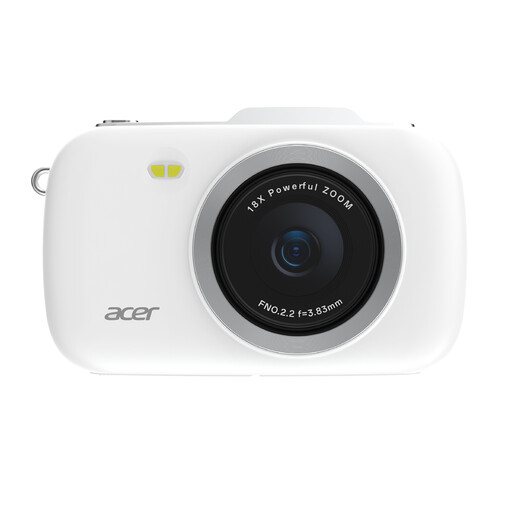
Komery G7-A 4K digital camera in white

Komery G7-A 4K digital camera, 80 MP, 18× digital zoom

The stated 18× zoom is digital zoom; it isn’t the same as a telephoto zoom for tightly framing distant subjects.

Features listed in the product title: 80 MP, 4K and 18× digital zoom.

View at Joybuy
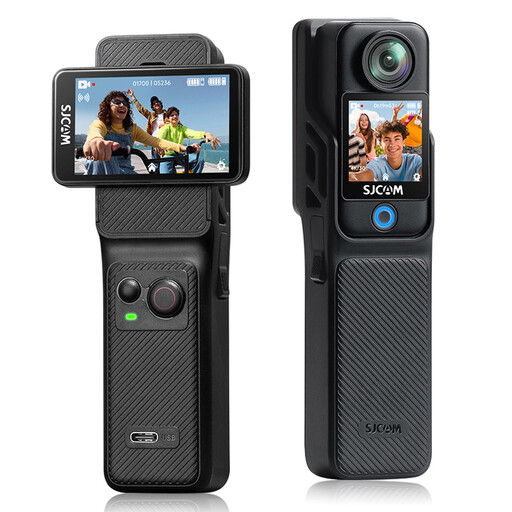
SJCAM C400 4K action camera

SJCAM C400 4K action camera

The 154° wide-angle lens is designed for broad views, but it’s a compromise when you want to frame distant details tightly.

Features listed in the product title: 16 MP photos, 6-axis EIS and a 154° wide-angle lens.

View at Joybuy
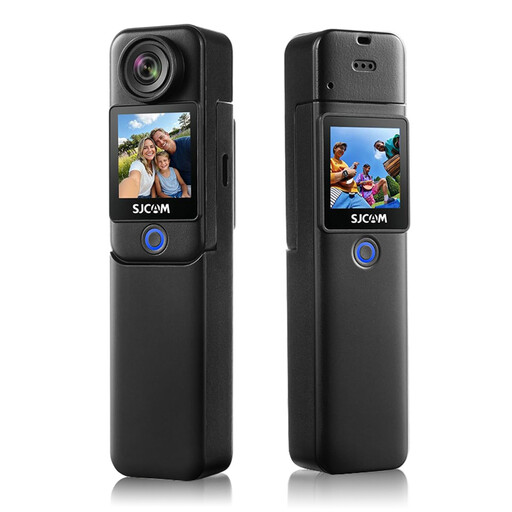
SJCAM C300 4K action camera

SJCAM C300 4K action camera

The 154° wide-angle lens is designed for broad views, but it’s a compromise when you want to frame distant details tightly.

Features listed in the product title: 20 MP photos and 6-axis stabilisation.

View at Joybuy
SJCAM SJ20 action camera with day and night lenses

SJCAM SJ20 action camera with day and night lenses

The stated 154° wide-angle lenses are suited to broad views, but they’re a compromise when you want to frame distant details tightly.

Features listed in the product title: 4K at 30 frames per second, two displays and 6-axis stabilisation.

View at Joybuy

Frequently asked questions

Is a mirrorless camera’s standard zoom enough for distant details?

If distant subjects are your main priority, check the telephoto range and exactly what’s included in the kit too. The Canon and Nikon packages described each include a second lens; the camera body’s name alone doesn’t tell you which lens comes with a particular offer.

What should I bear in mind before taking photos on the Calmont via ferrata?

The Moselle Tourist Information website describes steep sections, some secured with steel cables and ladders, and rates the route as very challenging. Choose a route and camera set-up that suit your abilities; this doesn’t mean there’s a general requirement to carry a camera or a general access rule for other viewpoints along the Moselle.

Does a camera kit always include a charger?

No. Nikon explicitly states that the German Z50II two-lens kit described doesn’t include a charger. Check what’s included before you buy and whether you’ll need a suitable charging option.

Are a warranty and statutory consumer rights the same thing?

No. The Verbraucherzentrale distinguishes between statutory consumer rights and a voluntary warranty. Check the seller and warranty terms separately for the specific offer.

Can I publish photos of a Moselle landscape if identifiable people appear in them?

As a general rule, publishing or publicly displaying images of people requires the consent of those pictured under § 22 KunstUrhG; § 23 sets out exceptions and limits that depend on the specific image. Under certain conditions, the freedom of panorama in § 59 UrhG applies to works permanently situated on public paths, roads or squares; it doesn’t remove the need to consider personality rights.