Which type of camera is right for you?

Campers travelling light

If you want to photograph moss and other subjects spontaneously without changing lenses, a dedicated close-up mode and the camera’s protection ratings for use in wet conditions are important considerations. OM SYSTEM and PENTAX list close-up modes on their compact cameras.

Photographers who love moss details

If you want individual textures to appear larger in the frame, check the magnification ratio of the specific macro lens and be prepared to focus carefully. OM SYSTEM, Canon and Nikon publish figures for their respective lenses.

Photographers in changeable weather

If you take photos in damp conditions, check the protection ratings for the camera and attached lens separately. Manufacturers’ ratings for compact cameras and camera-and-lens combinations apply to the products and conditions specified.

What should you look for when buying?

Rugged compact camera

A good fit if: You want to photograph moss within reach spontaneously, without changing lenses.

The trade-off: A short focusing distance alone doesn’t tell you how large a detail will appear in the frame.

System camera with a macro lens

A good fit if: You want to take a specific macro lens with you for detailed close-up shots.

The trade-off: The lens and camera body are separate components, so you’ll need to consider the protection rating and extra space in your luggage for each one.

What you need What to check before buying Who is it most relevant to?
Capture moss details at a larger scale For an interchangeable lens, check the magnification ratio of the specific model. OM SYSTEM and Nikon state a 1:1 ratio for their respective 60-mm and 50-mm macro lenses. If I want individual moss textures to stand out clearly in the frame, the achievable magnification ratio matters more than a short focusing distance alone. Around 31% of consumers prioritise detail.
Take photos in wet conditions Check the protection ratings for the camera body and lens separately. OM SYSTEM lists IP53 for the OM-5 Mark II and IPX1 splash protection for the M.Zuiko ED 60mm F2.8 Macro. If I take photos in damp camping conditions, I want to know which protection ratings apply to each part of my kit. Around 23% of consumers put weather protection first.
Travel with minimal luggage Check what’s included and which accessories you’ll actually take with you, particularly with system cameras that have a separate macro lens. If I want to carry as little extra gear as possible on a camping trip, a camera that doesn’t require a lens change is practical for me. Around 23% of consumers prioritise travelling light.
Control light and sharpness Check whether the camera has close-range lighting and which focus and exposure settings you’ll need. PENTAX lists six LED macro lights for the WG-90; Canon Academy explains the shallow depth of field in macro photography. If I want to bring out fine moss textures clearly in close-up shots, I pay particular attention to lighting and precise focus. Around 23% of consumers put this control at the heart of their choice.

Common camera-buying misconceptions

  • Assuming “from 1 cm” means “1:1 macro”

    Focusing distance and magnification ratio describe different things. A short distance doesn’t prove that a small detail of moss will fill the frame.

    For a compact camera, check the achievable framing in close-up mode. With an interchangeable lens, the stated magnification ratio for the exact model is what matters.

  • Assuming the kit zoom is the macro lens you researched

    The Canon EOS R50 is compatible with the RF 35mm F1.8 Macro IS STM, but a kit with the RF-S 18–45 mm doesn’t automatically include this macro lens.

    Before buying, check the full model names of the camera and lens, as well as what’s included.

  • Assuming the camera body’s weather protection applies to the whole system

    The OM-5 Mark II and the M.Zuiko ED 60mm F2.8 Macro have different protection ratings. A protected camera body doesn’t automatically make an attached lens equally protected.

    For a camera with interchangeable lenses, check the conditions for each piece of equipment you’ll take with you.

Key brands to consider

OM SYSTEM

The Tough TG-7 is a compact camera with a close-up mode; the OM-5 Mark II can be paired with a separate macro lens.

  • OM SYSTEM states that the TG-7’s Microscope mode in the Micro Adventure Kit can focus from 1 cm. The LG-1 light guide and a second battery are included in this kit, but not automatically with every TG-7 version.
  • OM SYSTEM states that the M.Zuiko ED 60mm F2.8 Macro has a 1:1 magnification ratio and that the OM-5 Mark II is rated IP53. According to the manufacturer, the lens has IPX1 splash protection.
  • The protection ratings for the camera body and lens differ, so check each specific component individually.

PENTAX

The WG-90 is a compact camera for close-up photography without changing lenses.

  • Ricoh Imaging lists a Digital Microscope mode from 1 cm, six LED macro lights and waterproofing to 14 m for up to two hours.
  • A focusing distance of 1 cm does not mean the camera has a 1:1 magnification ratio.

Canon

The RF 35mm F1.8 Macro IS STM is a separate RF macro lens, which Canon also lists as compatible with the EOS R50.

  • Canon states that the RF 35mm F1.8 Macro IS STM has a maximum magnification ratio of 1:2.
  • The lens needs to be included in your specific camera setup; an EOS R50 kit with the RF-S 18–45 mm doesn’t automatically include it.

Nikon

The NIKKOR Z MC 50mm f/2.8 is a macro lens for a compatible Nikon Z camera body.

  • Nikon lists a 1:1 magnification ratio and a minimum focusing distance of 0.16 m for this lens.
  • A Z50II zoom kit doesn’t prove that the separate NIKKOR Z macro lens is included.

Joybuy products for outdoor photography

The Joybuy models below are action cameras for outdoor photography on the go. For close-up shots of moss, check the framing they can achieve at close range; photo resolution or waterproofing specifications alone don’t prove that a camera has a macro mode.
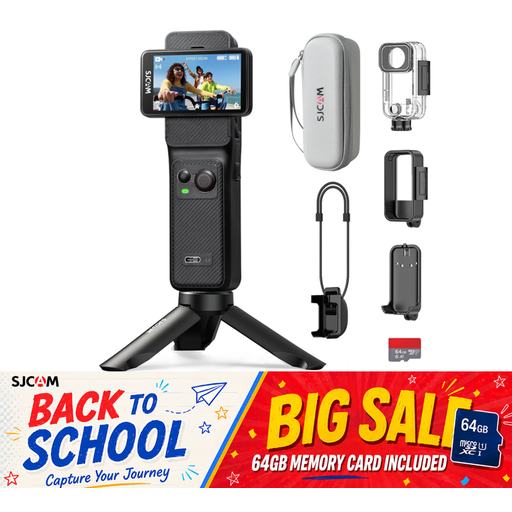
SJCAM C400 Action Camera 4K

SJCAM C400 Action Camera 4K

Described as an action camera for taking photos on the go; for moss details, check whether it can achieve the framing you want at close range.

The product name states up to 7 hours of battery life and waterproofing to 30 m with a case. The product description lists photos of up to 20 MP.

View at Joybuy
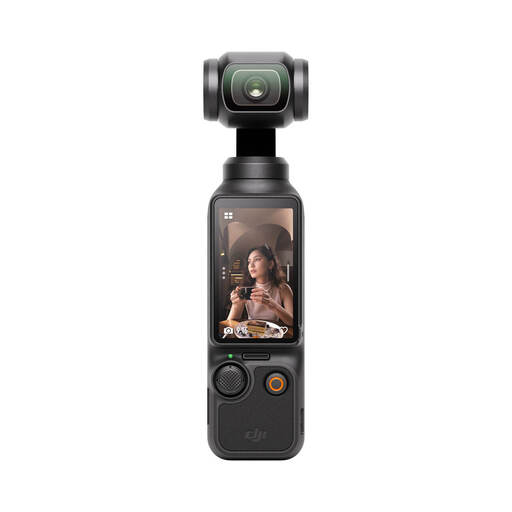
DJI Osmo Pocket 3

DJI Osmo Pocket 3

Described as a compact camera for taking on the go; before photographing moss details, check the framing it can achieve at close range.

The product description lists a 1-inch sensor, fast focusing and a weight of 179 g.

View at Joybuy
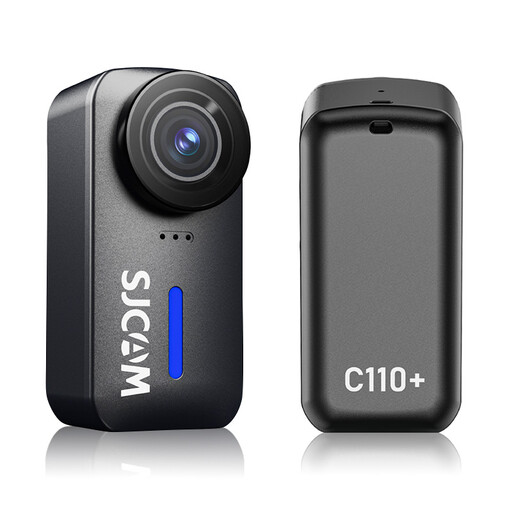
SJCAM C110+ 4K Action Camera

SJCAM C110+ 4K Action Camera

Described as a compact action camera for taking photos on the go; for close-ups of moss, it’s important to check whether it can achieve the framing you want.

The product name lists 4K recording and waterproofing to 30 m with a case; the description lists photos of up to 20 MP.

View at Joybuy
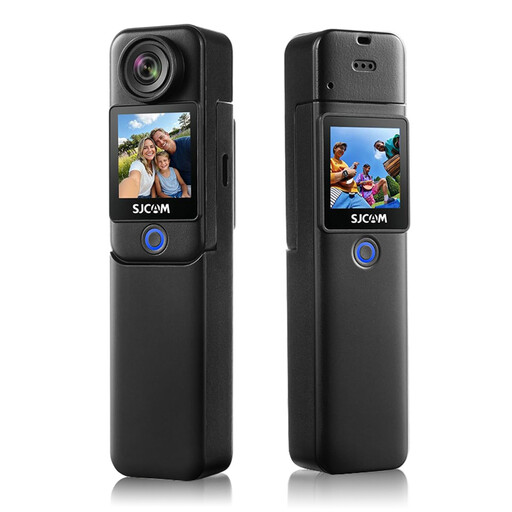
SJCAM C300 4K Action Camera

SJCAM C300 4K Action Camera

Described as an action camera for taking photos on the go; for moss details, check the framing it can achieve at close range.

The product description lists up to 460 minutes of recording time with the grip and additional battery, as well as photos of up to 20 MP. The stated waterproofing to 30 m requires the case.

View at Joybuy
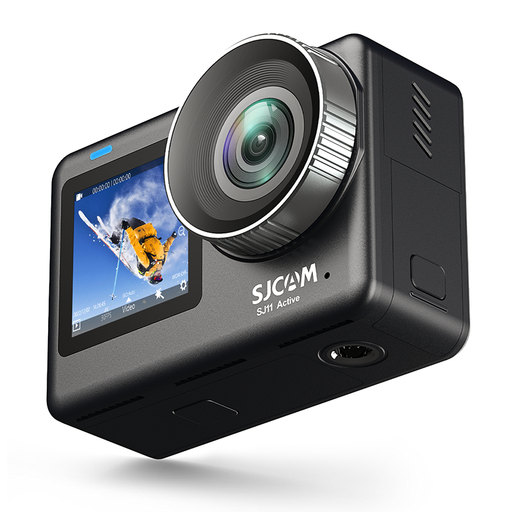
SJCAM SJ11 Active Dual Screen Action Camera

SJCAM SJ11 Active Dual Screen Action Camera

Described as an action camera for taking photos on the go; for close-ups of moss, check separately what framing it can achieve.

The product name lists photos of up to 20 MP, 4K video at 30 fps and waterproofing to 5 m without a case or to 30 m with a case.

View at Joybuy

Frequently asked questions

Is a focusing distance of 1 cm enough to capture highly magnified moss details?

No. The distance alone doesn’t prove that the subject will be highly magnified. OM SYSTEM and PENTAX list close-up modes from 1 cm for the TG-7 and WG-90 respectively; check the framing the camera can achieve to see how large the detail will appear in the image. With interchangeable lenses, the stated magnification ratio of the specific lens is what matters.

Do I need to change lenses for macro photography while camping?

The TG-7 and WG-90 have a close-up mode built into the compact camera, so you don’t need a separate lens for this feature. With a system camera, check whether the macro lens you want is actually included; a standard zoom isn’t automatically the same lens.

What can I do if only a small part of the moss is in focus in a close-up?

Depth of field is shallow in macro photography. Focus on the detail you want to highlight, and check the exposure and whether a smaller aperture would help, if your camera offers that setting. Bear in mind that this may require more light.

What costs and rights should I consider when buying online?

With a system camera, treat the body and any macro lens you need as separate purchases, and check what’s included. According to Your Europe, when you buy at a distance from a trader, you generally have a 14-day right to cancel from the date of delivery. For new goods bought from a trader, Your Europe lists a legal guarantee period of at least two years; this is not the same as a voluntary manufacturer’s warranty.

Can I walk on or remove moss to take a photo in a protected area in Germany?

There isn’t a blanket answer that applies to every photography location. In the Black Forest National Park, visitors must stay on designated paths; the park authority also advises people not to pull up moss. Check the rules for the specific campsite and photography location, and photograph subjects within reach without damaging the vegetation.