What should you look for when buying?
First decide whether a ready-to-use camera that doesn’t require you to change lenses will meet your needs, or whether you’d prefer to build a complete system with a camera body and suitable lens for dedicated macro photography.
| What matters to you |
What to check when buying |
Who should pay particular attention? |
| Fine details |
Check whether the specific product has a close-up mode or its maximum reproduction ratio; distinguish the focusing distance from the distance between the subject and the front of the lens. |
If you want to capture tiny moss structures clearly, focus on the actual magnification rather than just a short focusing distance. Around 36% of consumers put fine detail first. |
| Portability and weather |
Check the protection specifications for the specific model; with a mirrorless camera, also consider the attached lens and the weight of the complete kit. |
If you don’t want to change lenses on walks in changeable weather, prioritise a kit that’s easy to carry. Around 29% of consumers place particular importance on portability and use in wet weather. |
| Depth of field and focus |
Don’t confuse focus bracketing with in-camera focus stacking; plan for a stable camera position when taking a focus series. |
If you want several layers of a stationary moss subject to appear sharp, you’ll need to focus carefully and minimise movement. Around 21% of consumers prioritise sharpness across several planes of the image. |
| Complete kit |
Check what’s included, the lens mount and the macro lens’s compatibility; a camera body alone doesn’t guarantee macro magnification. |
If you want to start taking close-ups without having to look for missing kit later, check the complete set rather than just the camera body. Around 14% of consumers prioritise a complete kit and consider potential additional purchases. |
Joybuy products for this topic
The Joybuy products below are suited to photo outings where video recording, longer shooting times or use in wet conditions matter. For close-ups of moss, you should also check whether the camera can focus closely enough for your needs.
 No image available
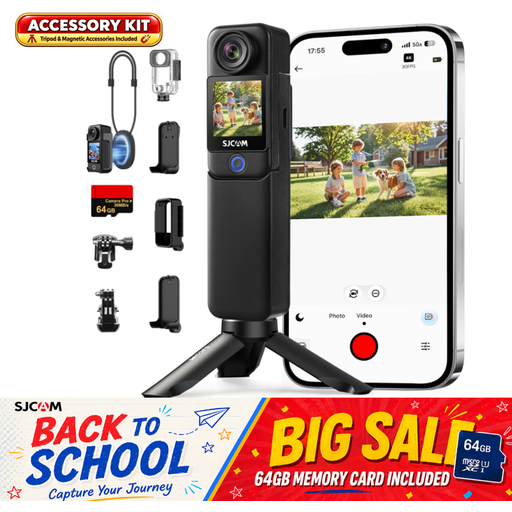
SJCAM C300 Action Camera 4K
The listed features suit outings where longer shooting times or recording in wet conditions matter; check separately whether the camera is suitable for detailed close-ups of moss.
4K video, 6-axis stabilisation, two touchscreens and a stated battery life of 7 hours.
Waterproof housing for use at depths of up to 30 m. Before using it underwater, make sure the housing is sealed correctly and test it.
Accessory kits are listed in the product name.
Joybuy
Frequently asked questions
Is a short minimum focusing distance proof of macro capability?
No. Focusing distance and reproduction ratio aren’t the same thing. For very small details, compare the stated magnification of the lens you’re using and, with compact cameras, check what the specific close-up mode can do.
How can you photograph moss close to the ground with greater depth of field?
Keep the camera as steady as possible and focus carefully. A focus series can help with a stationary subject; before buying, check whether the camera simply captures several separate images or combines them in-camera.
What should you bear in mind after a damp outing or if your camera develops a fault?
Follow the care and drying instructions for your specific camera model. A camera body’s protection rating doesn’t automatically mean the same protection applies to an interchangeable lens. If a product is faulty, your statutory rights are generally against the seller; the Verbraucherzentrale distinguishes these rights from a manufacturer’s voluntary warranty.
Can you pick moss for a photo in Germany or enter a protected area wherever you like?
No. Taking a photograph doesn’t give you blanket permission to pick plants or damage vegetation or habitats. Section 39 of the Federal Nature Conservation Act provides a limited exception allowing small quantities of certain wild plants, including mosses, to be carefully gathered for personal use in places where access isn’t prohibited; this doesn’t amount to general permission for every area or every species. The Federal Agency for Nature Conservation explains the special protections in nature reserves. Whether you may enter a particular location depends on the local protection rules.
Can you return a camera bought online if you change your mind?
For consumer contracts made online in Germany, you generally have a 14-day right to cancel from the day you receive the goods. Exceptions and the terms of the specific purchase apply; the right to cancel is separate from your rights if a product is faulty. The Verbraucherzentrale explains these consumer rights.


