
Lieferung heute & morgen

Qualitätsgarantie

Willkommens-Angebote freischalten: KOSTENLOSE Lieferung | Bis zu 80 % RABATT | Kostenlose 30-Tage-JoyPlus-Testphase
App herunterladen
A well-lit property not only deters intruders but also enhances safety on pathways, driveways, and in the garden. A motion-activated solar light offers an efficient and cost-effective solution, as it operates completely off-grid and only turns on when needed. Installation is straightforward and requires no complex wiring.
This article serves as your guide. It explains the most important technical features and presents a selection of models to help you choose the right solar-powered light.
To find a model that meets your requirements, several technical criteria should be considered.
The brightness of a light is measured in lumens (lm). For illuminating paths or entrance areas, values between 300 and 700 lumens are often sufficient. To effectively light up larger areas like driveways or gardens as a motion-activated security light, models with 1000 lumens or more are recommended.
Many devices also offer various lighting modes:
The choice of mode affects battery life and should match the intended application.
Since an outdoor solar light is permanently exposed to the elements, high durability is crucial. The IP rating indicates how well a device is protected against the ingress of foreign objects and water.
For outdoor use, a rating of at least IP65 waterproof is advisable. The first digit (6) signifies complete dust protection, while the second digit (5) ensures protection against water jets from all directions. This means the light is well-equipped to handle heavy rain and other weather conditions.
Battery capacity, specified in milliampere-hours (mAh), determines how long the light can operate without sunlight. A higher-capacity battery can store more energy, bridging longer periods with little sun.
The solar panel's performance is just as crucial. Models with a separate panel connected by a cable offer greater flexibility. This allows you to mount the solar garden spotlight in a shaded area while placing the panel in an optimally sunny spot to maximise energy harvesting.
Here is a selection of models that are well-suited for different applications due to their specific features.
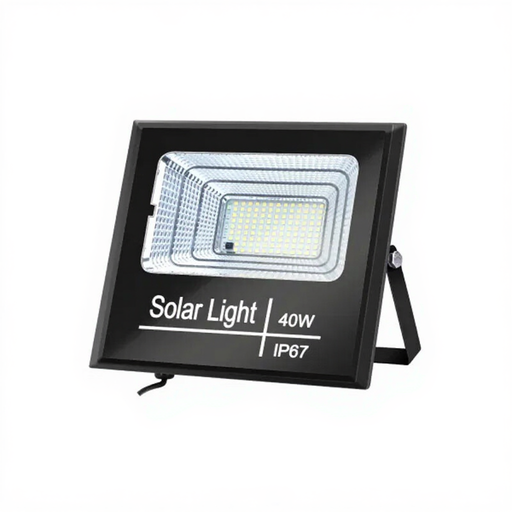
Aigostar Solar Floodlight, Separated, 40W, 6500K, Treasure Basin Series
Why it stands out: This model is distinguished by its separate solar panel and exceptionally robust construction. Its high IP67 rating makes it extremely durable.
Pros:
Best for: Users who need to install the light in a location with limited direct sunlight (e.g., under an eave or on a north-facing wall) but can position the solar panel for optimal sun exposure. A great choice for permanent and demanding installations.
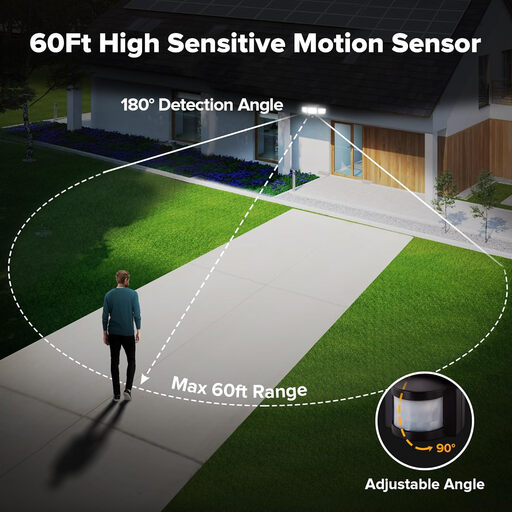
UME Solar Outdoor Lights 302 LED 3000LM, IP65 Waterproof (2-Pack)
Why it stands out: With a light output of 3000 lumens per light and a very wide sensor detection range, this set provides exceptionally bright and broad illumination.
Pros:
Best for: Homeowners looking to secure large areas such as long driveways, the entire garden, or a building's facade. The 2-pack offers a cost-effective solution for comprehensive coverage.
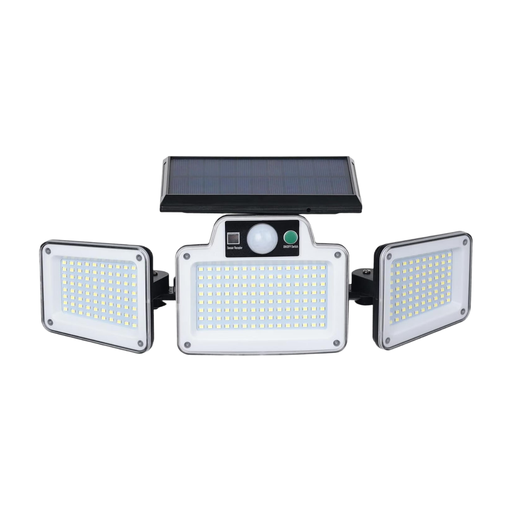
Grifema Solar Security Lights Outdoor Motion Sensor, 3 Adjustable Heads
Why it stands out: The combination of a remote control for convenient mode selection and a long connecting cable (approx. 4.7 metres) between the light and the panel makes this model particularly user-friendly.
Pros:
Best for: Users who value convenience and want to change the light's settings without climbing a ladder. The installation flexibility is another major plus.
Haven't found the perfect model for your specific needs, or are you looking for a different type of solar floodlight? Our range includes other lighting solutions for various requirements and property sizes.
The performance of solar lights can be reduced during the winter months due to shorter days and less intense sunlight. Models with high-efficiency solar panels and large-capacity batteries are better suited for this period. A south-facing orientation for the panel and regular cleaning to remove snow or dirt will help maximise charging performance. However, modern solar-powered LED outdoor lights are designed to remain functional even in less-than-optimal light conditions.
Installation is typically simple, as no connection to the power grid is required. Mount the light and the solar panel to a wall, fence, or post using the included screws. Ensure the panel receives as much direct sunlight as possible. Aim the motion sensor towards the area you want to monitor. Always follow the manufacturer's installation instructions.
The IP (Ingress Protection) rating classifies a housing's degree of protection against the entry of foreign objects (first digit) and water (second digit). IP65 means the light is completely dust-tight (digit 6) and protected against water jets from any direction (digit 5). This is a solid standard for products that are mounted outdoors and exposed to rain and dirt year-round.