
Lieferung heute & morgen

Qualitätsgarantie

Willkommens-Angebote freischalten: KOSTENLOSE Lieferung | Bis zu 80 % RABATT | Kostenlose 30-Tage-JoyPlus-Testphase
App herunterladen
A motion-activated solar light is a practical solution for illuminating driveways, garden paths, or entryways without complex wiring. It enhances security, provides light on demand, and operates completely off-grid. However, the market is flooded with products whose performance claims often don't hold up in practice. Many buyers are quickly disappointed when the light fails during a harsh winter or its brightness is insufficient.
This guide will help you navigate the common pitfalls. We focus on the technical features that are crucial for reliable performance, enabling you to make an informed decision.
Before we dive into the important specifications, you should be aware of three widespread problems that often lead to a bad purchase:
To find a durable and functional outdoor solar light, you should carefully examine three technical parameters. These are the primary determinants of the product's performance and reliability.
The brightness of a light is measured in lumens. This unit is the most reliable indicator of actual light output.
The IP rating indicates how well a housing is protected against the ingress of foreign objects and water. For year-round outdoor use, a high protection rating is essential.
The combination of the battery and solar panel is the heart of any solar light.
Based on the criteria mentioned, we have identified several products suitable for specific user profiles.
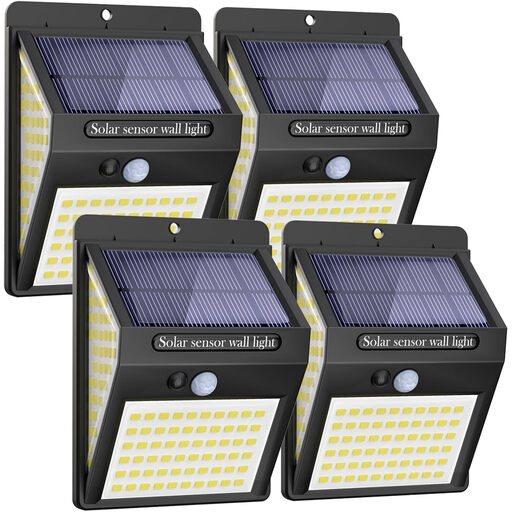
Why this product is a good fit: Ideal for users who want to equip multiple areas like a garden shed, bin storage area, and basement stairs with motion sensors at a low cost. The 4-pack offers a cost-effective all-in-one solution.
With an IP65 rating, this model is explicitly protected against water jets, making it suitable for unsheltered outdoor use and increasing its lifespan compared to IP44 models.
Three adjustable modes, including a pure security mode (light only on motion) and a dusk-to-dawn mode, allow for flexible customisation to suit the specific location.
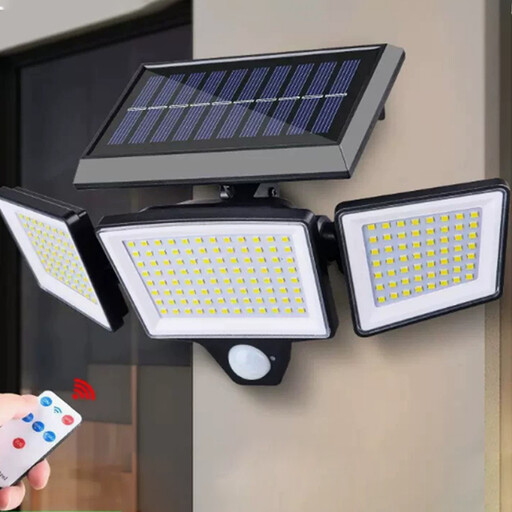
Why this product is a good fit: Perfect for anyone needing maximum brightness to illuminate large areas like driveways, yards, or dark corners of the garden. The high light output serves as an effective deterrent.
This model avoids the trap of insufficient brightness with a clear specification of 3000 lumens. This ensures the light is not merely decorative but functions as a fully-fledged solar floodlight with a motion sensor.
Three adjustable light heads allow for flexible light direction and wide 270° coverage. The 1800 mAh battery is appropriately sized for a light in this performance class.
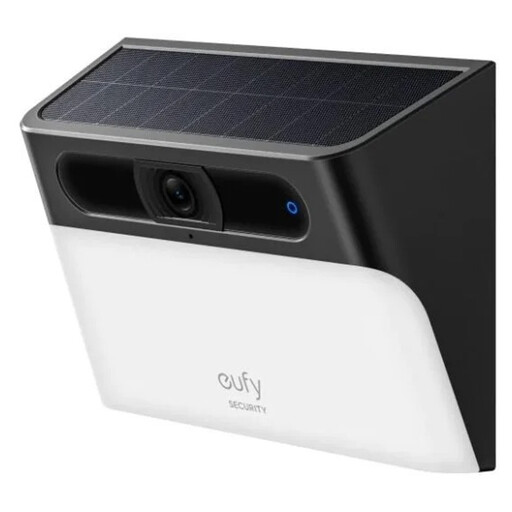
Why this product is a good fit: For users who want more than just a light. This device combines an outdoor LED solar light with a security camera that is controlled via an app and sends notifications.
This product offers clear added value beyond simple illumination. The integrated AI person detection distinguishes between people and other movements, which reduces false alarms—a common annoyance with basic motion sensors.
The combination of a light and camera in a single solar-powered device saves you from installing two separate systems. Recordings are stored locally, so there are no monthly cloud fees.
Yes, but their performance is limited. On short, cloudy days, the batteries do not fully charge. Therefore, it is crucial to choose a model with an efficient (preferably monocrystalline) solar panel and a sufficiently large battery capacity. Lights with a motion-sensor-only mode (instead of continuous light) are significantly more reliable in winter, as they only consume energy when needed.
The ideal location is an unshaded, south-facing position to capture maximum sunlight throughout the day. For the motion sensor to function correctly, the light should be mounted at a height of about 2 to 3 meters (6.5 to 10 feet). Avoid aiming it directly at busy streets or sidewalks to prevent constant activation.
The lifespan depends on the quality of the components. The LEDs themselves have a very long life (often over 15,000 hours). The limiting factor is usually the battery. In high-quality models, the lithium-ion battery can last for several years before its capacity noticeably degrades. A robust, weatherproof housing (e.g., IP65) is also crucial for a long service life.