
Lieferung heute & morgen

Qualitätsgarantie

Willkommens-Angebote freischalten: KOSTENLOSE Lieferung | Bis zu 80 % RABATT | Kostenlose 30-Tage-JoyPlus-Testphase
App herunterladen
A motion sensor can switch on lights automatically, monitor rooms or trigger smart-home routines. The options range from a classic 230 V PIR motion sensor to a connected sensor using Matter, Thread, Zigbee or mmWave radar. But with so much choice, it’s easy to buy the wrong one.
Three common pitfalls are worth looking out for:
PIR sensors detect changes in infrared radiation caused by moving people. They’re often suitable for hallways, stairwells, garages or lighting control. However, detection may stop if there’s no movement for an extended period.
A presence sensor with mmWave radar works differently. According to the product specifications, it can detect even slight movements and distinguish between movement and continued presence. This can be useful in a home office, living room or bathroom if you don’t want the lights to depend solely on you moving around.
Check the following:
A Matter motion sensor can work with several smart-home platforms. However, a Matter-over-Thread device needs a compatible border router, such as a suitable hub or compatible smart-home device. Thread is the wireless network; Matter defines device communication and platform integration.
A Zigbee presence sensor normally needs a Zigbee hub. According to the product description, the Aqara Presence Sensor FP1E requires an Aqara Zigbee 3.0 hub. This enables integration with platforms such as Apple Home, Alexa, Google Home, SmartThings, Home Assistant or Homey. Before buying, check that your existing hub is explicitly supported.
Battery-powered sensors can be positioned flexibly on a wall, ceiling or piece of furniture. Key considerations include the battery type, expected battery life and how easy it will be to replace the batteries later.
A wired 230 V PIR motion sensor connects directly to the electrical installation. This is suitable for permanent lighting control, but you’ll need to follow local electrical regulations. Switch off the power supply before working on the wiring. For a fixed installation, use a suitably qualified professional.
Material and IP rating also matter outdoors. IP44 means protection against solid objects larger than 1 mm and splashing water. Unprotected installation locations may require a higher level of protection.
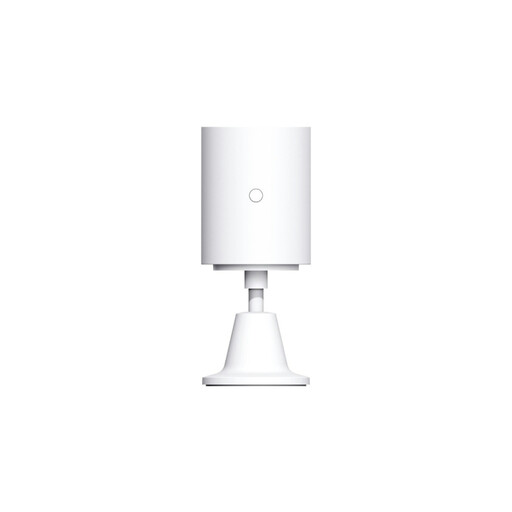
Why it suits this profile: This battery-powered Aqara motion sensor can be placed indoors without fixed wiring. It’s a good option if you already use Apple Home, Google Home or a Matter system.
Matter over Thread is clearly specified. However, setup requires a compatible border router or an Aqara M3 Hub.
170° detection angle, range of up to 7 m, built-in light sensor and two CR2450 batteries with a stated battery life of up to two years.
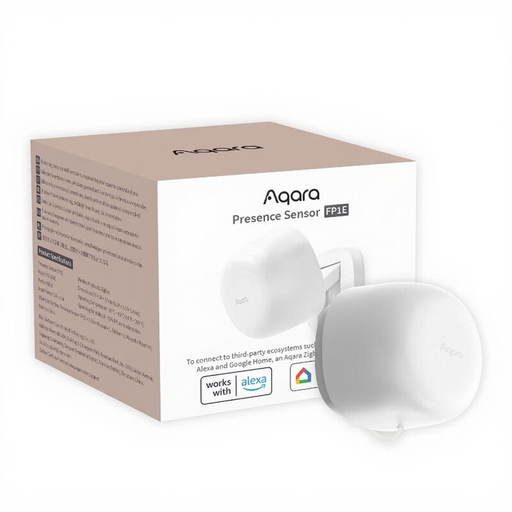
Why it suits this profile: The Aqara Presence Sensor FP1E is designed for households that want to detect presence even when there’s little movement, and include it in more complex automations.
Its mmWave technology is clearly distinct from that of a traditional PIR sensor. It requires an Aqara Zigbee 3.0 hub and a 5V/1A power adapter, so make sure to factor in both before buying.
120° field of view, detection range of up to 6 m and stated room coverage of up to 35 m². Magnetic and self-adhesive mounts are included.
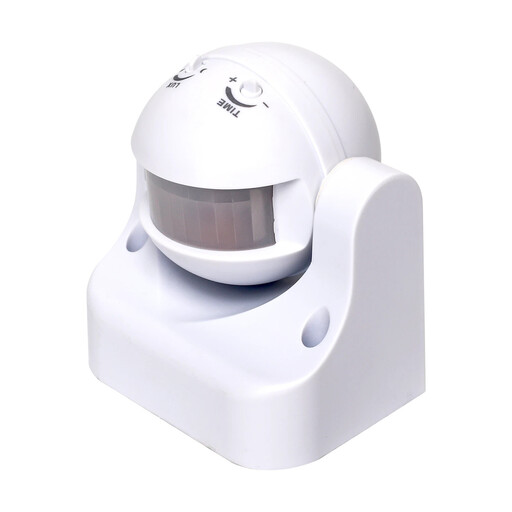
Why it suits this profile: This traditional motion sensor is suitable for directly controlling connected lights indoors and in covered outdoor areas such as car ports.
The 200–240 V~ power supply and IP44 rating are clearly specified. However, IP44 doesn’t protect against prolonged exposure to rain or direct water jets.
180° detection angle, wall mounting, ABS housing and compatibility with standard 200–240 V~ electrical systems.
Positioning makes a big difference to performance. Don’t install a sensor directly next to radiators, air vents or windows that get strong sunlight. For an indoor motion sensor, aim the detection area at doors, hallways or living spaces—not at a curtain that’s constantly moving.
For smart-home models, we recommend following these steps:
The Aqara Motion Sensor P2 takes two CR2450 batteries. It can be placed on a surface or mounted on a wall or ceiling using the adjustable stand. The FP1E, by contrast, needs a 5 V/1 A power supply and a separately available Aqara Zigbee 3.0 hub.
A PIR motion sensor responds to movement and is often suitable for timed lighting. According to the stated product specifications, an mmWave presence sensor can also detect slight movements and continued presence. This distinction matters for activities where you’re sitting still.
Not necessarily. A Matter-over-Thread model needs a compatible Thread border router. Which devices are suitable depends on the model and platform you use. Before buying, check that Apple Home, Google Home, Alexa or Home Assistant meets the requirements of the specific device.
For battery-powered devices, the main ongoing cost is replacement batteries. Battery life depends on usage, wireless connection and settings. A wired sensor doesn’t need batteries, but may involve higher installation costs. For outdoor models, make sure the installation location and IP rating are suitable for the surroundings.
We’ve put together a complete, regularly updated list of products that fully meet these strict selection criteria and the safety regulations in force across the EU.