
Lieferung heute & morgen

Qualitätsgarantie

Willkommens-Angebote freischalten: KOSTENLOSE Lieferung | Bis zu 80 % RABATT | Kostenlose 30-Tage-JoyPlus-Testphase
App herunterladen
By the Joybuy Product Recommendation Officer, July 28, 2026
Fumbling in the dark is a daily routine: whether in the wardrobe in the morning, a kitchen drawer at night, or a deep pantry cabinet. A motion-activated cabinet light promises a simple solution. However, the market is flooded with products whose real-world performance is often questionable until after you've bought them. Before you make a decision, it's helpful to know the most common weaknesses that can quickly turn a practical idea into a daily annoyance.
Many products look identical at first glance but differ in crucial details that determine their longevity and usefulness. Pay attention to these three points to avoid an ill-considered purchase:
To avoid these problems, you should check three core technical parameters. These will give you an objective basis for your decision, far beyond marketing promises.
A battery's capacity is measured in milliampere-hours (mAh). A higher value generally means a longer runtime between charges.
Also, look for a standardized charging port like USB-C, which allows for flexible charging via power banks, laptops, or existing power adapters.
Most models use a Passive Infrared sensor (PIR sensor). This reacts to changes in heat caused by movement. Key metrics include:
A good wardrobe light with a sensor combines these features for seamless operation.
Installing a wireless cabinet light should be straightforward. The most common methods are adhesive strips and magnets.
Here are some models that are well-suited for different needs and locations based on their technical specifications.

Why It's a Good Fit: Ideal for users looking for a cost-effective solution for multiple smaller areas like drawers, shoe racks, or medicine cabinets. The 2-pack offers excellent value right out of the box.
With an 800mAh battery capacity per light, it provides a solid foundation for occasional use, avoiding the trap of extremely short-lived batteries. The PIR sensor specification (3-5 meters) is clearly defined.
Three adjustable color temperatures (cool, neutral, and warm white) allow you to customize the lighting mood to suit the specific location.
Why It's a Good Fit: Suitable for users who need continuous illumination for longer areas, such as under kitchen cabinets or inside a wide wardrobe.
The 1100mAh battery capacity directly addresses the weakness of short runtimes. The 30cm length and 41 LEDs ensure more even light distribution and prevent dark spots.
The higher number of LEDs (41) provides brighter and broader illumination compared to shorter models, which is beneficial for workspaces.
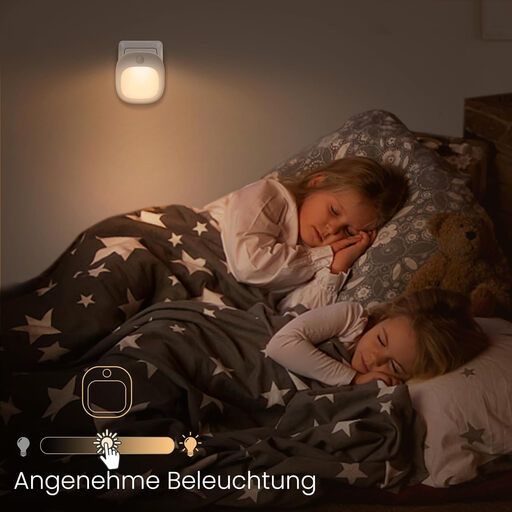
Why It's a Good Fit: This compact light isn't just for cabinets. Its dimming function and always-on mode also make it suitable as a night light in hallways, children's rooms, or bathrooms.
It bypasses the unreliable sensor trap by offering an alternative always-on mode. The 5-level dimming function also gives the user full control over the brightness.
The combination of a motion sensor, always-on mode, dimmability, and three color temperatures in one compact device offers high versatility.
While a battery-powered under-cabinet LED light primarily solves practical problems, you might also be looking for lighting to create a specific atmosphere. For that, colored LED lamps offer a wide range of possibilities for interior design.
We have compiled a complete, up-to-date list of products that fully meet these strict selection criteria and safety regulations.
1. How long does the battery of a rechargeable cabinet light last on average? The runtime heavily depends on the battery capacity (mAh) and frequency of use. With average use (approx. 5–10 activations per day), a model with 800–1100 mAh can last for several weeks to months. In always-on mode, the runtime is reduced to just a few hours.
2. Can I securely install a no-drill LED strip? Yes, if the installation is done correctly. Thoroughly clean the surface of dust and grease. For models with a magnetic strip, it's best to let the adhesive on the mount cure for 24 hours before attaching the light. For rough surfaces, additional mounting methods may be necessary.
3. Does the color temperature affect its use in a wardrobe? Yes. Neutral white light (approx. 4000–5000 Kelvin) renders colors most accurately, which is helpful when choosing clothes. Cool white (over 6000 Kelvin) appears very bright and crisp, while warm white (under 3300 Kelvin) creates a cozier atmosphere but can slightly alter color perception.