
Lieferung heute & morgen

Qualitätsgarantie

Willkommens-Angebote freischalten: KOSTENLOSE Lieferung | Bis zu 80 % RABATT | Kostenlose 30-Tage-JoyPlus-Testphase
App herunterladen
A well-placed motion-sensor cabinet light can make a huge difference in your daily routine. Whether in a dark wardrobe, under kitchen cabinets, or as a safety light in the hallway, automatic lighting provides comfort and guidance without needing to flip a switch. However, the market is flooded with products whose real-world performance often fails to live up to their promises. Before you make a decision, it's crucial to understand the common weaknesses that can quickly turn a convenient helper into a daily frustration.
This guide highlights the three most common product flaws and explains which technical features you should look for to find a reliable and long-lasting solution.
Many products entice buyers with attractive prices but often have critical design flaws that severely limit their usefulness.
To avoid the problems mentioned above, you should check three core technical parameters before buying. These are crucial in determining the product's functionality and longevity.
A high-quality PIR sensor is essential. Look for specific details on the detection range (typically 3–5 metres) and the detection angle (120 degrees is ideal). An integrated dusk-to-dawn sensor is a key efficiency feature, as it ensures the LED strip with motion sensor only activates in the dark. Some models also allow you to set the light duration after the last detected movement (e.g., 15, 30, or 60 seconds).
The power source is critical for a wireless wardrobe light. The most common and practical solution is an integrated, USB-rechargeable battery.
The quality of the light affects both functionality and atmosphere.
Based on the criteria above, we have identified some products that are well-suited for specific user profiles and requirements.
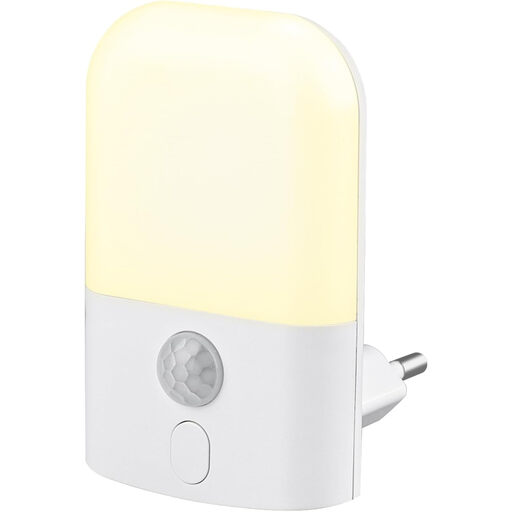
Why This Fits Their Persona: Ideal for users looking for a simple, maintenance-free solution for hallways, stairs, or the bathroom. As a plug-in light, it completely eliminates the need for charging, making it a highly reliable option.
Completely bypasses the short-lived battery problem by running directly from a wall socket. The combined motion and dusk-to-dawn sensor with clear specs (3 m, 120°) prevents unnecessary activations.
No battery management required; 5-step dimming to adjust brightness; very low power consumption of 0.5 W.

Why This Fits Their Persona: Perfect for users who want to equip multiple areas like wardrobes, kitchens, and pantries. The set offers great value for money and the flexibility to adjust the lighting mood depending on the location.
Addresses the battery issue with a solid 800 mAh capacity and USB charging. The clear sensor specifications (3-5 m range) and simple adhesive mounting provide a reliable, drill-free installation.
Three adjustable colour temperatures (Warm, Neutral, and Cool White); practical 2-pack for versatile use; ultra-thin design (10 mm).
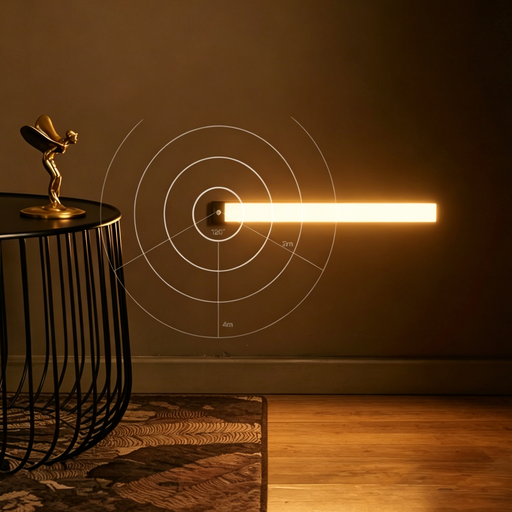
Why This Fits Their Persona: Suitable for users who value design, material quality, and reliable brand performance. The 40 cm length is ideal for wider cabinets or as an elegant under-cabinet light in modern kitchens.
Yeelight is an established brand in the lighting sector, which points to more reliable sensor technology and more efficient battery management. The high-quality construction minimises the risk of mounting issues.
Very slim and elegant design; reliable performance from a well-known brand; good illumination for larger areas thanks to its 40 cm length.
We have compiled a complete, up-to-date list of products that fully meet these strict selection criteria and all relevant safety standards.
1. How long does the battery last on a motion-sensor cabinet light? The runtime heavily depends on the battery capacity (mAh) and frequency of use. A battery with 800–1500 mAh can last for several weeks to months with an average of 5–10 activations per day. Models with efficient sensors that only trigger in the dark and have a short light duration are significantly more economical.
2. Is the adhesive mount really permanent, even in a kitchen? The durability depends on the quality of the adhesive strip and the condition of the surface. For optimal adhesion, the surface must be clean, dry, smooth, and free of grease. In kitchens with steam and temperature fluctuations, magnetic mounts are often the better choice. This involves sticking a metal plate to the surface, to which the light attaches magnetically. This also makes it easier to remove the light for charging.
3. Can I cut a motion-sensor LED strip to size myself? Generally, no. Unlike simple LED light strips, these products are integrated units where the sensor, battery, and light source are all calibrated to work together. Cutting the strip would damage the internal circuitry and render the product useless. It is advisable to choose a model in the correct length from the start (e.g., 20 cm, 30 cm, 40 cm, or 60 cm).