
Lieferung heute & morgen

Qualitätsgarantie

Willkommens-Angebote freischalten: KOSTENLOSE Lieferung | Bis zu 80 % RABATT | Kostenlose 30-Tage-JoyPlus-Testphase
App herunterladen
A motion sensor light promises comfort, security, and energy efficiency. It illuminates your path when you need it and deters unwanted guests. However, the market is flooded with models whose real-world performance often falls short of their advertising claims. Many buyers quickly find that the sensor is unreliable, the light can't withstand the weather, or the constant battery changes become a chore.
As your Joybuy Product Recommendation Officer, I'm here to help you navigate these pitfalls. Instead of relying on marketing buzzwords, we'll focus on the technical specifications that determine a successful purchase. This guide will show you the three most common flaws to be aware of and which core parameters truly matter.
To avoid a bad purchase, don't be dazzled by high lumen counts or a modern design. The following three technical parameters are crucial for longevity and functionality.
The IP (Ingress Protection) rating indicates how well an electrical device is protected against the intrusion of foreign objects (first digit) and water (second digit). For outdoor use, the following values are relevant:
The choice of power source determines the flexibility and maintenance requirements of your light.
The PIR (Passive Infrared) sensor is the most common technology. It reacts to moving heat sources. Pay attention to two values:
Based on these objective criteria, we have identified several products that represent a well-thought-out solution for specific requirement profiles.
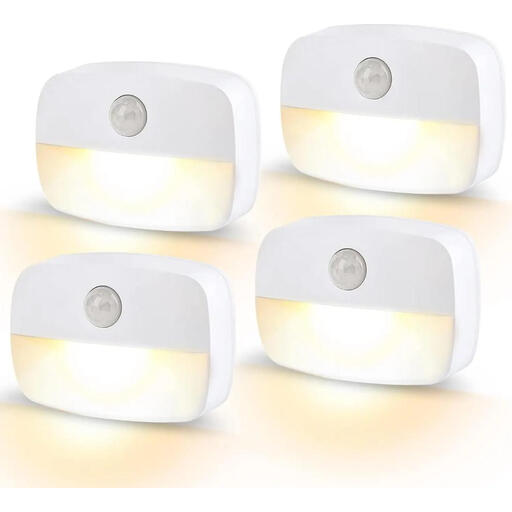
Why This Fits Their Persona: Ideal for renters and homeowners who want to illuminate dark corners like hallways, staircases, or closets without drilling or wiring. The 4-pack offers a cost-effective solution for multiple areas at once.
Solves the mismatched power source problem: Operating on standard AAA batteries is perfect for low-traffic indoor areas where solar is impractical and a rechargeable battery would be overkill.
Tool-free installation with included adhesive tape; warm white light (3200K–2800K) for a pleasant atmosphere.
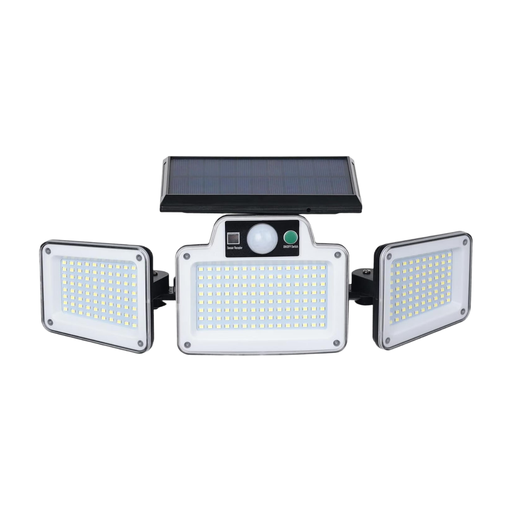
Why This Fits Their Persona: Designed for securing driveways, gardens, and garages. The three adjustable heads allow for wide and targeted illumination, while solar power ensures self-sufficiency and low running costs.
Addresses the flaw of inadequate weather resistance with its IP65 rating. This makes the light completely protected against dust and water jets, suitable for use in unprotected outdoor areas.
Three adjustable lighting modes via remote control; separate solar panel with a long cable for optimal sun exposure.
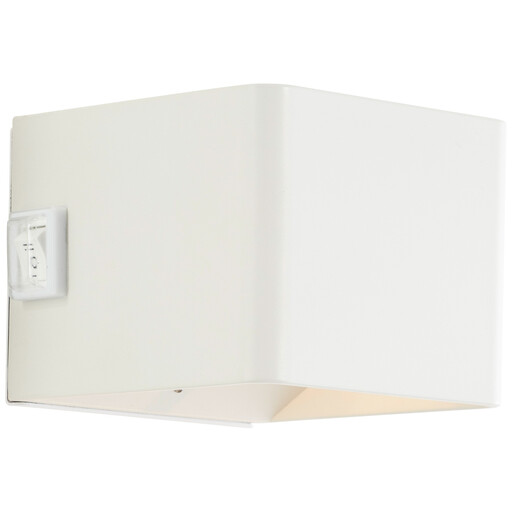
Why This Fits Their Persona: Perfect for anyone needing a flexible light source for various purposes—be it on the patio, in the tool shed, while camping, or as a temporary light in the basement. Mobility is the key feature here.
Bypasses the problem of rigid installation. Thanks to its integrated rechargeable battery and magnetic mount, the light can be placed exactly where it's needed, without relying on a fixed power source or mounting.
Rechargeable via USB; IP44 rating for protected outdoor use; magnetic attachment for metallic surfaces.
We have compiled a complete, up-to-date list of products that fully meet these strict selection criteria and safety regulations.
For optimal performance, the solar panel should be mounted in a location that receives several hours of direct sunlight daily, ideally facing south. The light itself can be placed in a shadier area, as long as the connecting cable is long enough. Ensure that no trees, overhangs, or other obstacles cast a shadow on the panel.
The runtime heavily depends on the frequency of use and the selected mode. For a motion sensor night light used indoors, batteries can last for several months. For a rechargeable motion sensor light outdoors, the runtime per charge depends on the number of activations per night. Manufacturer specifications like "up to 28 hours total runtime" (as with the VARTA Motion Sensor Light) refer to the cumulative illumination time. With solar lights, the battery is sized to last the entire night on a full charge.
Some models offer this function. Look for terms like "continuous on mode," "dim mode," or various adjustable modes in the product description. Solar security lights, in particular, often have an option where the light stays on at a dimmed brightness all night and switches to 100% upon detecting motion. Note that continuous operation significantly increases energy consumption.