
Lieferung heute & morgen

Qualitätsgarantie

Willkommens-Angebote freischalten: KOSTENLOSE Lieferung | Bis zu 80 % RABATT | Kostenlose 30-Tage-JoyPlus-Testphase
App herunterladen
A motion sensor light offers comfort, security, and helps lower energy costs. It turns on exactly when it's needed—whether in a dark hallway, on the basement stairs, or at the front door. But the market is crowded, and not every model lives up to its promises. Before you make a decision, it's crucial to understand the common flaws that often only surface after you buy.
As your Joybuy Product Recommendation Officer, I'm here to help you cut through the noise. In this guide, we'll focus on the critical technical features and how to avoid common purchasing pitfalls.
Many products advertise impressive features, but in practice, they often have shortcomings. Pay close attention to these three points to avoid a poor investment:
battery-powered light seems convenient at first, but with low-quality models, the batteries need to be changed constantly. Hardwired models are reliable but require a complex installation. Choosing the right power source is crucial for long-term satisfaction.outdoor motion sensor light must withstand rain, snow, and temperature fluctuations. Many budget models are advertised as "weatherproof" but have an insufficient IP rating. Corrosion on the contacts or water ingress often leads to complete failure after just one winter.To find the right LED light with sensor, don't be swayed by marketing promises. Instead, focus on verifiable technical specifications.
Most motion detectors use a PIR sensor (Passive Infrared), which reacts to the heat radiation from people and animals. Three values are critical here:
The choice of power source depends directly on the installation location and your needs.
plug-in night light with motion sensor is the simplest solution for hallways, children's rooms, or kitchens. It is ready to use immediately and requires no installation.wireless light offers maximum flexibility. It's perfect for places without a power outlet, like a rechargeable closet light or a basement light with sensor. Look for models with a rechargeable battery (USB-C is a modern standard) and long battery life.solar outdoor light is an eco-friendly and cost-saving option for gardens, paths, or garage walls. Its performance depends on sun exposure, so placement is critical.The IP (Ingress Protection) rating indicates how well an electrical device is protected against the ingress of foreign objects (first digit) and water (second digit).
outdoor motion sensor light in covered locations like a porch or balcony.Here are some product recommendations tailored to specific user profiles that avoid the pitfalls mentioned.
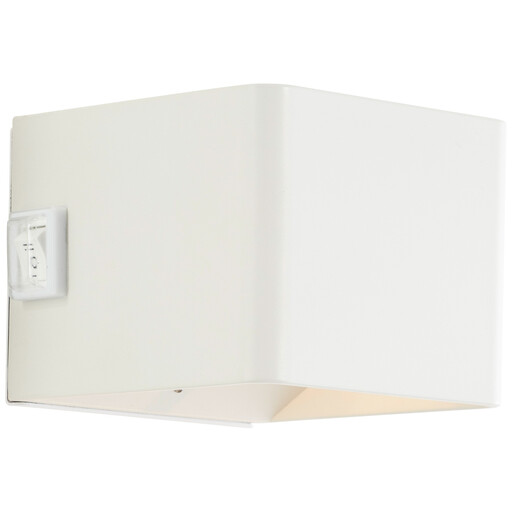
Why This Fits Their Persona: Ideal for anyone who doesn't want to drill into walls or run cables. Thanks to its rechargeable battery and magnetic mount, this light can be used flexibly in a closet, basement, on a balcony, or as a temporary security light on a garden gate. The USB port makes recharging straightforward.
It avoids the impractical power source trap. As a wireless, rechargeable light, it eliminates any installation effort and doesn't depend on a power outlet.
Maximum flexibility thanks to its rechargeable battery and magnetic mounting. The IP44 rating also allows for use in sheltered outdoor areas.
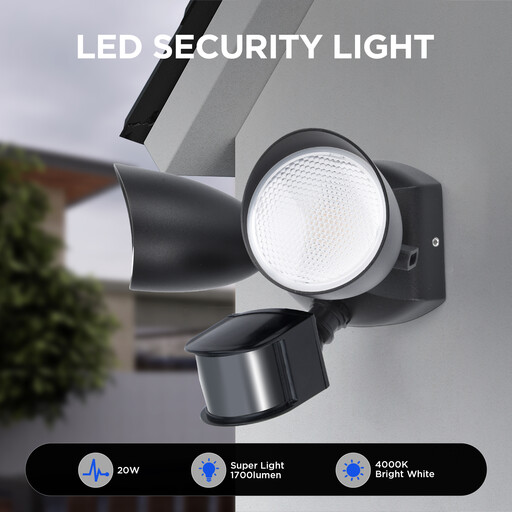
Why This Fits Their Persona: For homeowners who value reliable and bright illumination for driveways, gardens, or entryways. With 1700 lumens and two pivoting heads, this security light provides wide-area coverage. Mains power ensures constant, maintenance-free performance.
It sidesteps the trap of poor weather resistance. As a dedicated outdoor light, it is designed for permanent outdoor use and features a robust construction that withstands the elements.
High light output (1700 lm) for effective deterrence and security. The two integrated, adjustable floodlight heads allow for targeted illumination.
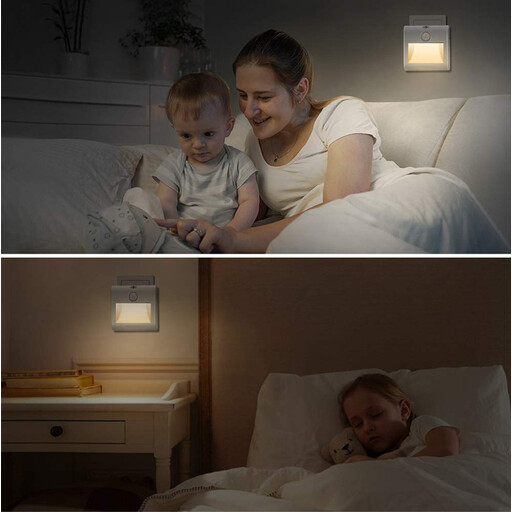
Why This Fits Their Persona: Perfect for anyone who wants to navigate their home safely at night without turning on the bright overhead light. This plug-in set provides a pleasant warm white light whose brightness can be steplessly adjusted via a touch function. Ideal for bedrooms, hallways, or a child's room.
Solves the inaccurate sensor problem with smart modes. The sensor only activates in darkness (≤20 LUX) and also offers a continuous-on mode. The stepless dimming prevents overly harsh light.
Stepless touch dimming with a memory function that recalls the last brightness setting. The practical 2-pack allows you to equip multiple rooms.
We have compiled a complete, up-to-date list of products that fully meet these strict selection criteria and German safety regulations.
1. How long does the battery last in a wireless motion sensor light? Battery life heavily depends on the frequency of use, the set brightness, and the battery capacity (measured in mAh). With average use (approx. 10 activations per day), models with a 500–1000 mAh battery often last for several weeks to months. A rechargeable closet light will typically last longer than a frequently used motion sensor night light in a hallway.
2. Can I adjust the sensor on an outdoor motion sensor light? Yes, this is possible on many models. Typically, there are three adjustment dials: "SENS" (sensor sensitivity), "TIME" (light duration after activation, often from a few seconds to several minutes), and "LUX" (dusk threshold, which determines the ambient light level at which the sensor becomes active). This helps you tailor the function to your specific environment and save energy.
3. What does "warm white" mean for an LED light with a sensor?Warm white describes the colour temperature of the light, measured in Kelvin (K). A warm white hue typically ranges between 2700 K and 3300 K. This light is similar to that of a traditional incandescent bulb and is perceived as cosy and inviting. It is a good choice for living areas, bedrooms, and hallways, as it is easy on the eyes and creates a pleasant atmosphere.