
Lieferung heute & morgen

Qualitätsgarantie

Willkommens-Angebote freischalten: KOSTENLOSE Lieferung | Bis zu 80 % RABATT | Kostenlose 30-Tage-JoyPlus-Testphase
App herunterladen
A light that turns on automatically when you enter a dark room—the promise of comfort and security is alluring. A motion sensor light can eliminate nighttime tripping hazards on the stairs, guide the way to the bathroom, or finally reveal the contents of a cluttered wardrobe. But the market is flooded with products whose real-world performance often falls short of their advertising claims.
As your Joybuy Product Recommendation Officer, I'm here to filter out the noise. In this guide, I'll show you the three most common pitfalls to avoid when shopping and which technical features to look for to find a reliable, long-lasting solution for your home.
Many buyers only realize after installation that their new light causes more frustration than convenience. These problems can be avoided by paying attention to a few key features.
To avoid these pitfalls, focus on three objective criteria. These will determine whether a motion sensor light is right for your specific needs.
The choice of power source depends directly on the location and your desired flexibility.
The quality of the sensor determines the light's functionality.
The right light is easy on the eyes and creates the desired atmosphere.
Based on these objective criteria, we have identified a few models that are particularly well-suited for specific user profiles.
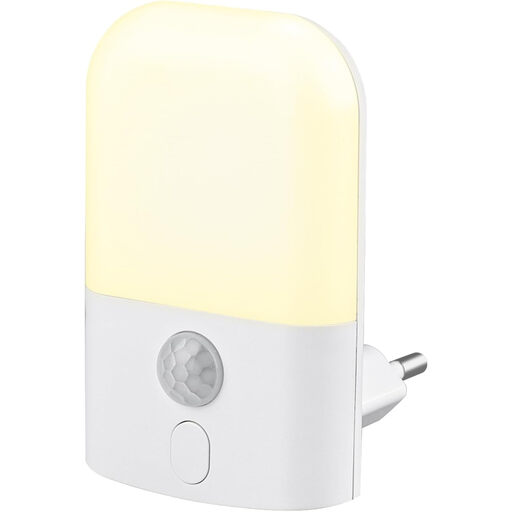
Why This Fits Their Persona: Ideal for households with children or seniors who need reliable and safe night lighting for hallways and kids' rooms to prevent falls.
Avoids the pitfall of poor light quality with 5 dimming levels and a warm white color temperature (2700K). As a plug-in model, it also eliminates the problem of dead batteries.
Combines a motion sensor and a light sensor for fully automatic, energy-efficient operation. The low power consumption of 0.5 W ensures minimal running costs.
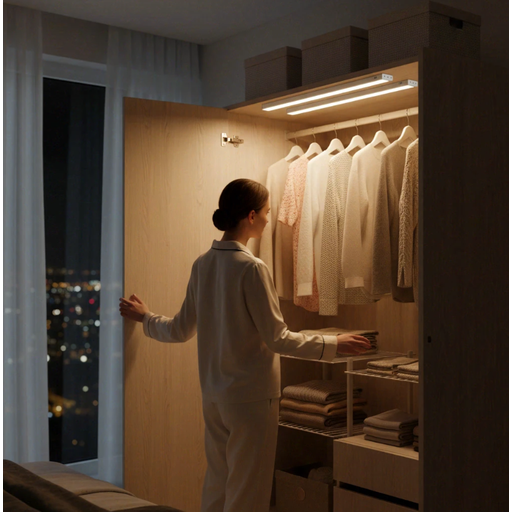
Why This Fits Their Persona: Perfect for anyone wanting to illuminate dark cabinets, drawers, or pantries without complex wiring. The simple installation is ideal for renters and DIY enthusiasts.
Solves the installation problem with an adhesive strip mount that requires no drilling. As a USB rechargeable lamp with an 1100mAh battery, it's more practical than models with disposable batteries.
Offers three adjustable color temperatures (warm, neutral, and cool white) for maximum flexibility. The ultra-slim design (10 mm) fits discreetly into any environment.
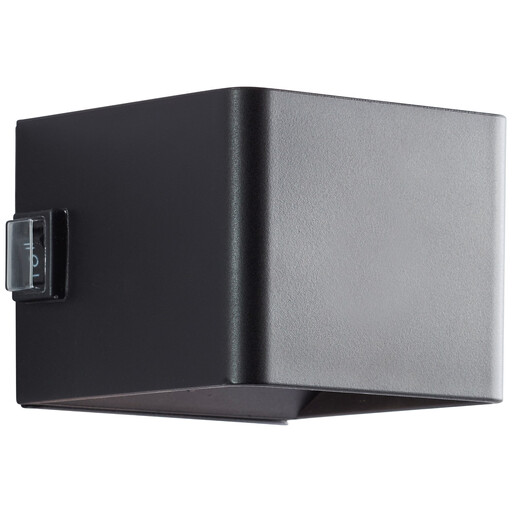
Why This Fits Their Persona: For users who need a robust, portable light source for various locations—from the basement and garage to the patio or a camping trip.
Escapes the indoor-only limitation with an IP44 rating, making it splash-proof and suitable for outdoor use. The integrated rechargeable battery solves the problem of missing outlets.
Extremely versatile thanks to an integrated magnet for attaching to metal surfaces and a USB-rechargeable battery. The 300-lumen brightness provides excellent illumination.
We've compiled a complete, up-to-date list of products that fully meet these strict selection criteria and safety regulations.
The runtime heavily depends on the battery capacity (mAh), frequency of use, and the set brightness level. A USB rechargeable lamp with a capacity of around 800-1100 mAh can last for several weeks to months with average use (5-10 activations per day) before needing a recharge. Models with disposable batteries can last up to a year, depending on the quality of the batteries and the light's efficiency.
For optimal performance, the sensor should have a clear, unobstructed view. Install a stair light in the lower third of the wall to detect movement on the first few steps. In hallways, mounting at knee to hip height is ideal for reliably detecting motion without reacting to pets. Avoid aiming the sensor directly at heat sources like radiators or windows with direct sunlight, as this can cause false triggers.
Yes, many modern models offer these features. A dimmable night light allows you to adjust the brightness across several levels or even continuously. Some lights, especially LED strip lights with motion sensors, also offer a choice between different color temperatures (e.g., warm white, neutral white, cool white), so you can perfectly match the light to the room and its purpose. Check the product description for features like "dimmable" or "adjustable color temperature."