
Lieferung heute & morgen

Qualitätsgarantie

Willkommens-Angebote freischalten: KOSTENLOSE Lieferung | Bis zu 80 % RABATT | Kostenlose 30-Tage-JoyPlus-Testphase
App herunterladen
A motion sensor light is a practical solution for greater convenience, security, and energy efficiency. It switches on automatically when you enter a room or approach your house, and turns off again when no more movement is detected. However, the market is flooded with models whose performance claims often don't hold up in practice. False information about weather resistance or unreliable sensors can quickly lead to a purchase you'll regret.
This guide will help you understand the crucial technical features and avoid common pitfalls, so you can find a lighting solution that will meet your needs for the long term.
Many products lure you in with impressive features that fail in everyday use. Pay special attention to these three points to avoid disappointment:
To make the right decision, you should carefully examine three technical specifications. These are the primary determinants of your light's functionality and longevity.
The IP (Ingress Protection) rating indicates how well an electrical device is protected against the entry of foreign objects (first digit) and water (second digit). For outdoor use, the following classes are relevant:
For indoor use, such as with a night light with a motion sensor, a high IP rating is generally not necessary unless the light is used in a bathroom.
Most motion sensors in lights use Passive Infrared (PIR) technology. These sensors react to the heat radiation from moving bodies. Two values are crucial here:
The choice of power source depends on the installation location and the intended use.
Instead of making a blanket recommendation, we have selected products for specific user profiles and their requirements.
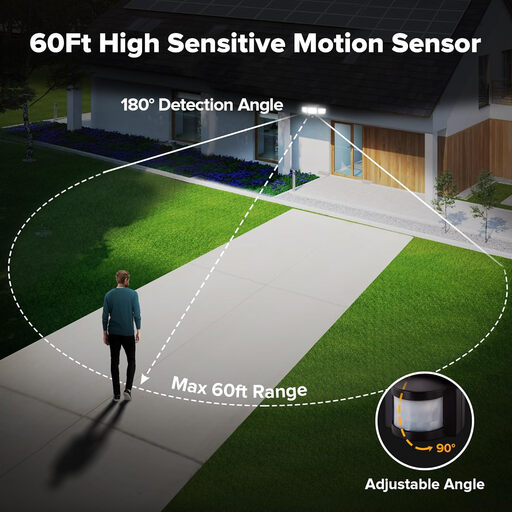
Why it's a good fit: Ideal for securing properties. The high brightness of 3000 lumens acts as a deterrent, while the three adjustable heads allow for wide illumination of up to 270°. The solar power supply eliminates the need for complex wiring.
With its IP65 rating, the light is dust-tight and protected against water jets, which avoids the pitfall of poor weather resistance. The sensor, with a range of up to 18 metres and a 180° detection angle, ensures reliable detection.
The combination of high light output (3000 lm), a wide illumination angle, and self-sufficient solar power provides an effective security solution with no ongoing electricity costs.
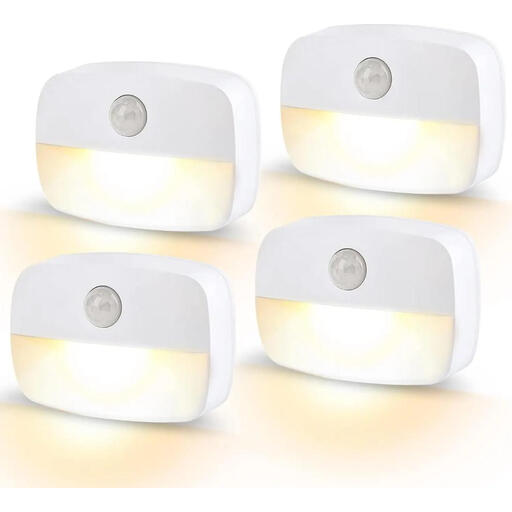
Why it's a good fit: This 4-pack is perfect for renters looking for flexible, non-permanent indoor lighting. Installation is tool-free via adhesive tape, ideal for hallways, stairs, closets, or the bathroom without damaging walls.
As a battery-powered light with a sensor, it bypasses installation hurdles. The low power consumption of 0.5W is designed for its purpose as an orientation light, addressing the pitfall of rapid battery drain in inefficient devices.
The tool-free mounting and convenient 4-pack allow for immediate and cost-effective outfitting of multiple areas in the home with automatic lighting.
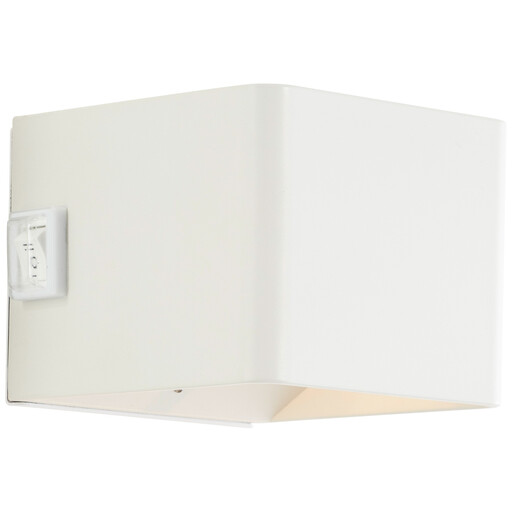
Why it's a good fit: This light is a versatile companion for the home and garden. Thanks to its integrated battery (rechargeable via USB) and magnetic mount, it can be used anywhere – on the patio, in the tool shed, or even as a temporary workshop light.
The clear specification of its IP44 rating defines its use case for the outdoors (splash-proof) and prevents false expectations. The rechargeable battery offers a sustainable alternative to disposable batteries or weather-dependent solar solutions.
The combination of battery operation, magnetic mounting, and an IP44 rating makes this light extremely flexible for temporary lighting tasks indoors and in sheltered outdoor areas.
We've compiled a complete, up-to-date list of products that fully meet these strict selection criteria and German safety regulations.
The optimal mounting height depends on the model and its intended use. For outdoor security lights, a height of 2.5 to 3 metres is often recommended. This provides a wide detection area and makes tampering more difficult. For indoor night lights, mounting near the floor (approx. 30–50 cm high) is sensible to illuminate the path without causing glare. Always check the manufacturer's recommendations for optimal sensor performance.
False triggers in PIR sensors are caused by moving heat sources. Common causes include passing cars, pets, or even branches that are warmed by the sun and move in the wind. Some models offer adjustable sensitivity. Check if the sensor is aimed at a street, a sidewalk, or a heat source like a ventilation outlet, and adjust the alignment if necessary.
Reliability depends heavily on the quality of the solar panel and the battery capacity. High-quality monocrystalline panels can generate energy even on cloudy days, but shorter days and potential snow cover significantly reduce charging performance. For security-critical areas, a mains-powered model may be the better choice in winter. To maximise performance, the solar panel should be south-facing and regularly cleared of snow and dirt.