
Lieferung heute & morgen

Qualitätsgarantie

Willkommens-Angebote freischalten: KOSTENLOSE Lieferung | Bis zu 80 % RABATT | Kostenlose 30-Tage-JoyPlus-Testphase
App herunterladen
A motion sensor light promises comfort, security, and energy efficiency. It switches on exactly when light is needed—whether in a dark hallway, a wardrobe, or at the entrance to your home. But not every model delivers on its promise. Many buyers are frustrated by unreliable sensors, short battery life, or lights that can't withstand the local weather.
As your Joybuy Product Recommendation Officer, I'm here to help you navigate these pitfalls. This guide will show you which technical details truly matter and how to make an informed decision that fits your needs.
Before you make a decision, you should be aware of the three most common problems that occur with low-quality products. Knowing them is the first step toward a satisfying purchase.
battery-powered light that needs new batteries every few weeks, or a rechargeable lamp with a weak battery, quickly becomes a burden rather than a help.outdoor light with motion sensor that isn't adequately protected against moisture and dust can fail after the first heavy rain or winter. Marketing terms like "weatherproof" are often insufficient if an official IP rating is missing.To avoid the problems mentioned above, you should check three core features before buying. These objective criteria will help you correctly assess the performance and longevity of a motion sensor light.
The choice of power source significantly determines the flexibility and maintenance requirements of your light.
night light with motion sensor in hallways, children's rooms, or stairwells where a socket is available.wireless, rechargeable LED strip with sensor is perfect for places without a power outlet, such as inside cabinets, drawers, or under kitchen cupboards. Pay attention to the battery capacity (measured in mAh) to ensure a long runtime. Models with a USB-C port are the modern standard.solar light with motion sensor is the most energy-efficient solution for outdoor areas. It uses daylight to charge and incurs no electricity costs. A high-performance solar panel and sufficient battery capacity to last through several cloudy days are essential.Most sensor lights for home use employ a PIR (Passive Infrared) sensor. This sensor reacts to the heat radiation from bodies. Two specifications are crucial here:
cabinet light with sensor.For any outdoor light with motion sensor, the IP rating is essential. It consists of two digits:
The following classes are relevant for outdoor use:
Here are some product recommendations tailored to specific needs and locations, which take the aforementioned quality criteria into account.

Why This Fits Their Persona: Ideal for illuminating wardrobes, kitchen counters, or drawers without drilling. The wireless installation and slim design allow for discreet placement almost anywhere.
The integrated 1100mAh battery is USB-rechargeable, avoiding the hassle of constant battery replacements. The PIR sensor is optimised for close range and reacts reliably when doors are opened.
Three adjustable colour temperatures (warm white, neutral white, cool white) to create the right atmosphere. Easy installation with adhesive strips.
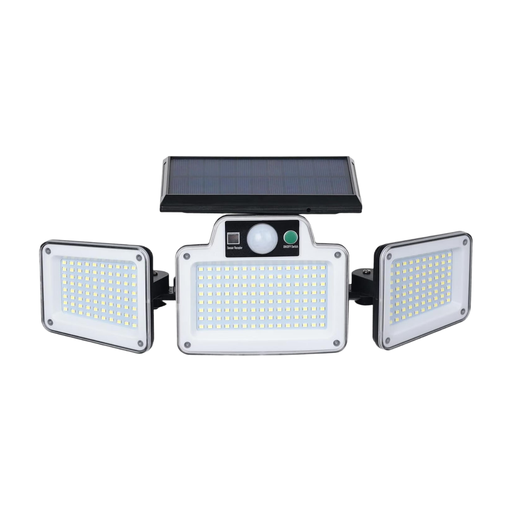
Why This Fits Their Persona: A powerful solution for illuminating driveways, gardens, or garages. Its solar power function makes it independent of the grid and enhances security in remote areas of the property.
With an IP65 rating, this light is dust-tight and protected against water jets, overcoming the pitfall of poor weather resistance. As a solar light, it also eliminates concerns about battery costs.
Three adjustable light heads and 280 LEDs provide wide and bright illumination. Three different operating modes can be set via remote control.

Why This Fits Their Persona: This plug-in night light provides gentle orientation light in children's rooms, hallways, or bathrooms. It increases safety during nighttime trips without disturbing sleep.
As a direct plug-in model, it eliminates any hassle with batteries or recharging. The combined motion and dusk-to-dawn sensor ensures the light only activates in the dark and when movement is detected.
The brightness is dimmable in five levels, allowing the light to be customised. At 0.5 watts, its power consumption is extremely low.
We have compiled a complete, up-to-date list of products that fully meet these strict selection criteria and rigorous safety standards.
1. How long does the battery of a rechargeable sensor light last? The battery life heavily depends on the battery capacity (in mAh) and the frequency of use. Models for cabinets, which light up for short periods only a few times a day, can last for several weeks or even months on a single charge. For lights in high-traffic areas like hallways, a weekly recharge might be necessary. Check the manufacturer's specifications for capacity to get a realistic estimate.
2. What does the IP rating mean for an outdoor motion sensor light? The IP (Ingress Protection) rating indicates how well an electrical device is protected against the ingress of foreign objects (first digit) and water (second digit). For an unprotected exterior wall exposed to rain, at least IP65 is recommended. This means the light is dust-tight and can withstand water jets. A light with an IP44 rating is only protected against splashing water and should be installed in a sheltered location.
3. Can I adjust the light duration after motion is detected? On many models, especially outdoor lights and some night lights, the duration is adjustable. Typical settings range from 15 seconds to several minutes. For simple, compact cabinet lights, the duration is often fixed (e.g., 20–30 seconds after the last detected motion) to conserve battery life. Check the product description for notes like "adjustable duration" or "auto-off delay".