
Lieferung heute & morgen

Qualitätsgarantie

Willkommens-Angebote freischalten: KOSTENLOSE Lieferung | Bis zu 80 % RABATT | Kostenlose 30-Tage-JoyPlus-Testphase
App herunterladen
A light that turns on automatically when you enter a room or approach your home is more than just a convenience. It enhances safety on paths and stairs, deters unwanted guests, and helps save energy. But the market for motion sensor lights is crowded and confusing. Many products promise more than they can deliver, leading to frustration instead of comfort.
As your Joybuy Product Recommendation Officer, I'll help you spot the common pitfalls and make an informed decision. We'll focus on the objective criteria that truly matter, so you can find a solution that works reliably.
Before we look at solutions, let's identify the problems that often lead to a bad buy. Many buyers focus on brightness or design, overlooking crucial technical flaws.
outdoor motion sensor light that starts to rust after the first winter or fails due to moisture ingress is an expensive nuisance. The lack of an appropriate IP rating is the core problem here.battery-powered LED motion sensor light seems convenient, but if the battery dies after just a few days, constant recharging becomes a chore. Cheap models often use low-capacity batteries, severely limiting their usefulness.To avoid these pitfalls, you should focus on three core technical features. These determine whether a motion sensor light is suitable for your specific application.
The type of sensor is fundamental to its function. Most lights use a combination of two technologies:
night light with a dusk-to-dawn sensor thus saves energy during the day.For most applications, a combination of both sensors is ideal. The light only activates when it's dark AND motion is detected.
The choice of power source depends entirely on the installation location.
plug-in night light is a maintenance-free solution for hallways, children's rooms, or stairwells and serves as a reliable guide light.under-cabinet light with sensor or a battery-powered LED motion sensor light can be installed anywhere. Pay attention to the battery capacity (in mAh)—higher values mean longer runtimes. USB-C charging ports are a modern and practical feature.solar light is the top choice for outdoor areas without a power outlet, such as in the garden, on the garage, or by the shed. A high-performance solar panel and a battery with sufficient capacity (e.g., 2400 mAh) are crucial here to store enough energy for the night, even on cloudy days.If you need an outdoor motion sensor light, the IP rating is non-negotiable. This two-digit code indicates how well the housing is protected against foreign objects and water.
Instead of making a one-size-fits-all recommendation, we have selected products that meet specific user profiles and successfully avoid the pitfalls mentioned.
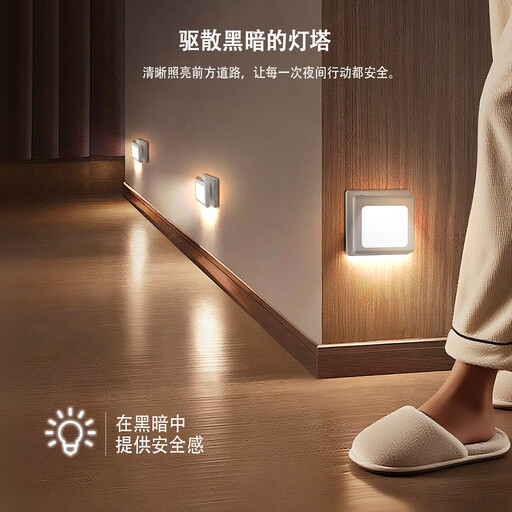
Why this product is a great fit: Ideal for anyone looking for a simple and effective solution for hallways, bedrooms, or children's rooms. Just plug it in, and you're done. It's a pure guide light that works without complex settings.
This model uses only a dusk-to-dawn sensor, which eliminates the complexity and potential for error of a motion sensor. As a purely indoor product, the need for weather resistance is irrelevant.
Stepless dimming allows for customised brightness. Very low energy consumption thanks to LED technology and automatic shut-off in bright conditions.
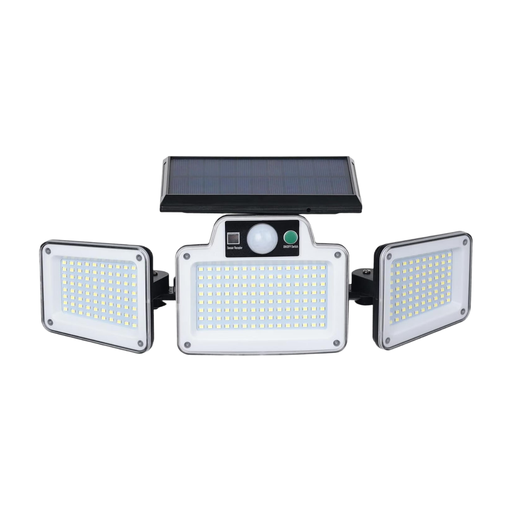
Why this product is a great fit: A robust solar light for homeowners who want to secure driveways, gardens, or garages without complex wiring. The three light heads allow for flexible and wide-area illumination.
With an IP65 rating, this light is explicitly designed for unprotected outdoor use and withstands rain and dust. The solar panel power supply makes it independent of the grid and avoids running costs.
Three adjustable operating modes via remote control and a 2400mAh battery offer high flexibility and reliable illumination throughout the night.

Why this product is a great fit: Perfect for renters and DIYers who need tool-free lighting for cabinets, drawers, or dark corners. Installation is simple using an adhesive strip.
The integrated 800mAh battery provides solid runtime and is USB-rechargeable, avoiding the short battery life trap. The simple adhesive mounting requires no drilling.
Three adjustable colour temperatures (cool white, neutral white, warm white) allow you to adapt the light to any environment and task.
We have compiled a complete, up-to-date list of products that fully meet these strict selection criteria and all relevant safety standards.
1. How long does the battery last in a battery-powered LED motion sensor light? The runtime heavily depends on the battery capacity (measured in milliampere-hours, mAh) and the frequency of use. Models with a capacity of 800 mAh or more can last for several weeks to months with average use (a few activations per day). Look for products with efficient power management and a short illumination time after activation.
2. Where is the best place to install an outdoor motion sensor light? For optimal performance, the light should be installed at a height of about 2 to 3 metres and tilted slightly downwards. This maximises the detection area on the ground and reduces false triggers from movement on the street or at a neighbour's property. Avoid pointing it at heat sources (e.g., ventilation outlets) or highly reflective surfaces.
3. Can I adjust the sensitivity and light duration? Yes, many models, especially those for outdoor use, offer adjustment options. You will typically find small dials labelled "SENS" (sensor sensitivity), "TIME" (illumination duration after activation), and "LUX" (the brightness threshold at which the sensor becomes active). Check the product description for these adjustment features to tailor the light to your needs.