
Lieferung heute & morgen

Qualitätsgarantie

Willkommens-Angebote freischalten: KOSTENLOSE Lieferung | Bis zu 80 % RABATT | Kostenlose 30-Tage-JoyPlus-Testphase
App herunterladen
A light that switches on automatically when you enter a room or approach your house offers both convenience and an extra layer of security. However, the market for motion sensor lights can be overwhelming. Many products overpromise and underdeliver, leading to frustration instead of relief. Before you make a decision, it's crucial to understand the common weaknesses that can quickly turn a supposedly smart solution into a costly mistake.
This guide shows you what really matters when making your choice and how to avoid the three most common pitfalls: unreliable sensors, impractical power sources, and a lack of weather resistance.
Many budget-friendly models have design flaws that severely limit their everyday usefulness. Pay close attention to these three points to avoid a bad investment.
wirelessbattery-powered cabinet light is convenient, but only if the battery doesn't need constant recharging. Models with low battery capacity quickly become a burden. On the other hand, hardwired lights require a complex installation that isn't suitable for every location.outdoor light with motion sensor must be able to withstand the local weather conditions. Products without a sufficient IP rating can fail after the first winter due to moisture ingress.To find the right sensor light, you should check three core technical parameters. These determine whether the product is suitable for your intended use.
Most motion detectors use Passive Infrared (PIR) sensors. These react to the thermal radiation from moving bodies. Two specifications are critical here:
sensor night light in a hallway.Additionally, many lights feature a dusk-to-dawn sensor, which ensures the light only activates in darkness.
The choice of power supply depends on the installation location and the desired flexibility.
solar light for the garden, paths, or garages uses solar energy to charge the integrated battery. Proper alignment of the solar panel towards the sun is important here.The IP (Ingress Protection) rating indicates how well an electrical device is protected against the ingress of foreign objects (first digit) and water (second digit). For outdoor use, the following classes are relevant:
Instead of making a blanket recommendation, we have selected products for specific needs and user profiles.
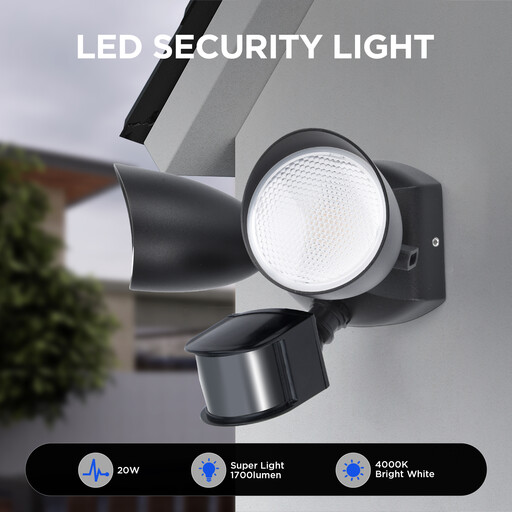
Why This Fits Their Persona: This model is designed for homeowners who value reliable and bright illumination for driveways, gardens, or backyards. It primarily serves for security and deterrence.
The light is designed for mains power, bypassing the problem of dead batteries. As a dedicated security light, it features a precise sensor and a robust construction that minimises false triggers.
High brightness of 1700 lumens and two individually adjustable heads allow for wide and targeted illumination of the desired area.

Why This Fits Their Persona: Ideal for renters or anyone looking for a hassle-free lighting solution for dark corners like wardrobes, kitchen counters, or hallways, without needing to run any wires.
This model tackles the battery trap with a 1100mAh capacity and simple USB charging. The drill-free installation using adhesive strips makes complex mounting unnecessary.
The ability to choose between three colour temperatures (Warm White, Neutral White, Cool White) offers flexibility for different moods and applications. The ultra-slim design is discreet.
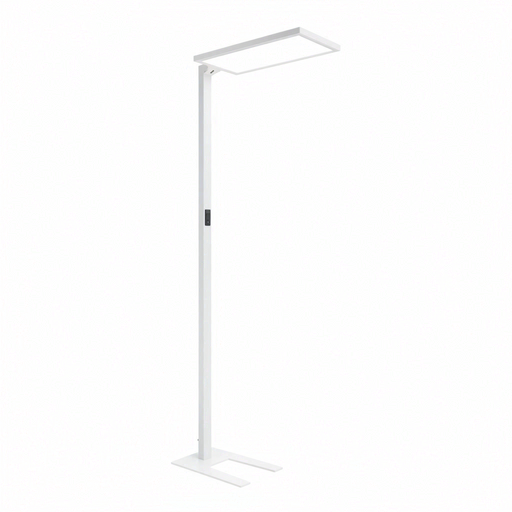
Why This Fits Their Persona: For users in home offices or professional environments who need a professional, energy-efficient, and ergonomic lighting solution that intelligently adapts to its surroundings.
This is more than just a motion detector. The combined daylight and motion sensor provides precise, demand-driven control that goes far beyond the functionality of simple PIR sensors.
The combination of direct and indirect light ensures balanced workspace illumination. The light is an `automatic dimmable light` and offers high visual comfort with UGR < 19, making it suitable for screen-based work.
We've compiled a complete, up-to-date list of products that fully meet these strict selection criteria and relevant safety regulations.
The adjustment options vary by model. Many outdoor lights have small dials, often labelled "TIME", to adjust the duration (e.g., from 10 seconds to 5 minutes). On simpler indoor lights or night lights, the duration is often fixed (e.g., at 20–30 seconds). Higher-end models can be configured via a remote control or an app.
The IP rating indicates how well the light is protected against the ingress of dust and water. IP44 means the light is protected against splashing water from all directions and is suitable for covered outdoor areas. IP65 offers a higher level of protection; the light is dust-tight and protected against water jets (e.g., from a garden hose), which qualifies it for unprotected areas with direct exposure to the elements.
No, modern LEDs with motion sensors are very energy-efficient. Since the light only activates when needed, the total consumption is significantly lower than that of a permanently switched-on light. In standby mode, the sensor consumes only a minimal amount of power. Models with LED technology also have very low power consumption (often under 1 watt for night lights and 10-30 watts for bright outdoor floodlights), which keeps electricity costs down.