
Lieferung heute & morgen

Qualitätsgarantie

Willkommens-Angebote freischalten: KOSTENLOSE Lieferung | Bis zu 80 % RABATT | Kostenlose 30-Tage-JoyPlus-Testphase
App herunterladen
A motion sensor light can automatically illuminate hallways, stairs, cupboards and entrances. However, not every model is right for every location. Buyers often make the wrong choice by focusing only on brightness or a low price. What really matters is the sensor type, power supply, installation method and suitability for dry or damp environments.
A PIR sensor responds to changes in infrared radiation caused by moving people. A dusk sensor, by contrast, measures the ambient light level. A sensor night light may therefore stay on in the dark, while a motion sensor only switches the light on when it detects movement.
For a hallway, a combination of motion detection and a light-level threshold is often useful. A dusk sensor alone may be enough for a child’s bedroom or a socket beside the bed.
Figures such as ‘up to 6 metres’ or ‘360°’ are based on technical conditions. Furniture, doors, walls and the mounting angle can all limit the detection area. A ceiling-mounted sensor works differently from a wall-mounted LED sensor light.
So, check the following:
An indoor motion sensor light is not automatically suitable for a balcony, carport or garden. For covered outdoor areas, check the stated IP rating as a minimum. IP44, for example, protects against splashing water, but is not designed for immersion or powerful water jets.
Fixed 230-volt appliances must be installed and connected in accordance with the applicable electrical regulations. Installation should be carried out by a qualified electrician.
A PIR motion sensor light responds to movement and is suitable for passageways, stairs and entrances. A dusk sensor light switches on according to the ambient light level. Some devices combine both functions and only switch on the light when it is dark and movement is detected.
Check whether the light sensitivity can be adjusted. According to the product information, the Aigostar infrared motion detector with ceiling mount has a range of 10 to 2,000 lux. The delay can be set between 10 seconds and 7 minutes, according to the manufacturer.
Battery-powered or adhesive models are practical for rented homes, as they do not require drilling or a fixed electrical connection. A USB-rechargeable cupboard light, for example, is suitable for kitchen wall units, shelving and wardrobes.
Hard-wired motion sensors, on the other hand, need a suitable connection. Plug-in night lights are easy to use, but their position is limited by the location of the socket. Also check whether the light visibly dims when the battery is running low, and how it is recharged.
A cupboard usually only needs a low to medium light output. An outdoor motion sensor light needs to be considerably brighter, depending on the area to be covered. Warm white light in the range of around 2,800 to 3,200 Kelvin is often used in bedrooms and hallways, while neutral or cool white light may be better suited to work surfaces.
A dimming function is useful if you do not want the light to feel too bright at night. Check the lumen output, wattage and colour temperature together in the product specifications.

Why this product suits this profile: The two-pack is designed for kitchens, cupboards, shelves and hallways and, according to the product information, can be attached with adhesive tape without drilling.
The PIR sensor and stated range of 3 to 5 metres make it easier to understand how the light works than a brightness-only automatic light.
USB charging, an 800-mAh battery, 21 LEDs and three stated colour temperatures, from warm white to cool white.
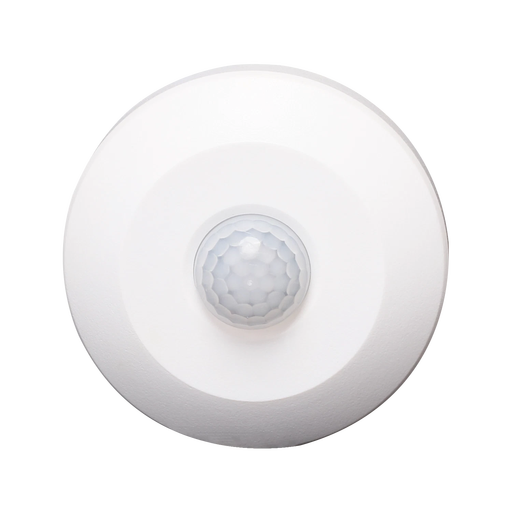
Why this product suits this profile: This ceiling-mounted sensor is designed for hallways, stairs, entrances and other indoor areas where movement may come from several directions.
The specifications include the detection angle, range, lux range and time delay, making it easier to plan your setup without relying on marketing claims alone.
According to the product information, it offers 360° detection, a diameter of up to 6 metres, 10 to 2,000 lux and a delay of 10 seconds to 7 minutes.
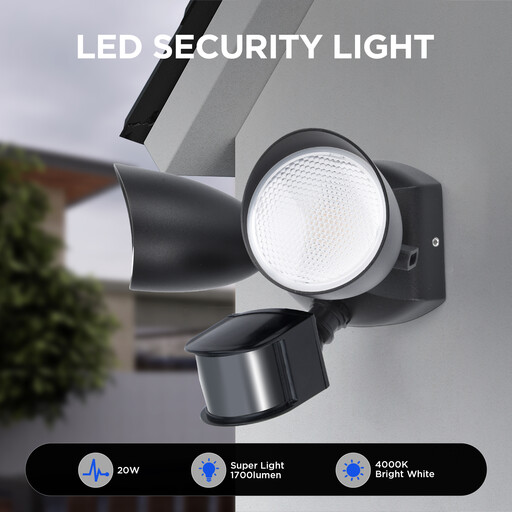
Why this product suits this profile: This outdoor light is designed for courtyards, gardens, patios and entrances where a higher light output is needed.
The stated figures of 20 watts, 1,700 lumens and 4,000 Kelvin make it easier to compare with smaller indoor lights.
Integrated LED, two light heads according to the product name, and a colour temperature of 4,000 Kelvin.
We’ve put together a complete, regularly updated list of products that meet these strict selection criteria and fully comply with the safety regulations in force in the EU.
Position the sensor so it has as clear a view as possible of the passage you want it to monitor. Then check the range, sensitivity and time delay. If it is a hard-wired 230-volt model, it must be installed with the power switched off and in accordance with local regulations.
Its lifespan depends on the LED module, battery, switching cycles and ambient temperature. For battery-powered models, battery capacity is particularly important. If the light becomes noticeably dimmer, recharge the battery and check the light for damage.
Power consumption depends on the wattage and how long the light is on. According to the product information, a 0.3-watt night light or a 0.5-watt plug-in model uses relatively little power. A 20-watt outdoor light uses more, but can be set to operate only for short periods. So, the key factors are the wattage, daily usage time and time delay.