
Lieferung heute & morgen

Qualitätsgarantie

Willkommens-Angebote freischalten: KOSTENLOSE Lieferung | Bis zu 80 % RABATT | Kostenlose 30-Tage-JoyPlus-Testphase
App herunterladen
A motion-sensor light promises both convenience and security: it lights your path for late-night trips to the kitchen, illuminates dark cabinets when opened, or deters unwanted guests in the garden. However, the market is flooded with models whose real-world performance often fails to live up to their promises. Before you make a decision, it's crucial to understand the common pitfalls that lead to frustration and wasted money.
Many buyers report three central problems:
This guide will show you which technical features to look for to find a reliable and long-lasting solution for your needs.
To select the right motion-sensor light, you shouldn't be swayed by marketing buzzwords but rather evaluate three objective criteria.
The choice of power supply determines both flexibility and maintenance effort.
The light's functionality depends heavily on its sensor. Most models use a Passive Infrared (PIR) sensor, which reacts to changes in heat. Pay attention to two key metrics:
An integrated dusk-to-dawn sensor is also important. It ensures the light only turns on in darkness, thereby saving energy.
The lighting effect is determined by brightness and color.
Based on these objective criteria, we have identified several products that are well-suited for specific use cases.
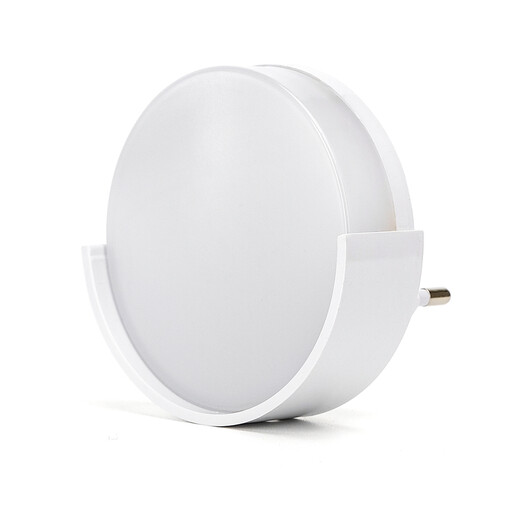
Why This Fits Their Persona: Ideal for users seeking simple, reliable lighting for hallways, stairs, or bedrooms. It plugs directly into an outlet and requires no further maintenance.
This model completely bypasses issues with rechargeable and disposable batteries. The integrated dusk-to-dawn sensor (activates below 20 LUX) prevents unnecessary operation during daylight.
Features an extremely low energy consumption of just 1W. According to the manufacturer, the LEDs are rated for a lifespan of 25,000 hours.

Why This Fits Their Persona: Perfect for illuminating wardrobes, kitchen drawers, or shelves where no power outlet is available. The slim design and wireless function allow for discreet installation.
Adhesive strip mounting eliminates the need for drilling. Thanks to the three selectable color temperatures (cool, natural, and warm white), the light can be adapted to its surroundings and isn't locked into a single color.
USB-rechargeable 800mAh battery. The 2-pack offers excellent value for outfitting multiple areas.
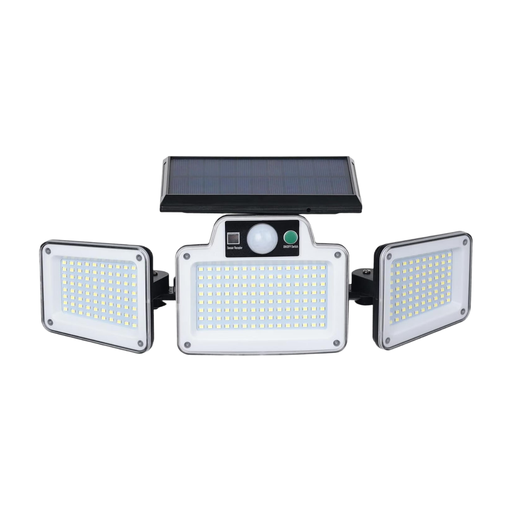
Why This Fits Their Persona: For homeowners who want to equip driveways, gardens, or garages with a bright security light without having to run power cables.
As a solar light, it incurs no electricity costs. The IP65 protection rating ensures the light is weatherproof—a common weak point in cheap outdoor lights.
Three adjustable light heads allow for wide and targeted illumination. The three operating modes can be set via remote control.
We have compiled a complete, up-to-date list of products that fully meet these strict selection criteria and UK safety regulations.
The battery life depends on the battery's capacity (measured in milliampere-hours, mAh) and the frequency of use. Models with a capacity of 800 to 1100 mAh can last for several weeks to months on a single charge with average use (approx. 5–10 activations per day). The sensor mode is significantly more energy-efficient than a continuous-on mode.
For hallways, installation at knee or hip height is recommended to detect movement without the light being constantly triggered by pets. On stairs, the light should be placed at the top or bottom. In cabinets, positioning it near the door opening is ideal. Avoid mounting it opposite heat sources like radiators or windows with direct sunlight, as this can cause false triggers in PIR sensors.
Yes, many modern models, especially a dimmable night light or an LED cabinet light, offer these features. Look for terms like "3 color temperatures" (e.g., 3000K, 4500K, 6500K) or "stepless dimming" in the product description. This allows you to customize the light for any environment—from a soft glow in the bedroom to bright task lighting in the kitchen.