
Lieferung heute & morgen

Qualitätsgarantie

Willkommens-Angebote freischalten: KOSTENLOSE Lieferung | Bis zu 80 % RABATT | Kostenlose 30-Tage-JoyPlus-Testphase
App herunterladen
A motion sensor light only switches on when you need it. That makes it ideal for hallways, stairs, children's rooms, bathrooms, entrances and wardrobes. However, the models available differ significantly in terms of sensor technology, power supply, installation and brightness.
If you only focus on a high LED count or particularly low prices, you risk overlooking important details. Three common buying pitfalls crop up time and again:
With an LED night light with motion sensor, the stated range should match the room. For cupboards and shelves, a few metres is often enough. In a long hallway, a larger detection area can be useful.
Pay attention to three key values:
A motion sensor light with an additional dusk sensor ideally only switches on when ambient light is low. However, check whether the light actually has both sensors or just responds to movement.
Light output is usually given in lumens. A compact orientation light needs less illumination than an under-cabinet light with sensor above a kitchen worktop. One example from the range is an Aigostar light with 18 lumens and 3000 Kelvin, designed for subtle indoor lighting.
With variable colour temperature, some models offer more flexibility:
The term 'bright' alone isn't very meaningful. Where possible, compare lumens, beam angle and installation height.
A magnetic or self-adhesive LED sensor light can be attached to cupboard sides, shelves or walls without drilling. Before fitting, make sure the surface is clean, dry and grease-free. For heavier lights or frequent removal, a magnetic holder can be more practical than adhesive tape.
For damp rooms and outdoor areas, the IP rating is crucial. A model with IP44 is protected against splashing water from any direction, but isn't suitable for immersion or direct high-pressure water jets. An outdoor wall light with motion sensor should also be installed according to the fitting instructions and local electrical regulations.
230-volt products such as a hardwired PIR sensor light must only be installed with the power supply switched off. For permanent installations, we recommend a qualified electrician. With battery-powered smart home sensors, you need to check compatible battery types and the specifications for indoor or outdoor use.
The following models are matched to various everyday situations. The deciding factors are the product data provided, not generic marketing claims.

Why this product fits the profile: This plug-in night light doesn't need batteries and offers five brightness levels. It's suitable for indoor areas such as hallways, stairs, children's rooms or bedrooms.
The five adjustable levels prevent a fixed light intensity that can't be changed. A dusk sensor is listed alongside the motion sensor.
0.5 watt power consumption, 120-degree detection angle and up to 3 metres range according to product specifications.
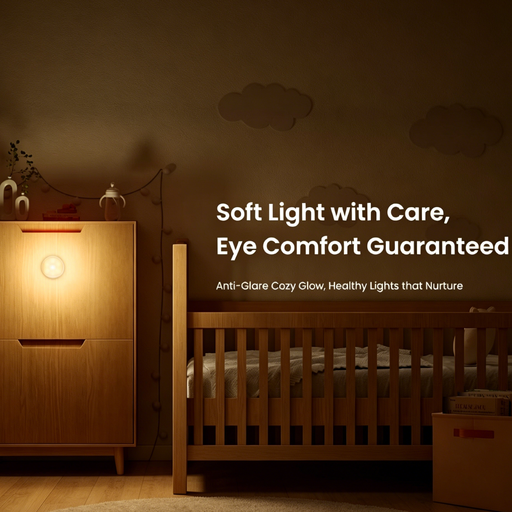
Why this product fits the profile: The compact format is designed for nighttime routes and small indoor areas where automatic lighting without a switch is desired.
It's positioned as a targeted night light rather than an oversized room light. This makes it easy to define exactly where it should be used.
Motion-activated design and space-saving form factor for typical indoor applications.

Why this product fits the profile: Two 30-centimetre lights are ideal for kitchen runs, wardrobes and shelves when you need to equip several areas.
The stated technical specifications include PIR range, battery capacity and colour temperatures. This allows buyers to plan their use more precisely.
41 LEDs, three colour temperature ranges, 1100 mAh battery and USB charging according to the product description.
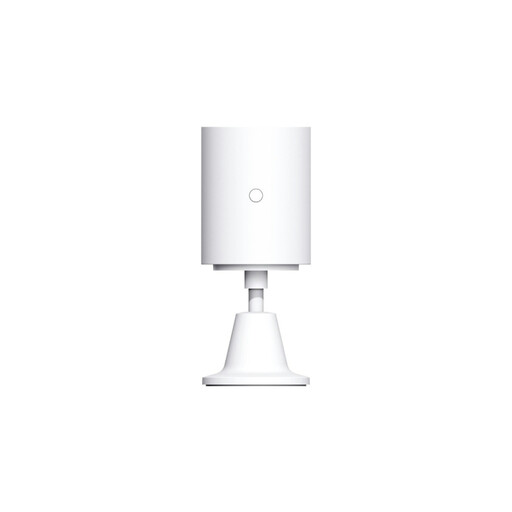
Why this product fits the profile: The sensor is designed for automations with compatible Matter-over-Thread systems and can provide both motion and brightness information.
The required Matter-over-Thread hub or compatible border router is explicitly stated. This reduces the risk of buying the wrong product due to system incompatibility.
170-degree detection angle, up to 7 metres range and two CR2450 batteries according to product specifications.
We've put together a complete, regularly updated list of products that fully meet these strict selection criteria and the safety regulations in force across the EU.
Mount the sensor so that the most common direction of movement passes through its detection area. Radiators, direct sunlight, fans and moving curtains can cause false triggers. With adhesive lights, clean the surface before fitting.
The lifespan depends on the LED components, battery, switching cycles and environment. With rechargeable lights, battery capacity is an important comparison value. If the operating time drops significantly, the battery may be the limiting factor. Hardwired models don't need regular battery charging, but must be professionally connected.
Energy-saving lighting reduces operation to the time it's actually needed. With plug-in and hardwired models, the power consumption in watts is relevant. Battery-powered smart home sensors can achieve a long battery life according to product specifications, but they require a suitable wireless hub and regular status checks.