
Lieferung heute & morgen

Qualitätsgarantie

Willkommens-Angebote freischalten: KOSTENLOSE Lieferung | Bis zu 80 % RABATT | Kostenlose 30-Tage-JoyPlus-Testphase
App herunterladen
By a Joybuy Product Recommendation Officer, August 30, 2026
A light that only turns on when you need it—the idea behind a motion sensor light is both simple and practical. Whether in a dark hallway, a cluttered wardrobe, or as a deterrent at your front door, the applications are endless. However, the market is flooded with models whose real-world performance often falls short of their promises. Before you make a decision, it helps to understand the most common pitfalls that lead to disappointment and wasted money.
Many buyers report three typical problems:
This guide will show you which technical features to look for to make an informed choice that you'll be happy with long-term.
To find a motion sensor light that meets your needs, you should check three core aspects. These determine the product's functionality, reliability, and durability.
The choice of power source is fundamental and depends directly on the location and desired level of maintenance.
The quality of the sensor determines the light's reliability. Two components are key here:
Some models also let you adjust the light's duration after activation or the sensor's sensitivity. For living spaces, a dimmable function can be useful for adjusting the brightness.
The intended location determines the necessary durability of the light.
Here are some product recommendations tailored to specific use cases that address the pitfalls mentioned earlier.

Why It's a Great Fit: Ideal for families with children or seniors. The light ensures safety on nighttime trips to the bathroom or in hallways. The adjustable colour temperatures and brightness levels allow it to be adapted to any environment, from a soft ambient glow to clear orientation lighting.
The integrated 500mAh battery is USB-rechargeable, avoiding constant and costly battery changes (Pitfall 2). The dusk sensor (≤20 LUX) ensures the light only activates in the dark.
High flexibility with 3 colour temperatures and 5-level dimming to customise the lighting mood.

Why It's a Great Fit: We've all been there: dark wardrobes, cluttered kitchen drawers, or gloomy pantries. This ultra-slim light can be installed without drilling thanks to its magnetic mount, providing instant clarity.
The precise sensor is optimised for close-range use, preventing false triggers (Pitfall 1). As a rechargeable light, it eliminates the hassle of changing batteries in hard-to-reach places.
Very slim design (under 1 cm thick) and tool-free, magnetic installation for maximum flexibility indoors.
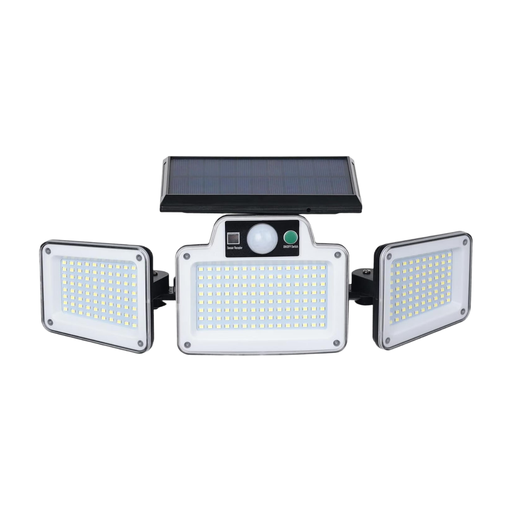
Why It's a Great Fit: For homeowners who want to reliably illuminate driveways, gardens, or garages with no extra electricity costs. The three adjustable heads allow for wide and targeted illumination to enhance security.
With an IP65 rating, this light is protected against water jets and dust, making it designed for unprotected outdoor use (avoids Pitfall 3). Solar power makes it independent of the grid and battery changes.
Complete energy independence thanks to a separate solar panel with a long cable, which allows for optimal positioning towards the sun.
We've compiled a full, up-to-date list of products that fully meet these strict selection criteria and UK safety regulations.
The key is sensor placement. Mount the light so that the sensor covers the typical path of movement. Avoid aiming it at heat sources like radiators or windows in direct sunlight, as this can cause false triggers. For most PIR sensors, sensitivity is higher for movement across the sensor's field of view than for movement directly towards it.
The IP (Ingress Protection) rating indicates how well an electrical device is protected against the entry of foreign objects (first digit) and water (second digit). For outdoor use, IP44 (protection against splashing water) and IP65 (protection against water jets) are common. While IP44 is sufficient for covered areas, IP65 offers higher protection for lights directly exposed to the weather.