
Lieferung heute & morgen

Qualitätsgarantie

Willkommens-Angebote freischalten: KOSTENLOSE Lieferung | Bis zu 80 % RABATT | Kostenlose 30-Tage-JoyPlus-Testphase
App herunterladen
A light that turns on automatically when you enter a room or approach your home offers both convenience and security. However, the market is flooded with motion sensor lights, and not every product lives up to its promises. Before you make a decision, it's crucial to understand the common pitfalls that often only become apparent after the purchase.
As your Joybuy Product Recommendation Officer, I'm here to help you cut through the noise. In this guide, we'll highlight the most common traps and show you which technical specifications truly matter.
Many buyers get frustrated with models that don't perform as expected in daily use. Pay close attention to these three points to avoid a bad buy:
To find the right light for your needs, you should carefully examine three technical parameters. These determine its functionality, durability, and efficiency.
The sensor is the heart of any motion-activated light. Two values are critical here:
The choice of power source depends on the location and your personal preferences:
When installing a light outdoors, the IP (Ingress Protection) rating is an essential quality mark. It consists of two digits:
For outdoor use, the following ratings are relevant:
Instead of generic recommendations, we've selected products for specific user profiles that are designed to solve common problems.
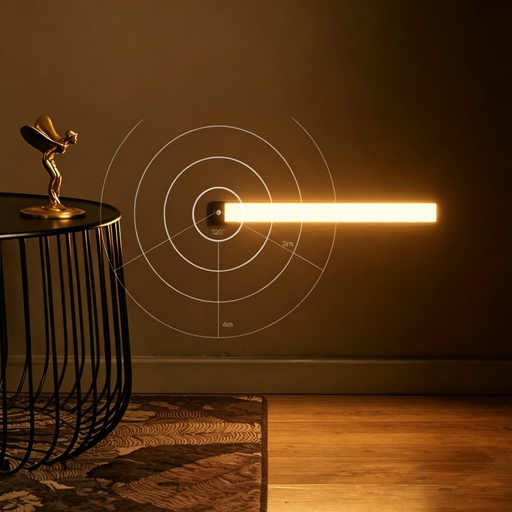
Why it's a great fit: Ideal for anyone looking for a hassle-free lighting solution for wardrobes, pantries, or as an under-cabinet kitchen light with a sensor. Installation is tool-free via a magnetic mount.
It solves the problem of short battery life with an integrated rechargeable battery that is conveniently charged via USB. This saves on running costs and the constant need to buy disposable batteries.
Its ultra-slim design (under 1 cm) allows for a discreet installation. The magnetic attachment makes it easy to remove the light for charging.
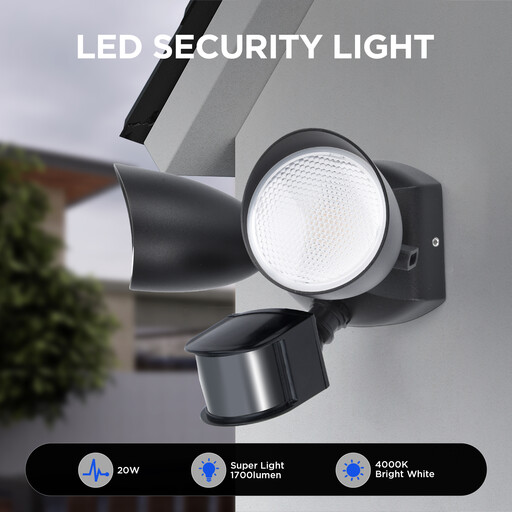
Why it's a great fit: Designed for homeowners who need reliable, bright illumination for driveways, gardens, or entryways for deterrence and security.
This model is built for the outdoors and is mains-powered. This ensures consistent performance and bypasses the problems of poor weather resistance and unreliable battery supply.
It delivers high brightness with 1700 lumens. The two light heads are individually adjustable, allowing you to aim the beam precisely where it's needed.
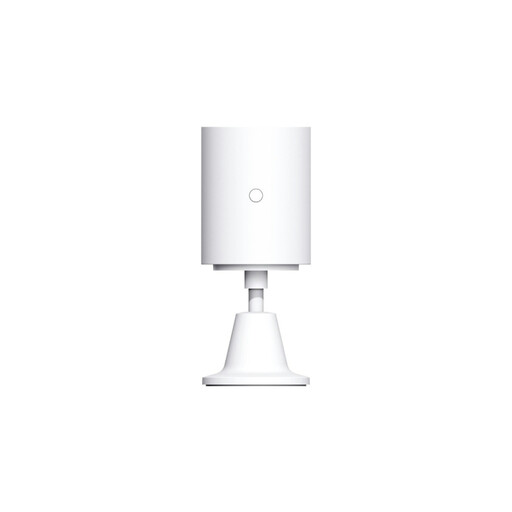
Why it's a great fit: For tech enthusiasts who want more than just a light—they want an intelligent sensor to create complex smart home automations (e.g., turn on lights, turn down heating, send a notification).
It addresses the problem of unreliable sensors with advanced configuration options. Sensitivity and on-time duration can be precisely adjusted via an app to minimise false triggers.
It supports the future-proof smart home standard Matter-over-Thread. This enables cross-platform integration into ecosystems like Apple Home or Google Home.
We have compiled a complete, up-to-date list of products that fully meet these strict selection criteria and safety regulations.
The on-time is adjustable on most models, typically ranging from 15 seconds to several minutes. On simple battery-powered lights, it's often fixed, whereas outdoor floodlights and smart home sensors usually allow for flexible configuration of the delay time.
No, generally it won't. Most motion sensors have a built-in photocell (also called a light sensor or dusk-to-dawn sensor). This ensures the light only activates with motion when the ambient light level drops below a certain threshold. This saves energy and prevents the light from being activated unnecessarily during the day.
Yes, they are very practical for specific use cases. Their strength lies in their simple, wireless installation in places without a power outlet. They are ideal for areas that need infrequent, brief illumination (e.g., inside a wardrobe or a drawer). For high-traffic areas or for security lighting, models with a rechargeable battery or a mains connection are often the better choice to avoid frequent battery changes.