
Lieferung heute & morgen

Qualitätsgarantie

Willkommens-Angebote freischalten: KOSTENLOSE Lieferung | Bis zu 80 % RABATT | Kostenlose 30-Tage-JoyPlus-Testphase
App herunterladen
A motion sensor light promises convenience, security, and energy efficiency. It switches on exactly when needed—whether in a dark hallway, a closet, or at your front door. However, the market is flooded with models whose practical performance often falls short of their marketing promises. Before you make a decision, it's crucial to understand the most common pitfalls that can lead to an unsatisfying purchase.
As your Joybuy Product Recommendation Officer, I'll help you identify the critical features and make an informed choice.
Many products look convincing at first glance but reveal their weaknesses only in daily use. Pay close attention to these three points to avoid disappointment:
To avoid the problems mentioned above, you should check three core technical aspects before buying. These determine whether a motion sensor light is suitable for your intended use.
The functionality of a sensor light depends on its sensor. Most models for home use employ PIR (Passive Infrared) sensors, which react to changes in heat from people or animals.
The choice of power source depends directly on the location of use.
The effect of the light is crucial for well-being and functionality.
Here are some product recommendations tailored to specific needs that meet the quality criteria mentioned above.
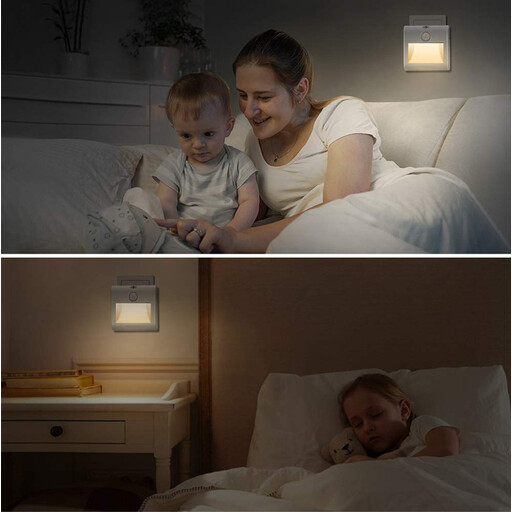
Why This Fits Their Persona: Ideal for families and seniors who need safe pathways in hallways, on stairs, or to the bathroom at night. The simple plug-in installation and practical 2-pack allow you to equip multiple areas at once.
The stepless dimming function and warm white light (4000-4500K) prevent the pitfall of glaring, inappropriate light. The integrated sensor only reacts in darkness (≤20 LUX).
Stepless touch dimming with memory function; very low power consumption of 1W; dual-mode (always-on or sensor).
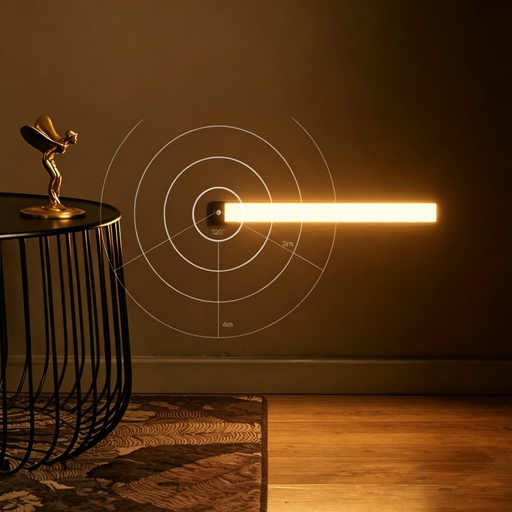
Why This Fits Their Persona: Perfect for anyone who wants to add light to closets, pantries, or under kitchen cabinets without drilling or wiring. The slim design and magnetic mount allow for flexible and discreet installation.
This model bypasses the cost trap of disposable batteries by featuring an integrated, USB-rechargeable battery. This avoids ongoing costs and waste.
Tool-free magnetic installation; ultra-thin profile (approx. 1 cm); rechargeable battery for sustainable operation.
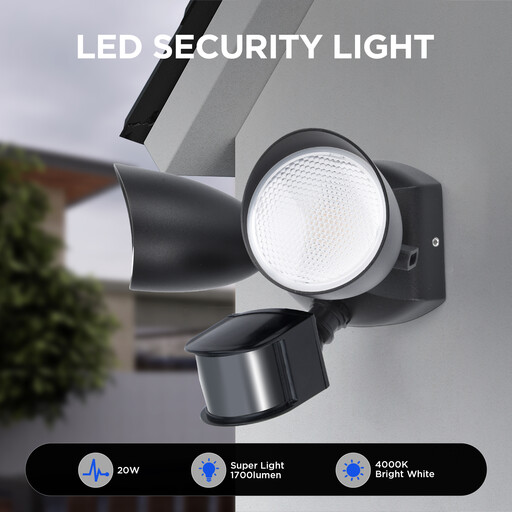
Why This Fits Their Persona: For homeowners who want to reliably and brightly illuminate driveways, gardens, or entrance areas. The high luminosity serves as a deterrent and increases safety on the property.
With 1700 lumens of brightness, this light avoids the pitfall of inadequate illumination. The pivoting light heads allow for precise adjustment of the light beam and sensor area.
Very high brightness (1700 lm) for large areas; two individually adjustable light heads; robust, weatherproof construction for outdoor use.
We've compiled a complete, up-to-date list of products that fully meet these strict selection criteria and UK safety regulations.
1. What does the IP rating mean for an outdoor motion sensor light? The IP (Ingress Protection) rating indicates how well an electrical device is protected against the intrusion of foreign objects (first digit) and water (second digit). For an outdoor motion sensor light, a minimum rating of IP44 is recommended. This means it is protected against splashing water from all directions and can easily withstand rain. Higher ratings like IP65 offer even better protection against dust and water jets.
2. How long does the battery last in a battery-powered closet light? The battery life depends on the battery's capacity (measured in mAh), the brightness of the light, and the frequency of use. With average use (a few times a day), a single charge can last for several weeks to months on many models. Products with a larger battery and an efficient sensor generally offer longer runtimes.
3. Can I adjust the sensor on an outdoor light? Yes, on many outdoor lights, you can adjust key sensor parameters. There are typically three adjustment settings: