
Lieferung heute & morgen

Qualitätsgarantie

Willkommens-Angebote freischalten: KOSTENLOSE Lieferung | Bis zu 80 % RABATT | Kostenlose 30-Tage-JoyPlus-Testphase
App herunterladen
A motion sensor light can automatically illuminate hallways, stairs, cupboards or entrance areas. This saves you from having to operate switches manually and can help limit energy consumption. However, not all sensor lights are suitable for every room. The key factors are where the light will be used, its power supply, detection range and the brightness you need.
An infrared motion sensor responds to changes in heat, such as a person entering a hallway. A twilight sensor, on the other hand, measures the ambient light level. A light with a motion sensor will not switch on automatically simply because it is dark. Conversely, a night light with a twilight sensor may remain lit in the dark even when nobody enters the room.
A night light with a twilight sensor can be useful in children’s bedrooms, bedrooms or hallways. For a cupboard, pantry or staircase, an LED light with PIR detection is often more suitable.
The stated range applies under the conditions specified by the manufacturer. Walls, furniture, doors and installation height all affect detection. A large detection angle is not necessarily required for a small cupboard. In a longer hallway, however, an angle that is too narrow may mean that the light responds too late.
You should therefore consider the combination of detection angle, detection range and the actual installation location. For example, a sensor with a 120° detection angle is suitable for a limited area in front of a socket or beneath a wall cupboard. A 360° sensor is more suitable for central ceiling installation.
Battery-powered models can be installed without permanent wiring, but they need to be recharged regularly. Plug-in night lights are ready to use straight away, but they occupy a socket. A PIR motion sensor 230V is permanently connected to the light or a circuit, so it is generally less straightforward for rented accommodation.
With a solar light with a motion sensor, the solar panel must receive sufficient direct daylight. A shaded entrance or covered balcony can limit charging performance. You should also check whether the light is designed for outdoor use.
The brightness of many lights is specified in lumens (lm). A small orientation light requires considerably less light than task lighting in a kitchen or garage. For bedrooms and children’s bedrooms, warm light colours between around 2700 and 3000 Kelvin are often perceived as subtle and relaxing. Neutral or cool white light can make it easier to see items in cupboards and on work surfaces.
An LED cupboard light with a sensor should not be judged solely by the number of LEDs. Total light output, beam angle and the position of the light are also important.
A PIR sensor detects movement through changes in heat radiation. Its sensitivity can be affected by pets, heaters or direct sunlight. Permanently installed sensors often offer additional settings for the twilight threshold and overrun time, which can be very practical.
According to the product details, the Aigostar infrared motion sensor for ceiling installation offers a detection diameter of up to 6 metres, adjustable light sensitivity from 10 to 2000 lux and a delay of between 10 seconds and 7 minutes. The model is designed for indoor use and has an IP20 rating.
The protection rating is described by the IP marking. IP20 is intended for dry indoor areas. IP44 provides protection against splashing water and may be suitable for sheltered outdoor areas, depending on the installation location. However, an IP44 light is not designed to be immersed in water or exposed to unprotected high-pressure water jets.
For permanently wired 230-volt products, the mains voltage, maximum load and installation instructions must be compatible. These devices should be installed and maintained in accordance with the manufacturer’s instructions and applicable German electrical regulations by a qualified electrician. In rented accommodation, you should also obtain your landlord’s permission before carrying out any permanent installation.
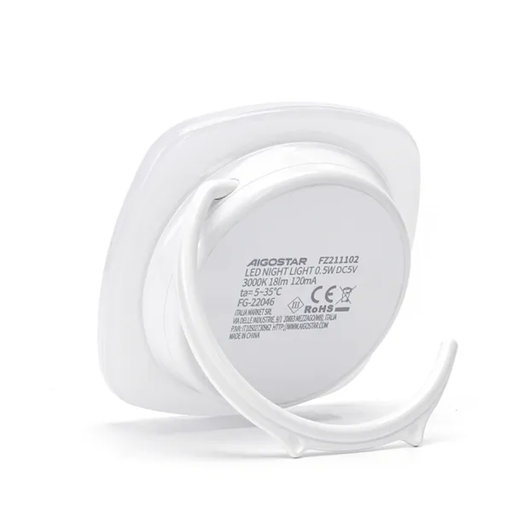
Why this product suits this profile: The compact USB rechargeable light is suitable for hallways, cupboards and areas where you do not want to permanently occupy a socket. Its warm white light is designed to provide gentle illumination indoors.
The product details specify PIR detection up to 3.5 m, a 120° beam angle and USB charging. This makes it easier to assess the relevant usage limitations than with an unclear range specification.
500-mAh battery, 3000 K and 18 lm; according to the product description, up to 6 hours of light operation when motion is detected.
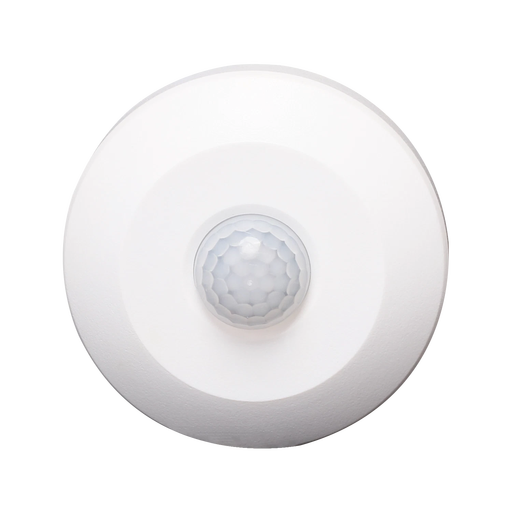
Why this product suits this profile: For homeowners or renovators, a centrally mounted sensor can control permanently connected indoor lighting in hallways, stairwells or entrance areas.
The specifications include adjustable ranges for the lux value and overrun time. This helps prevent the light from being activated unnecessarily when there is sufficient ambient light, or from switching off too quickly.
360° detection, 220–240 V~ and a stated detection diameter of up to 6 m; according to the product data, designed for indoor use and up to 100 W per lamp.

Why this product suits this profile: The two slim lights are designed for kitchen cupboards, shelving, wardrobes or work areas where flexible, drill-free installation is required.
The product data specifies dimensions of 300 × 38 × 10 mm and a PIR range of 3 to 5 m. This makes it easier to check whether the light will fit the intended location.
Three selectable colour temperatures, 1100-mAh battery, USB charging and adhesive installation without drilling; the stated contents include two lights.

Why this product suits this profile: According to the specifications, this plug-in night light requires no batteries and offers five brightness levels for children’s bedrooms, hallways, bathrooms or indoor staircases.
The automatic switch-off after 60 seconds without movement limits unnecessary operating time. The stated range of 3 m and 120° angle should be checked against the room layout before purchase.
0.5 W power consumption, 2700 K warm white light and five adjustable brightness levels; according to the product description, designed for indoor use.
We have put together a complete, regularly updated list of products that fully meet these strict selection criteria and the safety regulations applicable in the EU.
This short checklist can help you before you buy:
A PIR sensor detects changes in infrared heat radiation within its detection range. When movement is detected and the ambient light level is below the set threshold, the light or connected circuit switches on. A switch-off delay then ends operation.
Consumption depends on the power rating, how long the light is switched on and how frequently it is used. A 0.5 W light activated for short periods uses considerably less energy than room lighting that remains switched on continuously. With plug-in night lights rated at 0.5 to 1 W, you should also check whether the sensor operates only in darkness or continuously.
An indoor product expressly approved for use in dry areas of the bathroom may be suitable. Near water, steam or splashing water, the stated protection rating must be appropriate for the installation location. A model with IP20 is not intended for damp or wet areas. The installation zones and electrical requirements should be taken into account before installation.