
Lieferung heute & morgen

Qualitätsgarantie

Willkommens-Angebote freischalten: KOSTENLOSE Lieferung | Bis zu 80 % RABATT | Kostenlose 30-Tage-JoyPlus-Testphase
App herunterladen
A motion sensor light can automatically illuminate hallways, stairs, cupboards, entrances or patios. This means you no longer have to fumble for the light switch, and the light won't accidentally be left on for long periods. However, sensor lights differ significantly in detection range, power supply, installation and ingress protection rating.
If you only look for the words "automatic" or "energy-saving", you risk overlooking important details. Three common buying pitfalls crop up particularly often:
A PIR motion sensor detects changes in infrared radiation, such as those caused by a person walking. For practical use, three values are crucial:
A dusk sensor measures the ambient brightness. Depending on the model, the light only switches on in darkness or below an adjustable lux value. This prevents an LED sensor light from being activated unnecessarily during the day.
Also pay attention to the switch-off time. On some devices, the lighting ends after a few seconds; others allow a longer delay. For a short walk along a hallway, a brief time is sufficient. On a staircase or at a front entrance, a longer setting can be more practical.
For rented flats, cupboards and areas without a socket, a battery-operated sensor light, a rechargeable model or a USB-C light are suitable. Check the following:
A mains-powered motion sensor lamp is suitable for permanently installed applications. For a rented flat or a wardrobe, a cordless solution is often easier to install.

Why this product fits the profile: This plug-in model is designed for indoor areas such as children's rooms, hallways, bathrooms and stairs. The brightness can be adjusted in five steps between 20% and 100%.
The built-in motion and dusk sensor is designed for operation in darkness. The automatic switch-off after 60 seconds without detected movement limits the running time.
0.5 W power consumption, 120° detection angle and up to 3 metres detection range; no battery changes required.
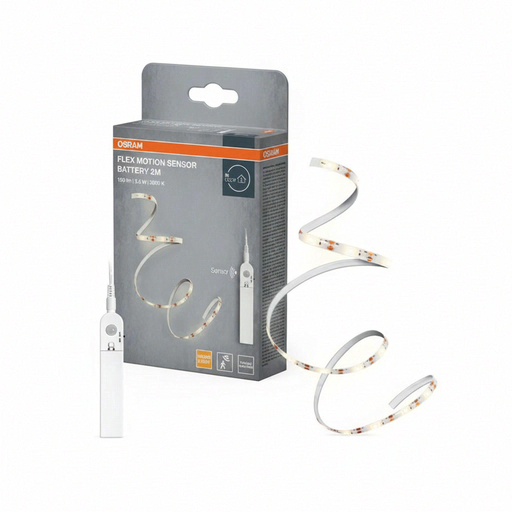
Why this product fits the profile: The 2-metre LED strip is suitable for elongated areas such as cupboards, shelves or indirect lighting where a continuous line of light is desired.
The defined length makes planning easier. However, you should still check before buying that 2 metres and your intended installation area are compatible.
Built-in motion sensor and battery-operated design for installation without a fixed power cable.

Why this product fits the profile: For the patio, garden, entrance or garage, this portable wall light features a built-in battery, USB charging and a magnet for flexible attachment.
The stated IP44 rating indicates protection against splashing water. However, the model must not be submerged in water or exposed to a strong water jet.
300 lm, 3000 K, built-in battery, USB cable, magnetic mount and IP44 for covered outdoor areas.
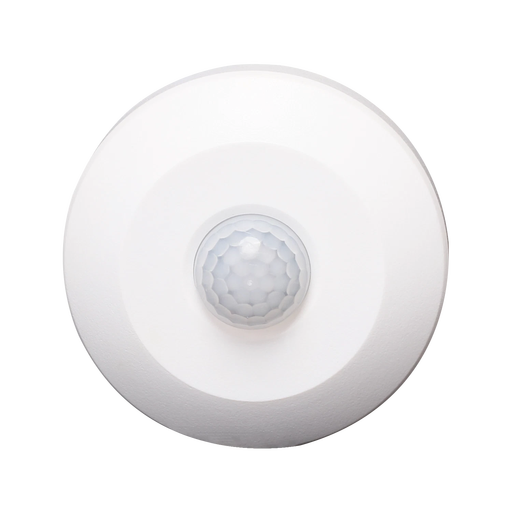
Why this product fits the profile: The hardwired sensor is intended for indoor areas such as hallways, stairs, kitchens or entrances where a connected light needs to be controlled automatically.
The adjustable light sensitivity from 10 to 2000 lux and the delay from 10 seconds to 7 minutes allow you to tailor it to the installation location.
360° detection, up to 6 metres diameter and support for connected LED lights up to 100 W according to product specifications.
We have compiled a complete, regularly updated list of products that fully meet these strict selection criteria and the safety regulations in force in the EU.
To make the right choice, simply measure your intended installation location:
A PIR sensor detects movements based on changes in infrared radiation. On models with a dusk sensor, the ambient brightness is also taken into account. The light then only switches on within the set conditions.
An automatic LED light can limit operation to the time it is actually needed. How much you save depends on the power consumption, the duration of illumination and how often it is used. Figures such as 0.5 W or 1 W should be compared directly with the desired lighting duration.
The running time depends on the battery capacity, the number of activations, the lighting duration and the brightness. For frequently used hallways, a rechargeable or mains-powered model may require less maintenance. For cupboards or rarely used areas, a battery-operated solution can be sufficient.