
Lieferung heute & morgen

Qualitätsgarantie

Willkommens-Angebote freischalten: KOSTENLOSE Lieferung | Bis zu 80 % RABATT | Kostenlose 30-Tage-JoyPlus-Testphase
App herunterladen
An automatic night light provides safety in dark hallways, on stairs, or in a child's room. However, the market is flooded with models whose real-world performance often falls short of their marketing promises. Many buyers only discover after a short time that the sensor is unreliable, the light disrupts sleep, or the batteries drain unexpectedly quickly.
This guide highlights the crucial features to look for before you buy, helping you find a model that will serve its purpose reliably and for the long term.
Before diving into features, it's important to understand the most common flaws that can render an otherwise good concept useless.
To avoid the issues mentioned above, you should check three core technical aspects. These determine whether a night light is truly practical in daily use.
Automation is the core function. There are two main technologies here:
The combination of both sensors is the most efficient solution for most use cases. The light only activates when it's dark AND motion is detected.
The choice of power source depends on where you'll use it.
The effect of the light is crucial for both comfort and safety.
Here are some recommendations tailored to specific use cases that avoid the common pitfalls.

Why it's a good fit: This plug-in light combines a motion detector with a dusk sensor, making it ideal for hallways and stairwells. The five brightness levels allow for precise adjustment to the surroundings, safely illuminating tripping hazards without causing glare.
The combination of motion and dusk sensors prevents unnecessary activation. The adjustable brightness and warm white light (2700K) help avoid sleep disruption.
5-level dimming: Precise control over light intensity. Low consumption: Only 0.5 W power draw.

Why it's a good fit: This product is more than just a night light; it's a multifunctional sleep aid for babies and children. It combines a gentle light projection with soothing sounds and automatically responds to a child's restlessness thanks to a cry sensor.
The light projection is gentle and specifically designed to be calming. The rechargeable battery (USB-C) eliminates battery costs. The automatic 23-minute shut-off timer conserves energy.
Cry sensor: Automatically responds to a baby's cries. Multifunctional: Combines light, music, and ocean sounds.
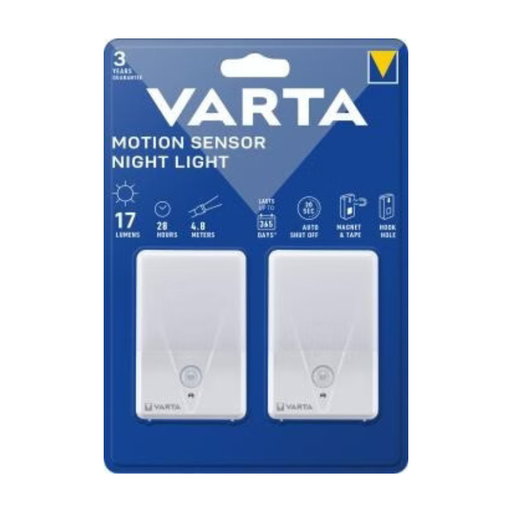
Why it's a good fit: This battery-powered light is designed for maximum flexibility. Thanks to its three mounting options (magnet, adhesive tape, screw), it can be placed almost anywhere—in a wardrobe, basement, garage, or even while travelling.
The automatic 30-second shut-off ensures long battery life. The warm white light (17 lm) is designed for orientation and doesn't cause glare.
Versatile mounting: Magnet, adhesive tape, and screw-mount options. Long battery life: Up to one year with typical use (according to the manufacturer).
We have compiled a complete, up-to-date list of products that fully meet these strict selection criteria and relevant safety regulations.
Install the light at a height of about 50 to 120 cm (approx. 1.5 to 4 feet). In hallways, it should be positioned to detect your path before you reach a critical point like a staircase. Avoid placing it directly opposite heat sources (heaters) or windows, as this can cause false triggers.
A correctly chosen night light should not disturb your sleep. The key factors are a warm colour temperature (under 3000 K) and a low, dimmable brightness. A light that only turns on with motion and then switches off is less disruptive than a permanently-on orientation light.
The battery life depends heavily on the battery capacity (measured in mAh), brightness, and frequency of activation. Models with a dusk sensor are generally more efficient. Many manufacturers state the runtime in months, based on an average number of activations per night (e.g., 5-10 times). With daily, frequent use, you may need to recharge it every few weeks to a few months.