
Lieferung heute & morgen

Qualitätsgarantie

Willkommens-Angebote freischalten: KOSTENLOSE Lieferung | Bis zu 80 % RABATT | Kostenlose 30-Tage-JoyPlus-Testphase
App herunterladen
Waking up suddenly in the middle of the night, making a trip to the bathroom, or soothing a child—these moments often happen in complete darkness. Manually fumbling for a light switch can disrupt not only your own sleep but also that of your family. For seniors, navigating in the dark also poses a safety risk. A motion-sensor night light offers a practical and safe solution. It automatically provides light exactly when it's needed and turns itself off again.
This article serves as a helpful guide. It explains the key features to consider when making your choice and presents various models designed for different household needs.
Selecting the right model depends on the specific needs of your household. Three key criteria will help you decide.
The type of sensor is a crucial feature. A pure motion sensor (often a PIR sensor) activates the light as soon as it detects movement within its range. Models with an additional dusk-to-dawn sensor are even more energy-efficient. They only activate with motion when the ambient light falls below a certain level (e.g., under 20 lux). This prevents the light from turning on unnecessarily during the day. This combination is especially practical for hallways, stairwells, and as a night light for a child's room.
The light colour, measured in Kelvin (K), influences the atmosphere and your sleep-wake cycle. Warm white light (approx. 2700–3300 K) is often perceived as pleasant and calming, making it well-suited as a soothing sleep light. Neutral white or daylight white light (approx. 4000–5500 K) offers clearer visibility and can be useful as guidance light in areas like the bathroom or hallway. A dimmable night light provides additional flexibility. This allows the brightness to be adjusted to the situation—bright enough for safe navigation, but gentle enough not to disturb sleep.
The power source determines the flexibility of placement. A plug-in LED night light is a maintenance-free solution for locations with available outlets. Simply plug it in, and it's always ready to go. In contrast, a rechargeable night light offers maximum flexibility. It can be charged via a USB cable and placed anywhere, regardless of outlet location—ideal for closets, shelves, or travel.
Based on the criteria mentioned, we have compiled a selection of models that cover different functions and applications.
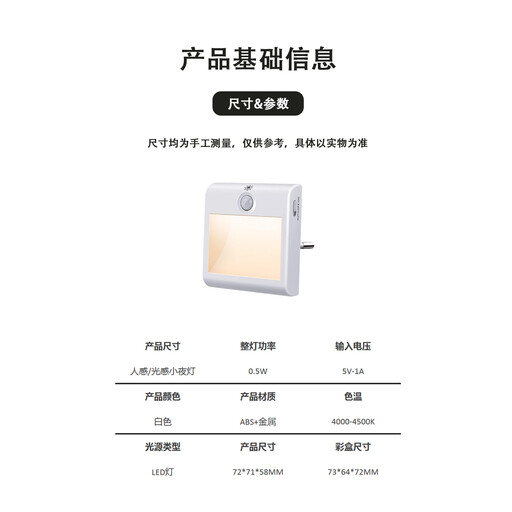
What makes it stand out: This set combines an intelligent motion sensor with a stepless touch-dimming function. The sensor activates the light in darkness (≤20 LUX) and upon detecting motion within a 3–5 metre range. A special feature is its memory function, which recalls the last-used brightness setting. With a colour temperature of 4000–4500 K, it falls in the daylight-warm white range, providing clear and natural illumination.
Benefits:
Who it's for: This model is ideal for households seeking a flexible and customisable lighting solution for various areas. The memory function is particularly useful for repeated nightly use by the bed or in the bathroom.
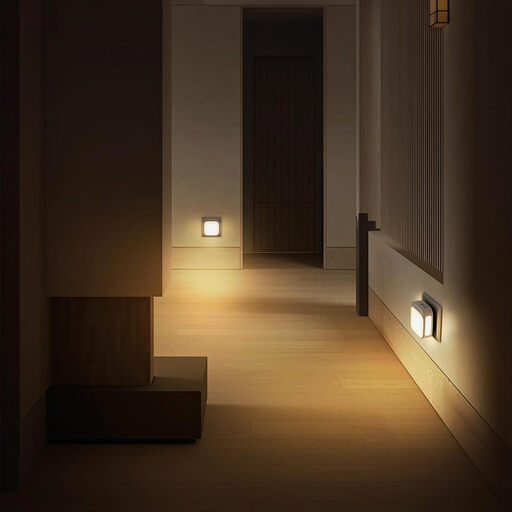
What makes it stand out: This night light is designed for maximum energy efficiency and ease of use. With a power consumption of just 0.3 W, it is extremely economical. It is controlled exclusively by a dusk-to-dawn sensor: it turns on automatically in darkness (≤20 LUX) and off again when it's bright. The light colour is a very warm white at 2800–3000 K, creating a cosy atmosphere.
Benefits:
Who it's for: Perfect for users who want a simple "set-it-and-forget-it" solution and value minimal energy consumption. It is especially suitable as a soothing sleep light in a child's room or as a permanent guidance light in a hallway.
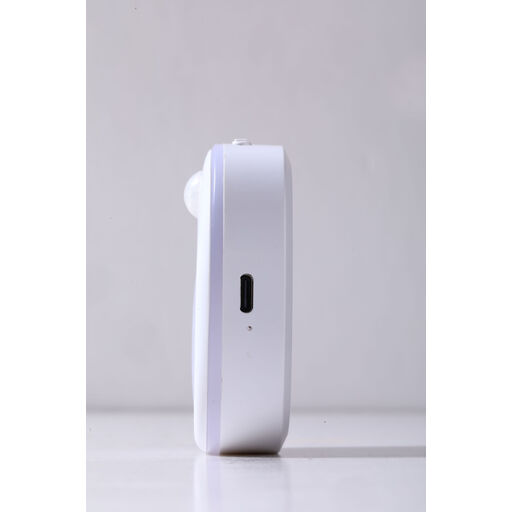
What makes it stand out: This model offers maximum flexibility thanks to an integrated 500-mAh battery that recharges via USB. It is not tied to an outlet and can be placed anywhere. Another strength is its customisability: it offers three selectable colour temperatures (warm white, cool white, mixed) and 5-step dimming. At 30 LM, it is also brighter than many standard models.
Benefits:
Who it's for: Ideal for anyone needing a flexible and versatile light source that can be used in closets, on stair landings without outlets, or while travelling. The adjustable light colours make it a true all-rounder for the entire home.
If you are looking for a more permanent or design-focused lighting solution for your home that goes beyond a simple guidance light, you will find a wide selection of models that combine functionality and aesthetics in our Metal Lamp category.
A motion-sensor night light typically uses a Passive Infrared (PIR) sensor. This sensor reacts to the heat radiation from moving bodies, such as people or animals. Many models combine this with a dusk-to-dawn sensor that measures ambient brightness. The light is then only activated when both motion is detected and the surroundings are dark enough.
For use in a bedroom or child's room, a warm white light colour (under 3300 Kelvin) is generally recommended. Warm light has a lower blue light component, which interferes less with the production of the sleep hormone melatonin than cooler, bluish light. A gentle, warm sleep light helps maintain a healthy sleep rhythm.
Modern LED night lights are very energy-efficient. Power consumption is typically between 0.3 watts and 1 watt. Even with several hours of daily use, this results in very low additional electricity costs per year, making them an economical solution for permanent nighttime lighting.