
Lieferung heute & morgen

Qualitätsgarantie

Willkommens-Angebote freischalten: KOSTENLOSE Lieferung | Bis zu 80 % RABATT | Kostenlose 30-Tage-JoyPlus-Testphase
App herunterladen
By the Joybuy Product Recommendation Officer, July 28, 2026
An automatic light that illuminates your path without disturbing your sleep—that's the purpose of a motion-sensor night light. Whether it's for safety in the hallway, a gentle guide in a child's room, or to light up cabinets, making the right choice is crucial. However, the market is flooded with models whose real-world performance often fails to live up to their promises. Before you make a decision, it's important to understand the most common pitfalls that lead to disappointment and unnecessary expense.
Many products advertise smart features, but daily use often reveals flaws that negate their benefits. Watch out for these three common problems:
To avoid these mistakes, you should base your selection on objective technical features. Focus on the following three core aspects.
A good motion-sensor night light typically combines two types of sensors:
For an automatic stair light or an orientation light in a hallway, the combination of both sensors is essential.
The choice of power source depends directly on the place of use:
Light quality is not a detail, but a central feature for comfort and well-being.
Based on these objective criteria, we have identified several products that represent a well-thought-out solution for specific user profiles.
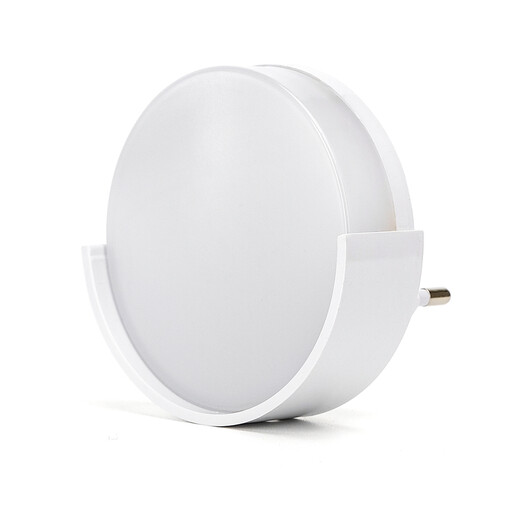
Why This Fits Their Persona: A straightforward plug-and-play solution for anyone looking for reliable basic lighting for hallways or stairwells without having to deal with batteries or settings.
This model uses a pure dusk sensor that only activates the light in darkness (below 20 LUX). This avoids unnecessary operating hours and electricity costs. The cool white light (6500K) is designed for orientation in transit areas, not for bedrooms.
Extremely low power consumption of just 1W and a long LED lifespan of 25,000 hours, according to the manufacturer. The fire-resistant material of the housing provides additional safety.

Why This Fits Their Persona: Ideal for users who need a versatile and wireless lighting solution for various places like kitchen cabinets, wardrobes, or dark corners. The 2-pack offers great value for money.
This model solves the problem of incorrect light colour by offering a choice of three colour temperatures (Warm White, Neutral White, Cool White). This allows the user to adapt the light to the specific location—warm for the hallway, cool for the kitchen countertop.
The integrated 1100mAh battery is USB rechargeable, avoiding battery costs. Installation is tool-free via adhesive strips, allowing for flexible placement without drilling. The PIR sensor has a range of 3-5 metres.

Why This Fits Their Persona: Perfect for parents and caregivers who need exceptionally gentle and adjustable lighting for children's rooms, bathrooms, or hallways to ensure safety without disturbing sleep.
This plug-in light tackles the problem of incorrect brightness with five adjustable dimming levels (20% to 100%). This allows the light to be precisely tailored to your needs—from a subtle glow to a brighter orientation light. The warm white light (2700K) is sleep-friendly.
Combines a motion and a dusk sensor for smart and efficient control. The very low power consumption of 0.5W and the compact design, which doesn't block adjacent outlets, are additional advantages.
We have compiled a complete, up-to-date list of products that fully meet these strict selection criteria and local safety regulations.
For areas where people sleep, warm white light with a colour temperature below 3300 Kelvin (K) is recommended. This light colour has a lower blue light component, which is less disruptive to the natural sleep cycle than cool white light. Many products list the colour temperature on the packaging; look for values around 2700K or 3000K.
The battery life depends on the battery's capacity (measured in mAh) and the frequency of use. A model with an 1100 mAh battery can last for several weeks to months on a single charge with average use in automatic mode (approx. 10 activations per day). Models with higher capacity will offer correspondingly longer runtimes.
Yes, that is a very popular use case. Look for a slim design so the strip fits discreetly under wall cabinets. Models with a magnetic mount are particularly practical as they can be easily removed for charging. For kitchen tasks, a light with an adjustable colour temperature can be advantageous, allowing you to switch to a brighter, neutral or cool white light when needed.