
Lieferung heute & morgen

Qualitätsgarantie

Willkommens-Angebote freischalten: KOSTENLOSE Lieferung | Bis zu 80 % RABATT | Kostenlose 30-Tage-JoyPlus-Testphase
App herunterladen
By Joybuy Product Recommendation Officer, August 29, 2026
A late-night trip to the bathroom, checking on a sleeping child, or getting a glass of water can quickly become a tripping hazard without the right lighting. A motion sensor night light promises a simple and safe solution. However, the market is flooded with products whose practical value only becomes apparent after you've bought them and tried them in your own home.
Many buyers soon find that their new night light is either too sensitive and stays on constantly, or it remains dark at the crucial moment. Others are jolted from a light sleep by harsh, cold light. To save you from such disappointments, we'll show you the most common pitfalls and what really matters when making your choice.
To find a suitable automatic night light that meets your needs, you should check three core technical parameters.
The type of sensor determines when and how the light is activated.
The choice of power supply depends on where you'll use it.
The quality of the light is crucial for night-time comfort.
Based on these objective criteria, we have identified some products that represent a well-thought-out solution for different user profiles.

Why This Fits Their Persona: Ideal for parents who want constant but gentle lighting in a child's room or hallway. The dusk-to-dawn sensor ensures automatic activation, and the three brightness levels allow for adjustment to the child's sensitivity.
Avoids the pitfall of overly harsh light with its 2700K warm white colour and dimming function. The dusk-to-dawn-only sensor also prevents the constant on-and-off switching of a motion detector in a sleeping area.
Very low power consumption of 0.5W. The slim design doesn't block adjacent sockets. Comes in a convenient 2-pack.
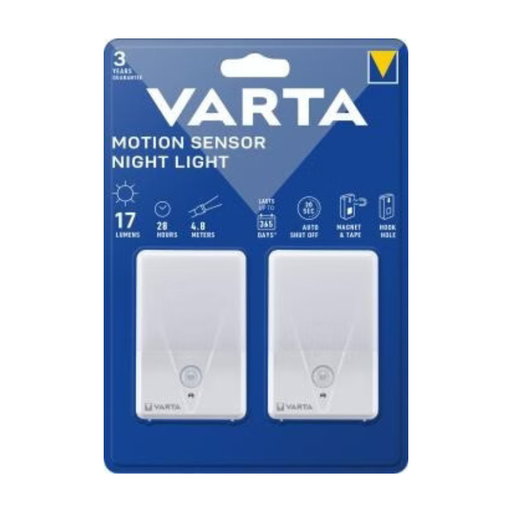
Why This Fits Their Persona: Perfect for anyone needing a lighting solution for places without a socket, such as wardrobes, dark corners in the basement, or as a stair light. The battery operation allows for completely location-independent placement.
Prevents the cost trap: According to the manufacturer, the energy-efficient design allows for a battery life of up to one year (based on 5 activations per day). The sensor has a clearly defined detection range of 3 metres and 120°.
Very flexible mounting options via screw, magnet, or adhesive tape. The warm white light with 17 lumens is sufficient for orientation without being glaring.
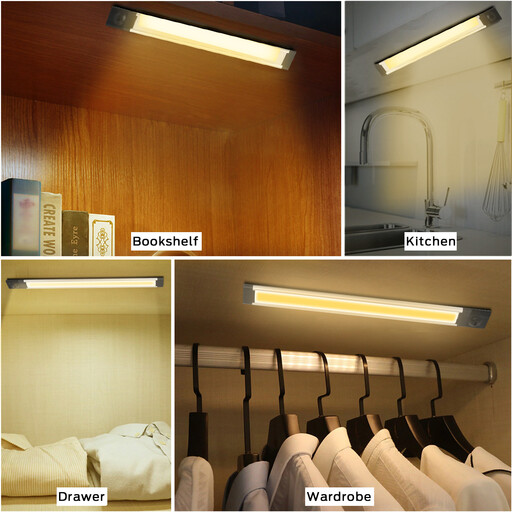
Why This Fits Their Persona: For users who value design, high-quality materials, and advanced features. The aluminium and ABS plastic bar fits into modern living environments and offers intuitive operation thanks to gesture control.
Completely solves the problem of wrong light colour and brightness: The colour temperature is adjustable from 2800K (warm white) to 6500K (cool white), and the brightness can be steplessly adjusted via gesture.
Tool-free installation with a magnetic holder and hook. The integrated battery is rechargeable via USB-C, combining flexibility and sustainability.
We've compiled a complete, up-to-date list of products that fully meet these strict selection criteria and UK safety regulations.
The costs are extremely low. A typical LED night light with a dusk-to-dawn sensor consumes about 0.5 to 1 watt. With 10 hours of operation per night and an electricity price of 35 cents per kilowatt-hour, the annual electricity costs amount to only about €0.64 to €1.28. A motion sensor night light, which only turns on when needed, consumes even less.
Install the light at a height of about 50 cm to 1.20 m. At this height, the PIR sensor can most reliably detect the movement of legs and bodies. Avoid placing it directly opposite heat sources (heaters), windows, or in areas with strong air circulation, as this can lead to false triggers. For a stair light, it is recommended to install it at the top or bottom of the stairs so that the path is well-lit.
Yes, this has been scientifically proven. Light in the blue and cool spectrum (over 5000 K) inhibits the release of the sleep hormone melatonin more strongly than warm light. A slumber light with a warm white colour temperature (around 2700 K) is therefore the better choice for bedrooms and children's rooms, as it interferes less with the natural sleep rhythm.