Joybuy Insights

Motion Sensor Night Light Buyer’s Guide: Avoid Common Pitfalls

An automatic night light promises safety and comfort without disturbing your sleep or driving up your electricity bill. However, the market is flooded with models whose practical utility often falls short of their marketing promises. Many users discover after their purchase that their new guide light is more of a nuisance than a help. This guide highlights the three most common pitfalls and explains which technical features truly matter for making an informed decision.

The 3 Most Common Mistakes When Buying a Night Light

Before choosing a model, you should be aware of the typical problems that often only become apparent in everyday use.

  1. The oversensitive or unreliable sensor: A common annoyance is motion detectors that activate with the slightest movement—like turning over in bed or a pet walking by. The opposite is just as problematic: sensors that react too late or not at all defeat their purpose as a safe stair light or a guide in the hallway.
  2. The wrong light colour: Many budget-friendly LED night lights use cool white light (over 5000 Kelvin). This light colour has a high blue light component, which can inhibit the production of the sleep hormone melatonin and thus disrupt your sleep cycle. A gentle sleep light should therefore have a warm light colour.
  3. The impractical power supply: A battery-powered night light offers flexibility but can quickly become an ongoing expense with frequent use and requires regular replacement. Plug-in models are maintenance-free but may block valuable outlets or not fit behind furniture due to their size.

Key Features: What to Look for Before You Buy

To avoid these problems, a close look at the technical specifications is essential. Three parameters are crucial for function and comfort.

Sensor Technology: Motion Sensor vs. Dusk-to-Dawn Sensor

The type of sensor determines when and how the light is activated.

  • Night Light with Motion Sensor (PIR Sensor): These models only turn on when they detect motion in the dark. They are the most energy-efficient solution for areas that are entered only briefly, such as hallways, stairs, or bathrooms. Pay attention to the specified detection angle (typically 120°) and range (usually 3–5 metres).
  • Night Light with Dusk-to-Dawn Sensor: This light activates automatically when it gets dark and stays on all night until it's light again. It is suitable as a permanent guide light in rooms where continuous, gentle illumination is desired, such as in a children's room night light.

Power Source: Outlet, Battery, or Rechargeable?

The choice of power source depends on the location and desired flexibility.

  • Plug-in Night Light: The most practical and lowest-maintenance option. Once plugged in, it works reliably. Look for a compact design so that adjacent outlets are not blocked.
  • Battery/Rechargeable Night Light: These wireless models can be placed anywhere—in cupboards, under beds, or in areas without an outlet. Rechargeable models that charge via USB-C are a more sustainable alternative to disposable batteries.

Light Colour and Brightness: The Key to Undisturbed Sleep

The quality of the light is critically important for nighttime use.

  • Light Colour: A warm white night light with a colour temperature between 2700 and 3000 Kelvin (K) is ideal for sleeping areas. This light has a calming effect and is less disruptive to your biorhythm.
  • Brightness and Dimmability: Brightness is measured in lumens (lm). For a guide light, 15–35 lumens are generally sufficient. A dimmable night light offers the advantage of being able to adjust the brightness to individual needs and room size—from a subtle glow to brighter illumination of the path.

Our Night Light Recommendations

Based on these objective criteria, we have compiled a selection of models for different use cases.
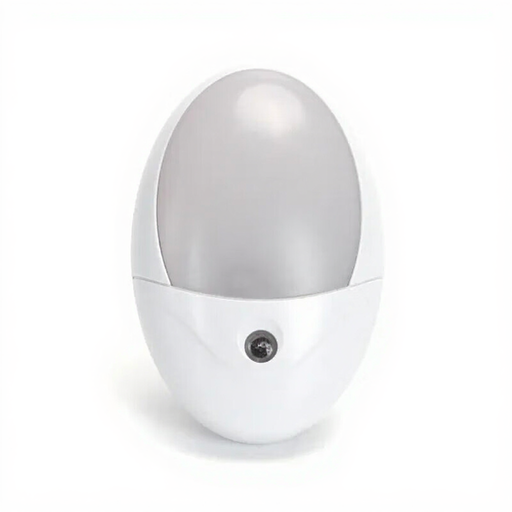
MATCH FOR: The Plug-and-Play Classic
Aigostar NL01 - LED Sensor Night Light - 1W 3000K IP20

Aigostar NL01 - LED Sensor Night Light - 1W 3000K IP20

Why This Fits Their Persona: Ideal for users looking for a simple and reliable solution for hallways and stairs. Just plug it in and enjoy automatic illumination on motion, without worrying about batteries or settings.

How It Avoids the Trap

It combines a PIR motion sensor with a dusk-to-dawn sensor, so it only activates in the dark and when motion is detected. This prevents unnecessary activation during the day or in ambient light.

Key Advantage & Pros

Warm White Light (3000K): Creates a pleasant atmosphere and doesn't disturb sleep. Plug-and-Play: No installation or maintenance required.
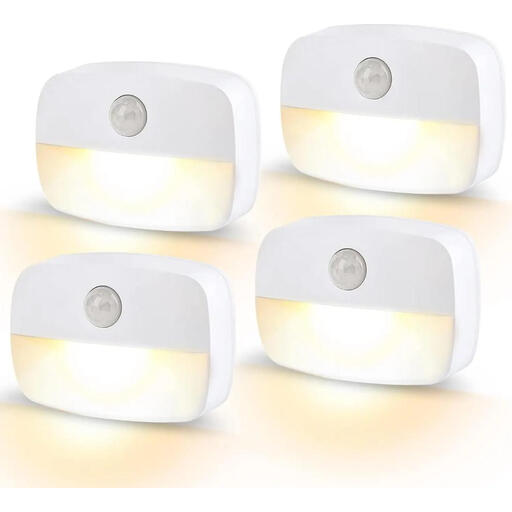
MATCH FOR: Maximum Flexibility
VIVREAL Motion Sensor Night Lights 4-Pack

VIVREAL Motion Sensor Night Lights 4-Pack

Why This Fits Their Persona: Perfect for renters or homeowners who need a lighting solution for places without outlets, such as closets, dark corners, or basement stairs. The 4-pack allows for flexible outfitting of multiple areas.

How It Avoids the Trap

Powered by AAA batteries, it bypasses the limitation of fixed outlets. The adhesive pad installation requires no drilling and makes placement extremely flexible.

Key Advantage & Pros

Battery-Powered: Can be mounted anywhere, independent of the power grid. Warm White Light (2800K–3200K): Provides pleasant and sleep-friendly illumination.

MATCH FOR: The Customisable Sleep Light
Grifema Children's Night Light, 5 Adjustable Brightness Levels

Grifema Children's Night Light, 5 Adjustable Brightness Levels

Why This Fits Their Persona: A great choice for parents who need a customisable night light for a child's room or bedroom. The adjustable brightness allows for perfect tuning to the needs of both the child and the parents.

How It Avoids the Trap

With five brightness levels and warm white light (2700K), it avoids the problems of overly bright or sleep-disrupting cool white light. It offers full control over the light intensity.

Key Advantage & Pros

5-Step Dimmable: Allows for precise brightness adjustment from 20% to 100%. Combined Sensor: The motion and dusk-to-dawn sensor ensures smart and economical operation.

Looking for more options?

We have compiled a complete, up-to-date list of products that fully meet these strict selection criteria and safety regulations.

## Frequently Asked Questions (FAQ)

How much does an LED night light cost to run?

The electricity costs are extremely low. A typical LED night light with a power consumption of 0.5 to 1 watt, used for 8 hours daily, consumes only about 1.5 to 3 kilowatt-hours (kWh) per year. At an electricity price of 30 cents/kWh, this corresponds to annual costs of less than one euro. Models with motion sensors are even more economical as they only light up when needed.

Does a motion sensor night light disturb sleep?

A well-designed night light should not disturb sleep. Two factors are crucial for this: a warm light colour (under 3000 K) and an appropriate brightness. Light that is too bright or cool white can impair sleep quality. Models that are dimmable offer the advantage of being able to reduce the light intensity to a minimum that is just enough for orientation.

Where is the best place for a motion sensor night light?

The ideal location depends on its purpose.

  • In the hallway or on the stairs: Place the light at knee to hip height so that it illuminates the path without shining directly into your eyes.
  • In the bedroom: A position under the bed or behind a dresser provides indirect light that gently illuminates the room without causing glare.
  • In the bathroom: An outlet near the floor is ideal for safely finding your way without having to turn on the bright overhead light.