
Lieferung heute & morgen

Qualitätsgarantie

Willkommens-Angebote freischalten: KOSTENLOSE Lieferung | Bis zu 80 % RABATT | Kostenlose 30-Tage-JoyPlus-Testphase
App herunterladen
A sudden noise from the children's room, a late-night trip to the bathroom, or searching for something in a dark hallway – these are all situations where a reliable light source is essential. A motion sensor night light promises a simple and energy-efficient solution. However, the market is flooded with models whose practical value is often questioned only after purchase. Many products suffer from design flaws that quickly render them useless.
This guide highlights the most common pitfalls and explains which technical features you should look for to make an informed decision.
Before making a purchase, it's important to understand the typical weaknesses that frequently occur in cheap or poorly designed models.
To avoid the problems mentioned above, you should check three central technical aspects before buying. These largely determine the functionality and longevity of your night light.
An automatic orientation light requires intelligent sensor technology to function properly. Look for a combination of two sensor types:
Models that combine both sensors offer the most reliable and efficient performance. They only activate the light when it is dark AND motion is detected.
The choice of power source depends on the intended location. Each option has specific advantages and disadvantages.
The quality of the light is crucial for comfort. Two values are important here:
Based on the criteria above, we have identified some products that are suitable for different user profiles.

Why This Fits Their Persona: Ideal for parents or seniors looking for a simple "plug-and-play" solution for hallways or children's rooms. It requires no installation or maintenance yet offers essential customisation options.
Thanks to its 5-level dimming, it bypasses the problem of glaring light. As a plug-in model, the hassle of dead batteries or recharging is eliminated.
Combined motion and dusk sensor; warm white light (2700K); adjustable brightness.
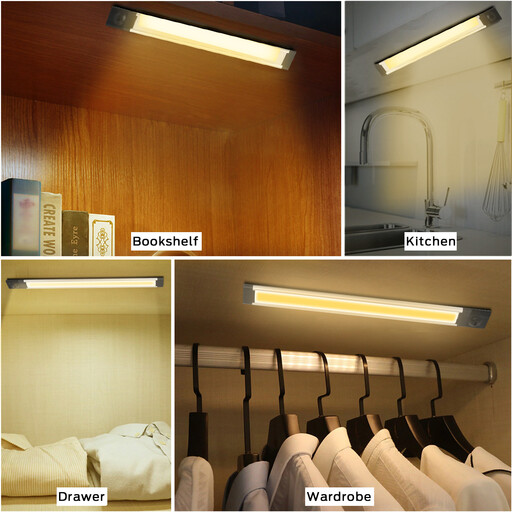
Why This Fits Their Persona: Perfect for users who value design, material quality, and advanced features. Its flexible installation and customisable light ambiance make it a versatile solution for various rooms.
Stepless dimming and adjustable colour temperature (2800K-6500K) solve the problem of unsuitable light. The aluminium housing and USB charging function signify greater durability.
Gesture control for brightness and on/off; flexible magnetic mounting; high light output (400 Lm).

Why This Fits Their Persona: A purpose-built solution for anyone needing invisible, automatic lighting for wardrobes, kitchen drawers, or shelves. The set offers great value for outfitting multiple areas.
With three selectable colour temperatures, the light can be adapted to its purpose (task lighting vs. ambient lighting). The 800mAh battery and USB charging are more practical than constant battery changes.
Very slim design (10 mm); tool-free adhesive mounting; three selectable colour temperatures.
We have compiled a complete, up-to-date list of products that fully meet these strict selection criteria and safety regulations.
The battery life heavily depends on the battery capacity (measured in mAh), brightness, and frequency of use. A model with an 800-1000 mAh battery can last for several weeks to months with average use (approx. 5-8 activations per day) before needing to be recharged via USB.
Yes, many modern models offer this feature. Look for terms like "dimmable night light" or "adjustable brightness levels." This function is particularly important to avoid glare and to adapt the light to the specific environment, such as a bedroom or a hallway.
For a stair light with a sensor, the optimal position is in the lower third of the wall, about 20-30 cm above the steps. This ensures the motion range is well-covered when you step onto the stairs, and the light illuminates the path without shining directly into your eyes. For long staircases, installing multiple lights every few steps can be useful.