
Lieferung heute & morgen

Qualitätsgarantie

Willkommens-Angebote freischalten: KOSTENLOSE Lieferung | Bis zu 80 % RABATT | Kostenlose 30-Tage-JoyPlus-Testphase
App herunterladen
A sudden noise from the nursery, a late-night trip to the bathroom, or finding clothes in a dark closet—many household situations call for a subtle and reliable light source. However, a constantly-on light can disrupt sleep and waste energy. A motion-sensor night light offers a practical solution, providing light only when it's truly needed.
This article serves as your guide. It explains the key criteria for choosing the right model and presents a selection of products with different features to help you make an informed decision.
The right night light depends on its intended location and the features you need. You should consider three key aspects in your decision.
The type of power source determines the night light's flexibility.
Light quality has a direct impact on well-being, especially at night.
The functionality of an automatic light is largely determined by its sensor. Most models use a PIR (Passive Infrared) sensor, which reacts to the body heat of moving people. Pay attention to the detection range (distance and angle) to ensure the light triggers reliably as you approach. Some models combine the motion sensor with a dusk-to-dawn sensor, so the light only activates in the dark, which saves additional energy.
Based on the criteria above, we've curated a selection of products that meet various needs—from the nursery to the closet.

Why it stands out: This night light combines a child-friendly design with practical features. The body is made of soft, BPA-free silicone, making it safe for children. It features intuitive tap controls.
Key Features:
Who it's for: Parents looking for a safe and functional night light for kids or a nursing light for the nursery. Its design also makes it a great gift.
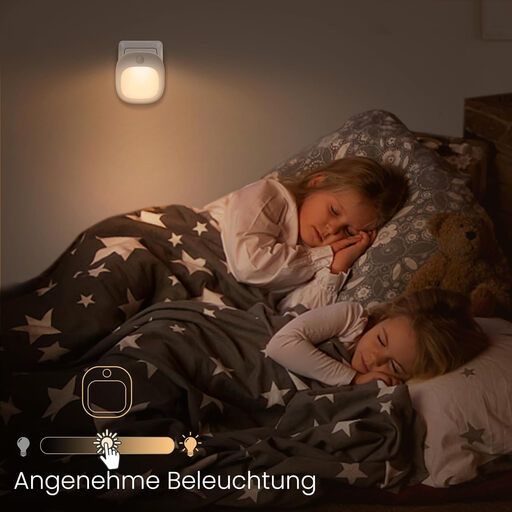
Why it stands out: This model is distinguished by its high degree of customisation. With three selectable colour temperatures and five-level dimming, it can be precisely adapted to any environment.
Key Features:
Who it's for: Users who need a versatile lighting solution for various rooms like bedrooms, hallways, or bathrooms and value a customisable lighting mood.

Why it stands out: With its 30 cm length and extremely slim profile, this light is specifically designed for installation in closets, drawers, or under kitchen cabinets. Installation is tool-free using adhesive strips.
Key Features:
Who it's for: Anyone looking for a bright and targeted battery-powered closet light for wardrobes, kitchen counters, or pantries without any drilling.
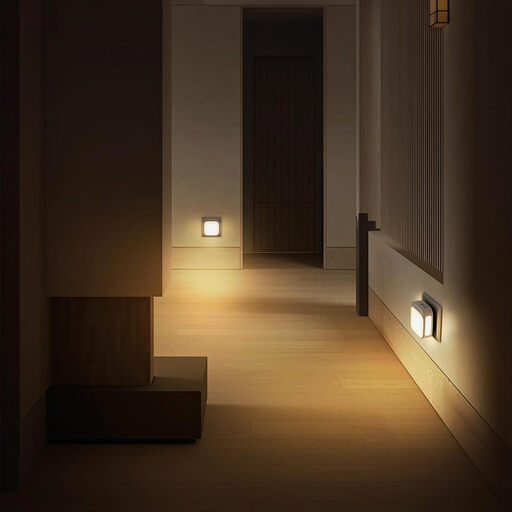
Why it stands out: This plug-in night light focuses on energy efficiency and ease of use. It is controlled by a light sensor that automatically turns it on in the dark, consuming only 0.3 watts.
Key Features:
Who it's for: Energy-conscious consumers who prefer a simple, plug-and-play guide light for continuous operation in hallways, children's rooms, or basements.
If the models presented here don't exactly match what you're looking for, or if you're searching for specific designs, it's worth taking a look at our wider selection. In our decorative indoor lighting category, you'll find more lighting solutions for your home.
Most of these night lights use a Passive Infrared (PIR) sensor. This sensor doesn't react to movement itself, but to the infrared radiation (heat) emitted by people or animals. When a heat source moves within the sensor's detection range, a circuit is activated, turning on the light. After a preset time with no detected motion, the light switches off again.
For hallways and stairwells, a low placement at about knee or ankle height is recommended. This illuminates the path without shining directly into your eyes and causing glare. In bedrooms, a night light can be placed under the bed or behind a piece of furniture to create a soft, indirect glow. In closets or pantries, it should be positioned so that the sensor covers the entrance area.
No, LED night lights are very energy-efficient. Models with motion sensors only consume power when they are active. Plug-in models for continuous operation, like the energy-efficient light featured, often have a power consumption of less than one watt. A rechargeable model only draws power from the outlet during charging. The energy consumption is minimal compared to traditional light bulbs.