
Lieferung heute & morgen

Qualitätsgarantie

Willkommens-Angebote freischalten: KOSTENLOSE Lieferung | Bis zu 80 % RABATT | Kostenlose 30-Tage-JoyPlus-Testphase
App herunterladen
An automatic night light promises safety and convenience in dark rooms. However, the selection is vast, and not every model lives up to its claims. Many buyers get frustrated with unreliable sensors, glaring light, or constantly dead batteries. This guide reveals the three most common pitfalls when buying a motion-sensor night light and explains which technical features truly matter for making an informed decision.
Analysis of user feedback reveals recurring problems that severely limit a night light's practical use. Knowing these can help you avoid a bad purchase.
To avoid the problems mentioned above, a close look at the technical specifications is essential. Three parameters are crucial for functionality and everyday usability.
The choice of power supply determines the device's flexibility and maintenance requirements.
The quality of the light has a direct impact on well-being and functionality.
The sensor's performance determines the night light's reliability.
Based on the criteria above, we have identified several models suitable for specific needs.

Why This Fits Their Persona: Parents need a safe, flexible, and gentle light source. The rechargeable battery eliminates cables within a child's reach, and its compact form allows for flexible placement on a nightstand or shelf.
With 3 colour temperatures and 5-level dimming, it avoids the 'inflexible light quality' pitfall. The integrated 500mAh battery bypasses the disadvantages of disposable batteries or blocked outlets.
High flexibility thanks to its rechargeable battery and a precisely adjustable light mood for a sleep-friendly environment.
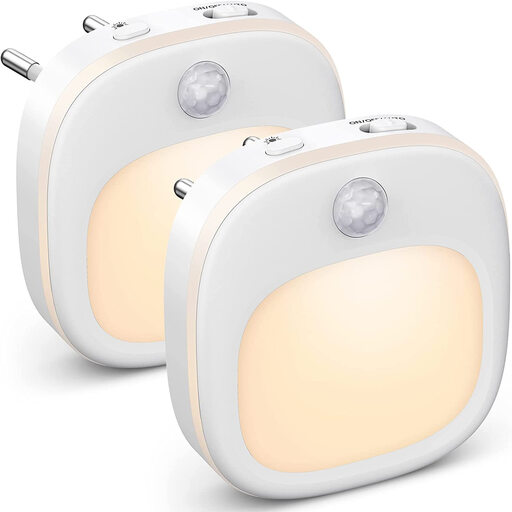
Why This Fits Their Persona: Homeowners and seniors need a reliable, maintenance-free solution for fall prevention. This plug-in model offers constant readiness without the need for charging or battery changes.
Solves the 'inflexible power supply' problem with direct mains operation. The adjustable light modes (3 colours, 5 dimming levels) also prevent overly harsh light and glare in the dark.
Reliable and maintenance-free continuous operation via a direct outlet connection. Ideal for safety-critical areas.

Why This Fits Their Persona: Anyone looking for discreet lighting for kitchen cabinets, wardrobes, or display cases needs a slim, wireless, and easy-to-install solution.
The tool-free adhesive mounting solves the problem of complex installation. The 800mAh battery offers a long runtime, and the three colour temperatures, including cool white, provide the right light for any task.
Tool-free installation and an ultra-slim profile for discreet and functional illumination of workspaces and cabinet interiors.
We have compiled a complete, up-to-date list of products that fully meet these strict selection criteria and relevant safety regulations.
Battery life depends on the capacity (measured in milliampere-hours, mAh), frequency of use, and the set brightness level. Models with a capacity of 500 to 800 mAh often last several weeks to two months in sensor-only mode, with an average of 5–10 activations per night, before needing a recharge. In continuous-on mode, the runtime is significantly shorter.
For optimal performance, a motion-sensor stair light should be mounted at knee to hip height (approx. 50–80 cm above the steps). At this height, the sensor reliably detects leg movement when using the stairs without triggering from motion further away. Aim the light downwards onto the steps to ensure good illumination without causing glare.
Yes, if the light is too bright or has an unsuitable colour temperature. Blue light, commonly found in cool white LEDs, can inhibit the production of the sleep hormone melatonin. To avoid disrupting sleep, a model with a dimmable function and a selectable, warm white colour temperature (below 3200 K) is the right choice. This ensures it produces only a gentle, unobtrusive orientation light.