
Lieferung heute & morgen

Qualitätsgarantie

Willkommens-Angebote freischalten: KOSTENLOSE Lieferung | Bis zu 80 % RABATT | Kostenlose 30-Tage-JoyPlus-Testphase
App herunterladen
A motion sensor night light is designed to automatically illuminate dark hallways, stairs or bedrooms, so you don't have to fumble for a switch in the middle of the night. In practice, however, models differ significantly when it comes to sensor technology, power supply and installation. A cheap buy can prove unsuitable if the light reacts too slowly, stays on permanently or drains its batteries quickly.
This guide shows you which technical specifications actually matter and which LED night light with motion sensor suits different living situations.
A PIR motion sensor detects changes in infrared radiation caused by moving people. A twilight sensor, on the other hand, measures ambient brightness. These two functions are not automatically linked.
A night light with motion detection can therefore trigger even in daylight if no twilight sensor is integrated. For hallways or stairwells, a combination of motion detection and an adjustable light threshold is usually more practical.
Manufacturers often quote a maximum range. What also matters is the detection angle, the mounting height and the direction of movement. A sensor typically reacts more reliably when a person walks across its detection field than when they walk directly towards it.
Also pay attention to the shut-off time. A short time span saves energy, but on stairs or long hallways it can lead to frequent switching on and off.
A battery-operated night light can be placed flexibly, but requires regular battery changes or recharging. A plug-in night light is ready to use immediately, but depending on its design it may block the second socket and is tied to a fixed position.
For hardwired 230-volt motion sensors, installation by a qualified electrician is required. These devices are not the same as a simple plug-in night light.
For an automatic night light indoors, the following details are relevant:
A sensor with adjustable sensitivity and shut-off delay can be better adapted to a hallway, bathroom or entrance area.
Brightness is usually given in lumens. For a night light in the bedroom, a few lumens are often enough, while a night light for stairs may need a little more guidance. A dimming function is useful if you want to use the same device by the bed and in the hallway.
Colour temperature is given in Kelvin. Warm white light around 2700 to 3000 K feels more subdued in living areas. Figures like 4000 to 4500 K describe a more neutral white. The choice depends on your personal location and desired visibility.
For indoor use, housings made from ABS or PC are common. In the bathroom or near moisture, the stated IP rating must match the installation location. IP20 is only suitable for dry indoor areas. IP44 offers protection against splashing water, but does not replace proper planning for permanently damp environments.
For mains-voltage products, make sure you have a clear instruction manual, correct voltage details and visible conformity markings. Batteries and small components should be kept out of reach of children.
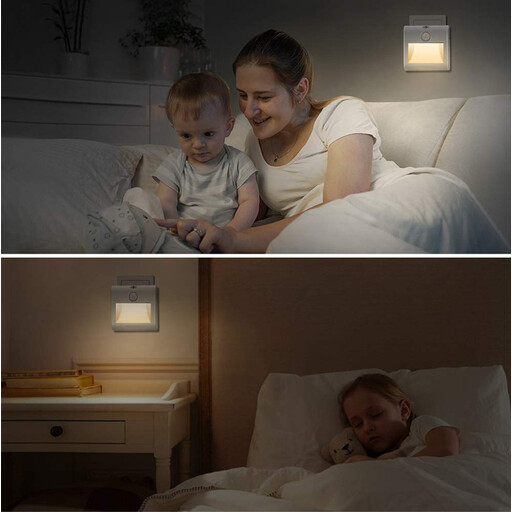
Why this product fits the profile: The 2-pack is ideal for households wanting to equip bedrooms, hallways or toilets at the same time. It plugs directly into a socket and requires no batteries.
The automatic mode is linked to a light threshold of ≤20 LUX and a stated motion detection range of 3–5 m.
Two lights, 1 W power consumption per unit, touch dimming and memory function; a constant-on mode is also available.
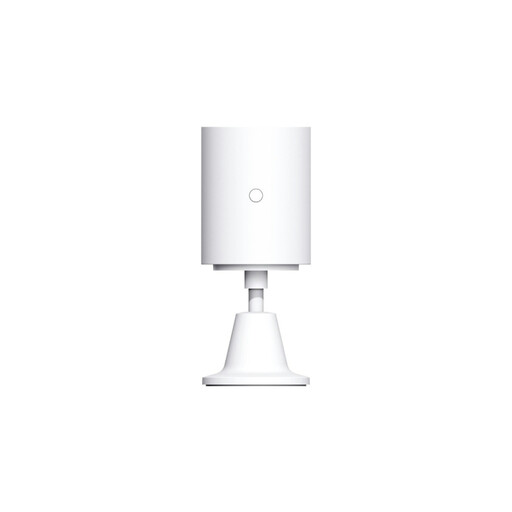
Why this product fits the profile: This sensor is aimed at smart home users who want to use motion and brightness data for automated lighting rules.
The specifications mention an integrated light sensor, a 170° detection angle and a range of up to 7 m, rather than just a vague motion claim.
Matter-over-Thread communication, powered by two CR2450 batteries and customisable automations via compatible systems.
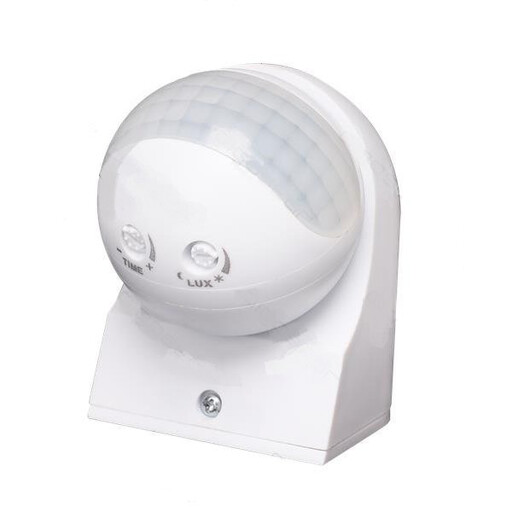
Why this product fits the profile: This device is designed for fixed wall mounting and controlling connected lights, for example in hallways, entrance areas or the garage.
IP44, a stated voltage range of 200–240 V and a described wall mounting method make the usage limits clear.
180° PIR sensor, ABS housing and designed for indoor use as well as covered outdoor areas according to the product specifications.
We have put together a complete, regularly updated list of products that fully meet these strict selection criteria and the safety regulations in force in the EU.
A PIR sensor detects movement within its detection area. An additional twilight sensor checks whether the room is dark enough. Only when both conditions are met is the light automatically activated. Depending on the model, the shut-off delay can be adjusted.
The running costs depend on the power output, usage duration and battery or rechargeable battery type. For a 1 W LED light, the power consumption in continuous mode is theoretically low; in sensor mode it only lights up intermittently. With battery-operated models, there are additional costs for batteries or recharging.
The actual lifespan depends on operating hours, heat generation, switching cycles and the quality of the power supply. Figures like 25,000 hours are manufacturer values and not a guarantee for every usage scenario. For permanently installed lights, the bulbs and electronics should not be opened or modified by yourself.