
Lieferung heute & morgen

Qualitätsgarantie

Willkommens-Angebote freischalten: KOSTENLOSE Lieferung | Bis zu 80 % RABATT | Kostenlose 30-Tage-JoyPlus-Testphase
App herunterladen
An automatic night light provides safety and comfort, whether as a gentle nursing light for babies, a guide light in the hallway, or a sensor-activated stair light. But the market is flooded with models whose real-world performance often falls short of their promises. Many buyers are frustrated by unreliable sensors, short battery life, or glaring light. This guide highlights the technical details you need to check to make an informed decision and sidestep common purchasing mistakes.
As your Joybuy Product Recommendation Officer, I have analysed the key features that define a functional and durable night light.
Before making a purchase, you should be aware of the three most common problems found in low-quality models, which can severely limit their everyday usefulness.
To avoid the issues mentioned above, you should check three core technical parameters. These are decisive for the functionality and longevity of your night light.
A good motion detector is based on a PIR (Passive Infrared) sensor that reacts to body heat. Look for the following specifications:
Battery capacity is measured in milliampere-hours (mAh). For sensor-only mode, a battery should have at least 500 mAh to ensure a runtime of several weeks. Models intended for continuous use or as a rechargeable night light for kids benefit from capacities of 1000 mAh or more. Also, check the charging port: a USB-C port is more modern and robust than the older Micro-USB standard.
The quality of the light is crucial for comfort.
Here are some recommendations tailored to different user profiles that meet the quality criteria mentioned above.

Why This Fits Their Persona: Ideal for families looking to equip multiple areas like hallways, children's rooms, and stairwells. The 2-pack offers a cost-effective solution without compromising on core features.
It avoids the 'inappropriate light quality' trap by offering three colour temperatures (from warm to cool white) and 5-step dimming. The sensor, with its 3-5m range and dusk-to-dawn feature, is precisely specified.
High flexibility thanks to adjustable light colour and brightness. The 500mAh battery provides a solid runtime in sensor mode. The set is an economical starter kit.

Why This Fits Their Persona: Safety and child-friendly operation are the top priorities here. The soft silicone material is harmless, and the simple touch controls are perfect for use as a nursing light or a soothing light in a child's room.
It bypasses the 'short battery life' trap with a 1200mAh battery for extended runtime. The dimmable, gentle light prevents the 'inappropriate light quality' issue and is easy on babies' sensitive eyes.
Made from food-grade, BPA-free silicone. The intuitive touch controls and integrated 30-minute timer are practical features for daily life with children.
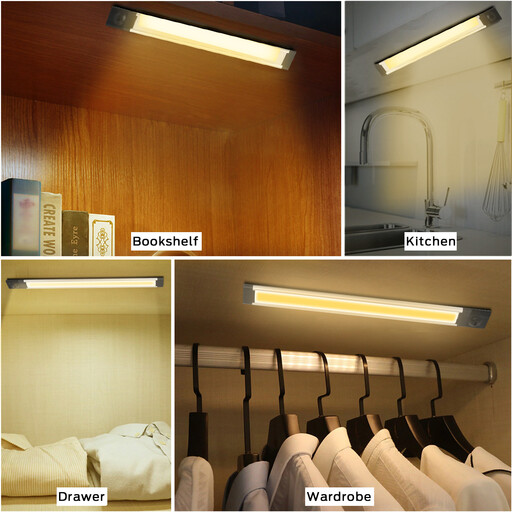
Why This Fits Their Persona: For users who want more than just basic illumination. The gesture control for brightness and power offers a modern user experience, while the high light output is also suitable for workshops or closets.
It solves the 'inappropriate light quality' problem with stepless dimming and a wide colour temperature range (2800K-6500K). The high-quality construction of aluminium and ABS also prevents premature wear and tear.
Innovative gesture control for touchless operation. The high light output of 400 lumens and flexible magnetic mounting make it extremely versatile.
We have compiled a complete, up-to-date list of products that fully meet these strict selection criteria and relevant safety standards.
1. On average, how long does the battery of a motion sensor night light last? The runtime heavily depends on the battery capacity (mAh) and frequency of use. A model with 500 mAh, activated about 10 times per night in sensor mode, can last from several weeks to over a month. In continuous-on mode, the battery life shortens to just a few hours.
2. What is the ideal mounting location for a stair light with a sensor? For optimal performance, the light should be mounted in the lower third of the wall, around ankle or knee height. This allows the sensor to detect leg movement early without shining directly into your eyes. Place one at the top and bottom of the stairs to cover the entire area.
3. Can an LED guide light disrupt sleep? Yes, light with a high blue-light content (cool white, over 5000 K) can inhibit the production of the sleep hormone melatonin. For sleeping areas, always choose a model with a warm white colour temperature (under 3200 K) and a dimming function to reduce brightness to a minimum.