
Lieferung heute & morgen

Qualitätsgarantie

Willkommens-Angebote freischalten: KOSTENLOSE Lieferung | Bis zu 80 % RABATT | Kostenlose 30-Tage-JoyPlus-Testphase
App herunterladen
A motion sensor night light promises comfort and safety: it turns on exactly when you need it while also saving energy. In practice, however, inadequate product features often lead to frustration. Many models end up in a drawer after a short time because they complicate daily life rather than making it easier. Before you make a decision, it's crucial to understand the typical pitfalls that often only become apparent after the purchase.
The three most common problems are:
To avoid buyer's remorse, you should focus your attention on three technical features. These are the primary determinants of a night light's functionality and longevity.
Most night lights use a Passive Infrared (PIR) sensor, which reacts to body heat. Two values are critical here:
Some models offer additional activation methods like gesture or clap control, which can be more practical than a simple motion sensor in certain situations, such as inside a closet.
The choice of power source directly impacts user convenience and running costs. A rechargeable LED night light via USB-C is often the more flexible and cost-effective long-term solution. Pay attention to the battery capacity, specified in milliampere-hours (mAh). A higher mAh value generally means a longer runtime between charges. Models with a capacity of 500 mAh or more often provide weeks of use before needing to be recharged.
A well-designed mounting solution is crucial for practical use. For drill-free cabinet lighting or flexible placement on walls, magnetic mounts are ideal. Check if the light itself is magnetic or if a metal plate with an adhesive backing is included. This combination allows you to easily detach the light for charging. Additional hanging hooks offer further flexibility for mounting in various locations. The material of the light—often a combination of aluminium and ABS plastic—also gives an indication of its quality and stability.
Based on these objective criteria, we have curated a selection of products suitable for different needs and locations.
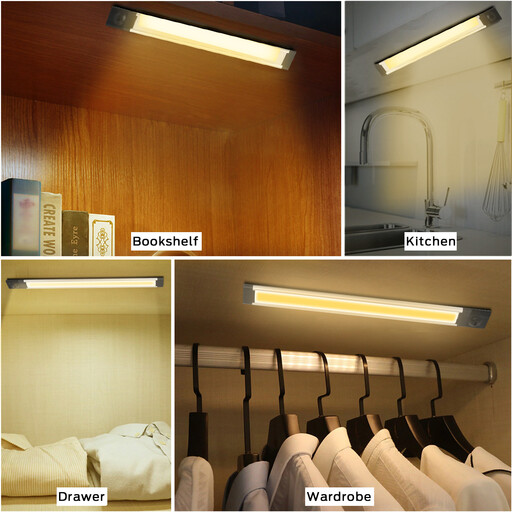
Why This Fits Their Persona: Ideal for users seeking a bright and reliable light source for passageways, stairs, or closets. The combination of high luminosity and flexible control primarily meets functional requirements.
The dual mounting option (magnet and hook) ensures a stable hold, bypassing the problem of falling lights. The additional gesture control offers a reliable alternative to a simple motion sensor.
High light output of 400 lumens for clear visibility. The colour temperature is adjustable from warm white to cool white, allowing adaptation to different environments.

Why This Fits Their Persona: Designed for parents looking for a specialised night light for a child's room. The focus is less on motion detection and more on creating a sleep-conducive environment through light projection and soothing sounds.
Instead of an error-prone motion sensor, this device uses a sound sensor that specifically reacts to a child's cry. The USB-C charging is modern and practical, solving the problem of dead batteries.
Combines light projection with two melodies and two nature sounds. The automatic 23-minute shut-off supports the process of falling asleep without running all night.
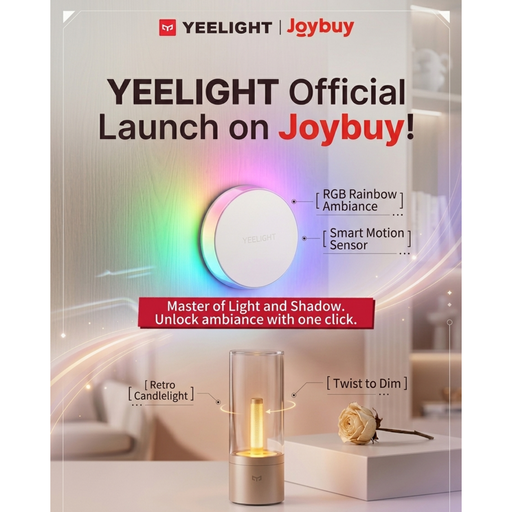
Why This Fits Their Persona: Perfect for users looking for a dimmable mood light for living rooms, bedrooms, or playrooms. It combines the functionality of a motion sensor with customisable RGB lighting and a modern design.
The high-quality sensor operates precisely and avoids false triggers. The magnetic base is stable and well-engineered, while the USB-C port ensures convenient and fast charging.
Offers 11 preset light effects for different moods. The combination of a motion and a dusk sensor provides intelligent and fully automatic operation.
We have compiled a complete, up-to-date list of products that fully meet these strict selection criteria and UK safety regulations.
The battery life heavily depends on the frequency of use and the set brightness level. With average use (approx. 8–10 activations per night), a model with a battery capacity of 500 mAh or more can last for several weeks to months. In continuous-on mode, the runtime is reduced to a few hours.
Yes, they are very well-suited for this purpose. A sensor-based orientation light is ideal for wardrobes or pantries. Look for a model with a mounting method that allows for drill-free cabinet lighting, such as a magnetic holder. The sensor will react reliably when the door is opened, providing instant brightness.
A correctly used night light should not disturb your sleep. Choose a model with warm white light (approx. 2700K–3000K), as this has less impact on melatonin production. A dimmable light that only briefly turns on with motion and then switches off again is preferable to continuous lighting to ensure an undisturbed sleep environment.