
Lieferung heute & morgen

Qualitätsgarantie

Willkommens-Angebote freischalten: KOSTENLOSE Lieferung | Bis zu 80 % RABATT | Kostenlose 30-Tage-JoyPlus-Testphase
App herunterladen
A well-placed motion sensor night light significantly enhances safety in your home. It illuminates the way to the bathroom at night, provides gentle orientation in a child's room, or prevents tripping hazards on the stairs—all without fumbling for a light switch. However, the market is crowded, and not every model lives up to its promises. Before you make a decision, it's crucial to understand the most common weaknesses that often only become apparent after purchase.
As your Joybuy Product Recommendation Officer, I'll help you cut through the noise. We'll focus on the facts and technical features that truly matter, so you can make an informed choice.
Many products advertise long feature lists, but in daily use, the same flaws often appear. Pay attention to these three points to avoid disappointment:
battery-powered night light seems convenient but can become expensive with frequent battery changes. Plug-in models are often inflexible in their placement. The power source is a critical factor for long-term satisfaction.To avoid the problems mentioned above, you should check three core parameters before buying. These are the key determinants of your night light's functionality and utility.
The choice of power source depends entirely on your intended use case.
closet lighting with a sensor or as a portable orientation light.A good motion detector is the heart of the night light. Look for the following specifications:
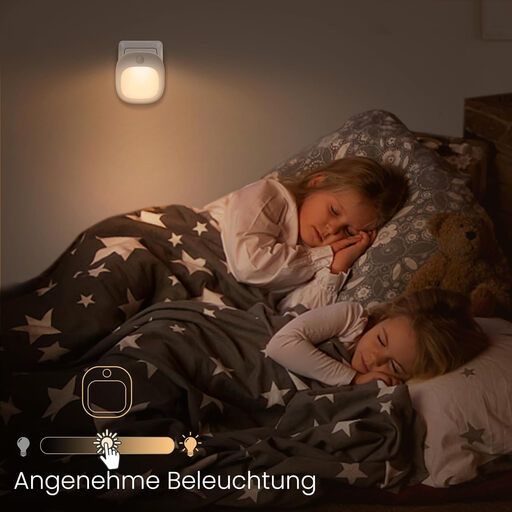
The quality of the light has a direct impact on your well-being.
child's room, a minimal brightness level is often sufficient, whereas a stair light should be brighter to make steps clearly visible. Adjustable brightness levels provide the necessary flexibility for any location.Based on the criteria above, we have identified a few products that are well-suited for different user profiles.
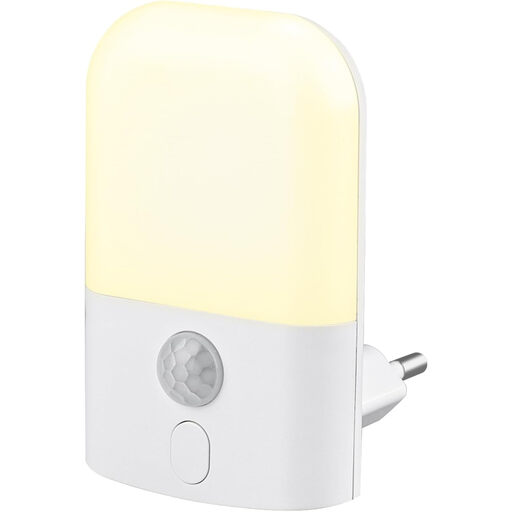
Why This Fits Their Persona: Ideal for users looking for a simple, reliable, and cost-effective solution. Perfect as a first orientation light in a hallway or child's room, without complex settings.
The warm white light (2700K) avoids disrupting sleep patterns. As a plug-in model with 0.5W consumption, it bypasses the trap of hidden running costs from batteries.
5-level dimmable: The brightness can be precisely adjusted. Compact Design: Doesn't block adjacent outlets.
Why This Fits Their Persona: Perfect for anyone who needs maximum flexibility. Ideal for rental apartments, closets, basements, or as a temporary light while travelling, as no outlet is required.
Thanks to USB charging, the cost of disposable batteries is eliminated. The choice between three colour temperatures (including warm white) prevents sleep disruption from the wrong kind of light.
USB-rechargeable: Cost-effective and eco-friendly. 3 Colour Temps & 5 Dimming Levels: Maximum adaptability for any environment and preference.
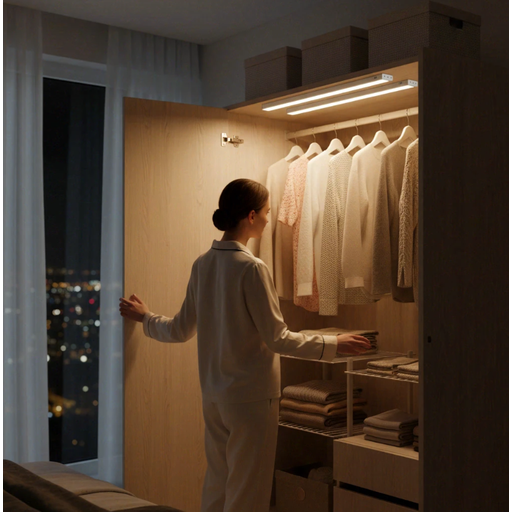
Why This Fits Their Persona: Designed for users who need targeted lighting for wardrobes, kitchen counters, or display cabinets. The slim design is discreet and functional.
The PIR sensor is optimised for short-range detection, avoiding false triggers. The three selectable colour temperatures allow it to be adapted to the location (e.g., clear light in the kitchen, warm light in a bedroom closet).
Ultra-thin profile (10 mm): Fits discreetly under shelves and in narrow spaces. Large battery (1100mAh): Ensures long runtimes between charges.
We've compiled a complete, up-to-date list of products that fully meet these strict selection criteria and safety regulations.
The running costs are extremely low. A typical LED night light with a 0.5-watt output, used for 8 hours daily, consumes only about 1.46 kilowatt-hours (kWh) per year. With an electricity price of 30 cents/kWh, this amounts to an annual cost of less than 50 cents. Rechargeable models are similarly cost-effective.
The ideal height is typically between 30 and 60 cm (about 1-2 feet) off the floor. At this position, the sensor reliably detects leg movement without being triggered by movements in bed or across the room. For a stair light, it's recommended to install one at the top and bottom of the stairs to cover the entire area.
Yes, it's an excellent solution for a child's room night light. Choose a model with warm white light and adjustable brightness. A low dimming level provides gentle orientation if the child wakes up at night, without fully rousing them from sleep. The motion sensor ensures the light is only on when it's actually needed.