
Lieferung heute & morgen

Qualitätsgarantie

Willkommens-Angebote freischalten: KOSTENLOSE Lieferung | Bis zu 80 % RABATT | Kostenlose 30-Tage-JoyPlus-Testphase
App herunterladen
A motion-sensor night light is a smart solution for many everyday situations. Whether you need to safely navigate a hallway at night without turning on the main light, check on your child without disturbing their sleep, or use a gentle nursing light as a new parent, the right illumination provides both safety and comfort.
This guide is designed to give you a clear overview of the available features. We'll explain key characteristics like power source, light colour, and sensor technology, so you can find a model that is perfectly tailored to your needs.
Choosing the right guide light depends on technical details that determine its convenience and efficiency. Here are three key criteria to simplify your decision.
The type of power source determines the night light's flexibility and where it can be used.
The quality of the light has a direct impact on the sleep environment.
The motion sensor is the core feature of these devices. A Passive Infrared (PIR) sensor reacts to the body heat of people moving within its detection range. At the same time, a dusk-to-dawn sensor measures the ambient brightness (in lux) to ensure the light only activates in the dark. Pay attention to the detection range (typically 3–5 metres) and angle to ensure it covers the area you wish to illuminate.
Based on functionality and use cases, we have selected a few models that meet different requirements.
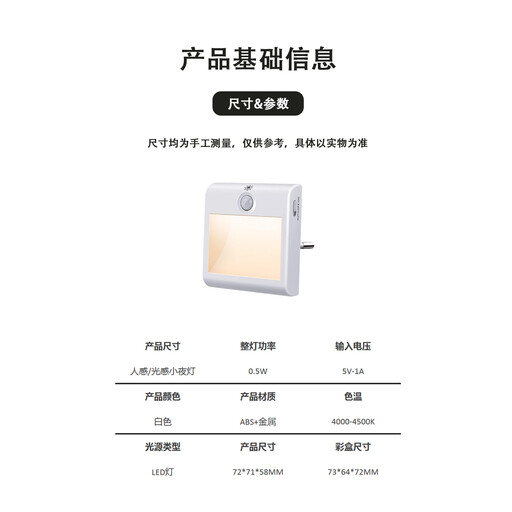
Why it stands out: This set offers a complete solution for multiple rooms, combining smart sensor technology with a convenient dimming function that includes memory.
Advantages:
Who is it for? For homeowners and renters looking for a uniform and customisable lighting solution for multiple areas. The memory function is especially useful for those who prefer a consistent brightness level.
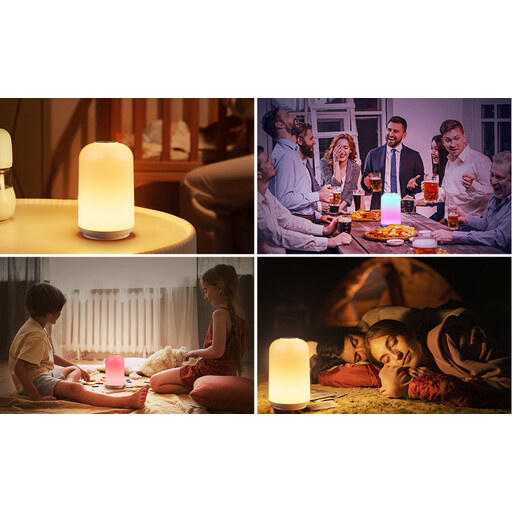
Why it stands out: This model impresses with its wireless flexibility and dual light function, offering both warm white light and colourful accents.
Advantages:
Who is it for? Perfect for parents looking for a versatile soothing light or nursing light. Also great for users who need a portable light source that can adapt to different moods.
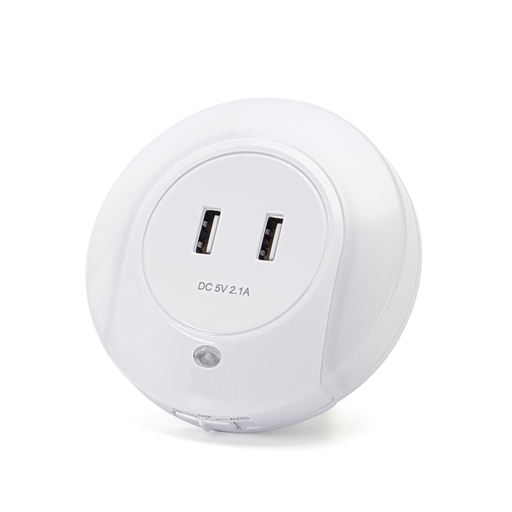
Why it stands out: This device is a 2-in-1 solution that combines a gentle guide light with a practical charging station for mobile devices.
Advantages:
Who is it for? Ideal for tech-savvy users who value functionality and efficiency. It's an excellent choice for bedrooms, guest rooms, or offices where outlets are at a premium.
If the models presented don't exactly match your requirements, you can find a wider selection of lighting solutions for your home in our Warm LED Lights category. There, you can compare different designs and features to find the right product for your needs.
A motion-sensor night light uses two sensors. A Passive Infrared (PIR) sensor detects heat radiation from moving people. A dusk-to-dawn sensor measures the ambient brightness. The light only activates when both conditions are met: it is dark, and motion is detected within its range. After a pre-set time with no movement, it automatically switches off again.
For bedrooms and children's rooms, a warm white light colour (under 4500 Kelvin) is recommended. This light has a lower blue light content, which is less likely to inhibit the production of the sleep hormone melatonin than cool white light. A warm white night light thus supports an undisturbed sleep cycle and is easier on the eyes when you wake up at night.
LED night lights are very energy-efficient. Most models have a power consumption of less than 1 watt. For example, a device with 0.4 watts, like the Aigostar model, uses less than one kilowatt-hour of electricity even after 1,000 hours of operation. The operating costs are therefore minimal, even if the light remains in the sensor's standby mode all night.