
Lieferung heute & morgen

Qualitätsgarantie

Willkommens-Angebote freischalten: KOSTENLOSE Lieferung | Bis zu 80 % RABATT | Kostenlose 30-Tage-JoyPlus-Testphase
App herunterladen
A good motion-sensor night light provides safety and comfort after sunset. It illuminates the path to the bathroom, prevents falls on the stairs, and soothes children who are afraid of the dark. But the market is flooded with models whose real-world usefulness only becomes clear with daily use—or doesn't. Many products turn out to be impractical, disruptive, or just unnecessary power hogs.
As your Joybuy Product Recommendation Officer, I've analysed the most common frustrations that arise when choosing a guide light. This guide will show you what to look for to make an informed decision and sidestep the three typical buying traps.
Before you choose a model, you should be aware of the hidden drawbacks that often only surface after the purchase.
To avoid these traps, you should carefully examine three technical features. These define the functionality and everyday usability of a night light.
The most important feature is the type of sensor. Look for models that explicitly combine both technologies:
The quality of the light has a direct impact on your well-being and sleep quality.
Consider which power source makes the most sense for your intended use.
Here are a few recommendations tailored to different needs that meet the criteria mentioned above.
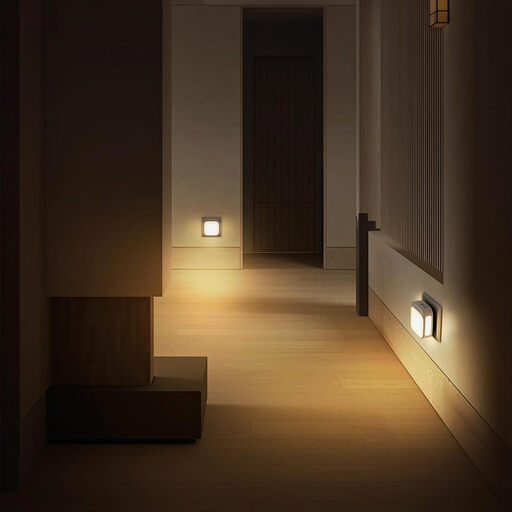
Why This Fits Their Persona: Ideal for users looking for a simple yet effective solution for multiple rooms. The two-pack offers excellent value, perfect for outfitting a hallway and bedroom.
This model features an automatic light sensor (dusk-to-dawn) and a stepless dimming function. It bypasses the trap of running during the day and being too harsh at night.
Extremely low power consumption of just 0.3W, according to the manufacturer. The stepless dimming from 10% to 100% provides full control over the light intensity.
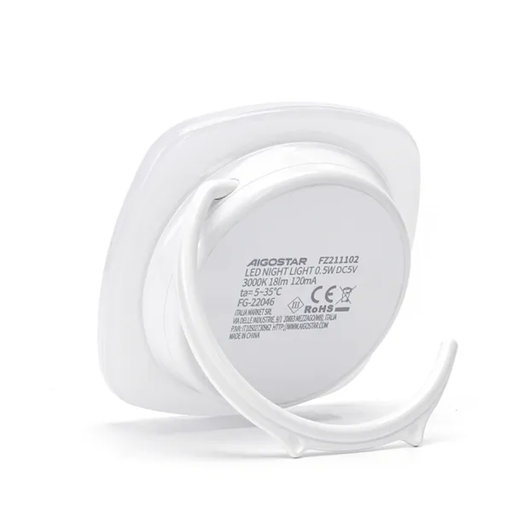
Why This Fits Their Persona: Perfect for anyone needing a light source in places without an outlet, such as closets, basements, or older homes. The rechargeable battery makes placement independent and flexible.
This model combines a PIR motion sensor with a light sensor, so it only activates with movement in the dark. The USB-rechargeable battery solves the problem of impractical power sources and constant battery changes.
USB-rechargeable and wireless for maximum flexibility. Its compact form factor and modern design allow for discreet placement in any room.

Why This Fits Their Persona: Designed specifically for parents who want more than just a light. It's a sleep aid that combines visual and auditory stimuli to create a soothing atmosphere for babies and toddlers.
This product goes beyond typical functions. With adjustable brightness, a timer, and calming projections, it avoids the trap of disruptive light. The battery operation ensures safety with no cords near the bed.
Combines light projection with soothing sounds. According to the manufacturer, it features an adjustable cry sensor that automatically reactivates the unit when needed.
We've compiled a complete, up-to-date list of products that fully meet these strict selection criteria and safety standards.
1. How much does it cost to run an LED night light? The cost is extremely low. A typical LED night light with a power consumption of 0.5 watts, running for 8 hours a night, uses about 1.46 kilowatt-hours (kWh) per year. At an average electricity price of 30 cents/kWh, this results in annual running costs of less than 50 cents.
2. Where is the best place to install a motion-sensor night light? Install the light at knee-to-hip height to ensure it reliably detects motion. Ideal locations include hallways, stair landings, and bathrooms. Avoid pointing the sensor directly at heat sources (like radiators) or windows, as this can cause false triggers. For a stair light, it's best to place one at both the top and bottom of the staircase.
3. Can a night light disrupt sleep? Yes, if it has the wrong colour temperature or is too bright. As described above, you should choose a dimmable model with warm white light (under 3000 Kelvin). This type of light is least disruptive to the body's natural melatonin production, making it easier to fall back asleep after waking up during the night.