
Lieferung heute & morgen

Qualitätsgarantie

Willkommens-Angebote freischalten: KOSTENLOSE Lieferung | Bis zu 80 % RABATT | Kostenlose 30-Tage-JoyPlus-Testphase
App herunterladen
Navigating your home at night shouldn't be a challenge. Yet, inadequate lighting solutions often lead to uncertainty or disrupt sleep. A motion-sensor night light promises a simple and energy-efficient solution. However, not all models are created equal, and certain flaws can quickly negate their benefits. Many users report sensors that react too slowly, batteries that are constantly dead, or light that is so harsh it disturbs sleep more than it helps.
This guide shows you which technical details truly matter to avoid these pitfalls and find a reliable guidance light for your home—whether it's for a nursery night light, the hallway, or as a motion-sensor stair light.
To make an informed decision, it's crucial to understand the core features that separate a good model from an impractical one.
The choice of power source is fundamental and depends directly on where you plan to use it.
The quality of the light has a direct impact on your well-being and sleep cycle.
The functionality of an LED night light with a sensor lives or dies by the quality of its sensors.
Based on the criteria mentioned, we have selected a few models for different use cases.
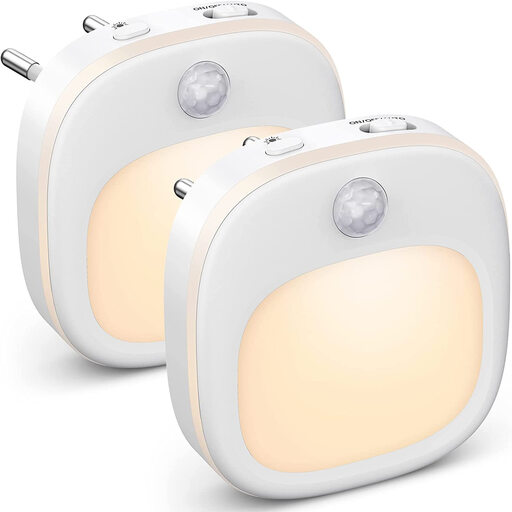
Why This Fits Their Persona: This set offers a cost-effective solution for outfitting multiple rooms. As a plug-in model, it's maintenance-free and ideal for hallways and children's rooms where constant readiness is required.
With 3 selectable colour temperatures and 5 dimming levels, it avoids the problem of light that is too harsh or unsuitable. You can adjust the lighting precisely to the environment.
Reliable plug-in operation with no battery worries. The 2-pack allows for uniform and affordable outfitting of a hallway and bedroom.

Why This Fits Their Persona: Ideal for users who need a lighting solution for places without a socket, such as stair landings, cupboards, or campervans. Its independence from the mains offers maximum placement freedom.
With an integrated 500 mAh battery and USB charging, this model sidesteps the pitfall of short battery life. According to the manufacturer, it provides up to 10 hours of light in sensor mode.
Compact, wireless design. Adjustable colour temperatures and brightness levels allow for versatile use in various scenarios.
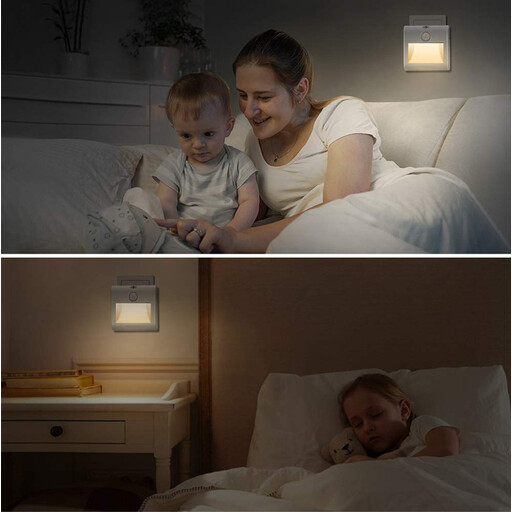
Why This Fits Their Persona: For users who value precise and personalised lighting. The memory function is particularly convenient, as the preferred brightness doesn't need to be reset with every activation.
The stepless touch dimming with a memory function solves the problem of fixed, often unsuitable brightness levels. The light always starts at the last selected intensity.
High ease of use thanks to touch controls and a memory function. The 4000-4500 K colour temperature provides a natural, daylight-like warm white.
We have compiled a complete, real-time list of products that fully satisfy these strict selection criteria and UK safety regulations.
1. How long does the battery last on a motion-sensor night light? The battery life varies greatly depending on the model, battery capacity (mAh), and frequency of use. A model with a 500 mAh battery can often last for several weeks to months in sensor-only mode, with an average of 8–10 activations per night. For models in continuous-on mode, the runtime is limited to a few hours.
2. What light colour is best for a night light in a bedroom or nursery? For sleeping areas, a warm light colour below 3200 Kelvin (K) is generally recommended. This warm white night light resembles candlelight and is less disruptive to the production of the sleep hormone melatonin than cool, bluish light. This can make it easier to fall back asleep after waking up during the night.
3. Where is the best place to install a motion-sensor stair light? For optimal performance, a motion-sensor stair light should be mounted at knee or calf height. This ensures that the sensor detects the movement of your legs early as you approach the stairs. Placing one at the top and bottom of the staircase ensures seamless illumination of the entire area.