
Lieferung heute & morgen

Qualitätsgarantie

Willkommens-Angebote freischalten: KOSTENLOSE Lieferung | Bis zu 80 % RABATT | Kostenlose 30-Tage-JoyPlus-Testphase
App herunterladen
Waking up suddenly in the middle of the night—whether for a child, a glass of water, or a trip to the bathroom—presents a common challenge: How do you navigate in the dark without turning on a bright overhead light and completely disrupting your sleep? A fall in the hallway or on the stairs is a real hazard, especially for seniors and families with young children. A motion-sensor night light offers a practical and safe solution. It activates only when needed, provides gentle, guiding light, and then automatically turns off.
This article serves as a guide to understanding how they work and the key selection criteria. We will introduce you to various models based on objective features like power source, brightness, and installation type, so you can make an informed decision for your home.
Choosing the right model depends on your specific use case. Three key criteria will help you decide.
The type of power supply determines the night light's flexibility and where it can be placed.
The right light intensity is crucial for providing guidance without disturbing your sleep.
The motion sensor is the core of the device. Its precision determines its functionality. Pay attention to the specified range (often between 3 and 5 metres) and the detection angle. A wide angle is advantageous for open areas like hallways, while a more focused sensor is sufficient in a bedroom to avoid false activations from movement in bed.
Based on the criteria mentioned, we have compiled a selection of models that cover a range of different needs.
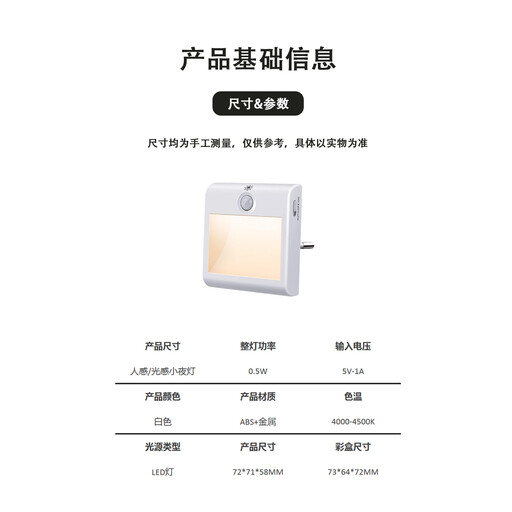
Why it stands out: This set offers a practical solution for outfitting multiple rooms. The combination of plug-in operation, stepless touch dimming, and a memory function makes it exceptionally user-friendly.
Benefits:
Who is it for? Ideal for households looking for a straightforward and uniform lighting solution for hallways, bedrooms, and bathrooms. The 2-pack is a cost-effective starter kit.
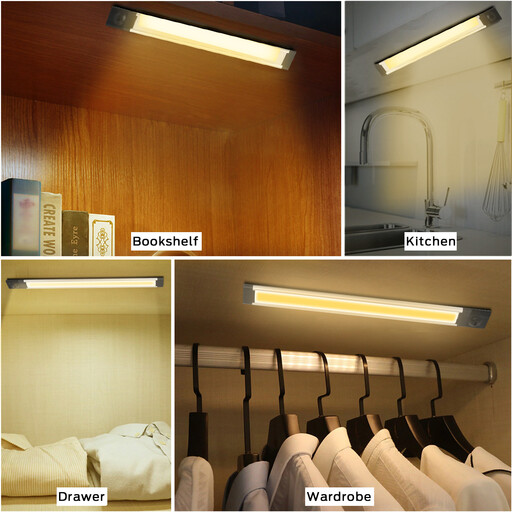
Why it stands out: This model is distinguished by its high brightness of 400 lumens and innovative gesture control. The flexible magnetic mount allows for a drill-free installation.
Benefits:
Who is it for? Perfect for users who need bright, flexible lighting for wardrobes, workshops, garages, or stairwells. The intuitive controls and battery operation make it a versatile tool.
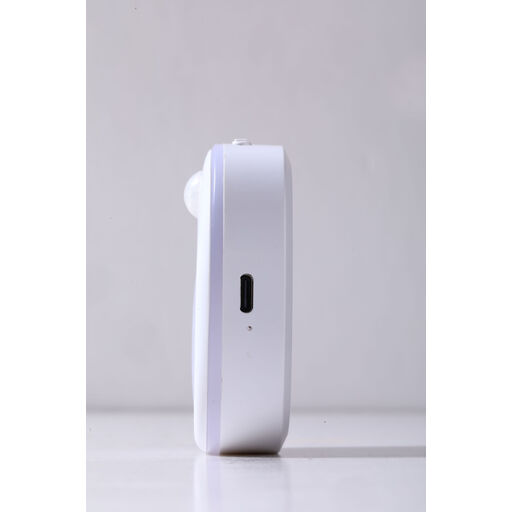
Why it stands out: This 2-pack of rechargeable night lights combines portability with maximum adaptability. With three selectable colour temperatures and five brightness levels, it adapts to any situation.
Benefits:
Who is it for? An excellent choice for parents looking for an adaptable child's room night light, as well as for anyone who needs a flexible light source for various locations like a bedside table, shelf, or bathroom.
If the models featured don't exactly match what you're looking for, or if you need specific components for a custom lighting project, exploring other categories might be helpful. Discover our selection of lamp holders to find the right base for your lighting ideas.
1. How much power does a motion-sensor night light use? Modern LED night lights are extremely energy-efficient. Power consumption is typically between 0.5 and 1 watt. Because the motion sensor only uses energy when light is actually needed, it further minimises running costs.
2. Can the brightness of a motion-sensor night light be adjusted? Yes, many models are designed as a dimmable night light. There are devices with fixed brightness levels or with stepless dimming, which allow for finer adjustment via touch or gesture control. This is especially useful for adapting the light to your eyes' sensitivity at night.
3. Where is the best place to install a motion-sensor guidance light? For optimal performance, the motion-sensor guidance light should be placed where it can detect typical pathways. In hallways and on stairs, a low mounting position (approx. 30–50 cm above the floor) is recommended to illuminate the ground and make trip hazards visible. In the bedroom, it should be positioned so that it is not activated by movements in bed, but only when you get up.