
Lieferung heute & morgen

Qualitätsgarantie

Willkommens-Angebote freischalten: KOSTENLOSE Lieferung | Bis zu 80 % RABATT | Kostenlose 30-Tage-JoyPlus-Testphase
App herunterladen
An LED night light with a motion sensor should help you find your way at night without keeping the room permanently lit. In practice, however, models vary considerably in their sensors, power supply, brightness and installation. If you focus only on a high number of LEDs or an especially long battery life, you could overlook important details.
Claims such as “up to 5 metres” usually refer to the maximum range in ideal conditions. Furniture, doors and the mounting angle can reduce the actual detection range. For a bedroom, hallway or staircase, the detection angle matters just as much as the range.
A bright LED sensor light can illuminate a wardrobe or worktop well, but may be distracting in a bedroom. Lumens measure light output, but don’t tell you on their own whether the light is distributed comfortably. A dimmable night light or several brightness settings gives you more control.
The advertised battery life of a rechargeable night light depends on brightness, how often the sensor is triggered and the condition of the battery. A high capacity doesn’t automatically mean longer everyday use. Also check whether it has a USB port, a suitable charging cable and a battery-level indicator.
A PIR sensor detects movement by sensing heat radiation. Many models also combine the sensor with a dusk sensor, so the motion-sensor night light only switches on when the ambient light is low. Figures such as 20 lux, a range of 3 to 5 metres or a 120-degree detection angle give you specific points of comparison.
An automatic switch-off is useful in a hallway or on the stairs. Some lights switch off after around 20 seconds if no further movement is detected. A shorter on-time may be enough for a wardrobe, while a gentle light that stays on a little longer can be more practical in a bedroom.
A plug-in model is ready to use straight away and doesn’t need charging. It’s particularly suitable for fixed positions beside doors, in hallways or in bathrooms. Check the specified mains voltage, IP rating and whether it’s intended for indoor use. For example, a model with IP20 is designed for dry indoor areas and must not come into direct contact with water.
A rechargeable night light, on the other hand, can be attached wherever you need it, such as to the sides of wardrobes, on shelves or underneath wall units. USB-C or USB charging makes it easy to recharge using a mains adaptor, laptop or power bank. Follow the manufacturer’s safety and charging instructions for lithium batteries. Damaged or swollen batteries must not be used.
Warm-white night lights with a colour temperature of around 2,800 to 3,200 Kelvin are a popular choice for bedrooms and finding your way around at night. Neutral or cool white light can provide clearer illumination when looking in a wardrobe or working in the kitchen. Models with 3,000, 4,500 and 6,500 Kelvin can be adjusted to suit the situation.
For sensor-activated wardrobe lighting or an LED under-cabinet light, a slim housing, magnets and adhesive pads are practical features. Before installation, make sure the surface is clean, dry and strong enough to support the light. On stairs, beside a bed or in a passageway, secure the light properly to prevent it from falling.

Why this product suits this profile: Two compact lights with USB charging, three colour temperatures and five brightness settings can cover several rooms without needing a fixed power socket.
The five brightness settings reduce the risk of having just one light level that doesn’t suit both a bedroom and a hallway. According to the product information, the sensor works in the dark and has a range of 3 to 5 metres.
500-mAh battery, 5-V USB charging, 30 lumens and two modes: sensor-activated or constant light.
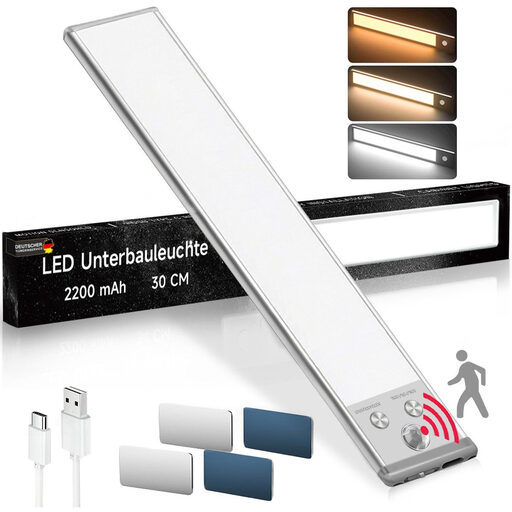
Why this product suits this profile: This slim light bar works well under kitchen cabinets, inside wardrobes, in hallways or on stairs. It offers three colour temperatures and three brightness settings.
The product information gives specific details about the sensor angle, range and switch-off time: 120 degrees, up to 3 metres and around 20 seconds with no movement.
2,200-mAh battery, USB-C charging, magnetic attachment and 41 LEDs in the 30-cm version.
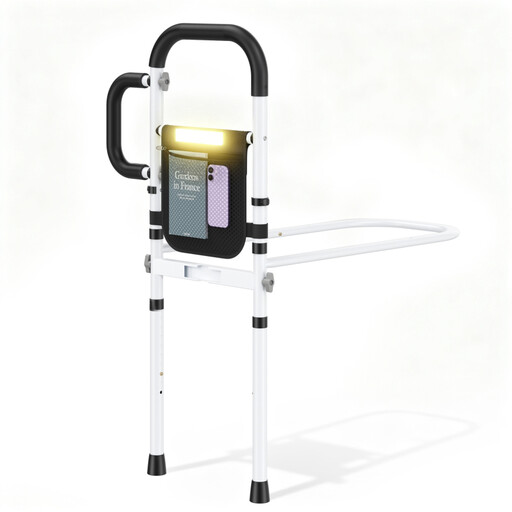
Why this product suits this profile: This model combines an adjustable bed rail with an integrated sensor light, making it designed for use right beside the bed.
This isn’t just a light: check the height ranges, non-slip feet and specified installation against your own bed before buying.
Nine handle heights from 42 to 48 cm, stand heights from 39 to 55 cm and a stated load capacity of up to 136 kg.
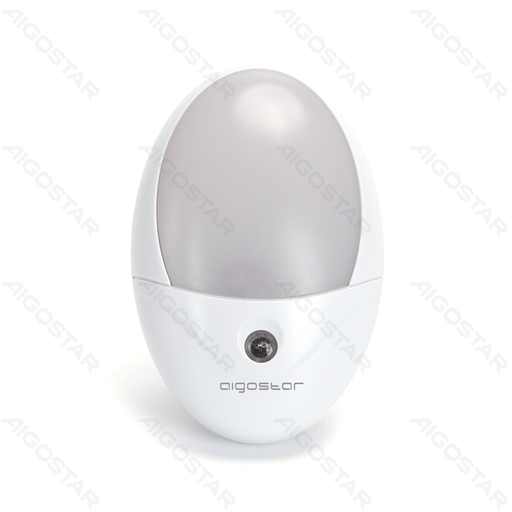
Why this product suits this profile: This plug-in model is designed for hallways, bedrooms, bathrooms or stairs, and doesn’t need its batteries replaced or recharged.
The clear technical specifications make it easier to plan where to use it: PIR sensor, maximum range of 7 metres, 120-degree detection angle and 20 lumens.
Warm white light at 3,000 Kelvin, 1-watt power consumption and a direct connection to a 220- to 240-volt socket.
We’ve put together a complete, regularly updated list of products that meet these strict selection criteria and fully comply with the safety regulations in force in the EU.
Position the light so the sensor can detect movement across the area from the side or straight on. If you’re using a magnetic or adhesive mount, the surface must be clean, dry and strong enough to support it. Plug-in models go directly into a suitable indoor socket.
Battery life depends on capacity, brightness, colour temperature and how often the light is triggered. Manufacturer claims such as “up to 10 hours” or “up to 80 hours” should therefore be treated as estimates based on specific conditions. Regular charging and using compatible USB power adaptors help you plan for everyday use.
Power consumption is usually low because the light only switches on when it detects movement, and often only when it’s dark. Actual consumption depends on wattage, how long the light stays on and how often it’s triggered each day. A 1-watt plug-in model or a rechargeable LED light bar may be more or less economical depending on how you use it.