
Lieferung heute & morgen

Qualitätsgarantie

Willkommens-Angebote freischalten: KOSTENLOSE Lieferung | Bis zu 80 % RABATT | Kostenlose 30-Tage-JoyPlus-Testphase
App herunterladen
A good motion sensor night light provides safety and comfort without disturbing your sleep or running up the electricity bill. However, the market is flooded with models whose practical utility often falls short of their marketing promises. Many buyers only realise after a few weeks that the sensor is unreliable, the light is too harsh, or the power source is impractical for their chosen location.
As your Joybuy Product Recommendation Officer, I'm here to help you spot these pitfalls. This guide focuses on the crucial technical features that separate a reliable night light from a useless one, so you can make an informed decision for your home.
Before we get to the solutions, it's important to understand the typical problems that lead to buyer's remorse. Pay attention to these three points to avoid disappointment.
To avoid the problems mentioned above, you should carefully examine three technical aspects. These define the functionality and practical benefit of a night light.
Automation is the main advantage of such a light. Look for a combination of two sensor types:
The type of light has a direct impact on well-being and sleep quality.
The choice depends entirely on your use case.
Here are some models that, based on the criteria above, represent a smart choice for specific use cases.

Why This Fits Their Persona: Ideal for parents who need flexible and gentle lighting. The rechargeable battery allows it to be placed directly on the changing table or by the bed, free from the constraints of a power outlet. The adjustable colour temperature and brightness create a soothing environment for the baby.
Thanks to 3 colour temperatures (incl. warm white) and 5-step dimming, it avoids the mistake of overly harsh, cold light. The integrated rechargeable battery solves the problem of an inflexible power supply.
Rechargeable via USB for maximum flexibility. The combination of a motion and dusk-to-dawn sensor (≤20 LUX) ensures efficient operation. The 2-pack offers excellent value for money.
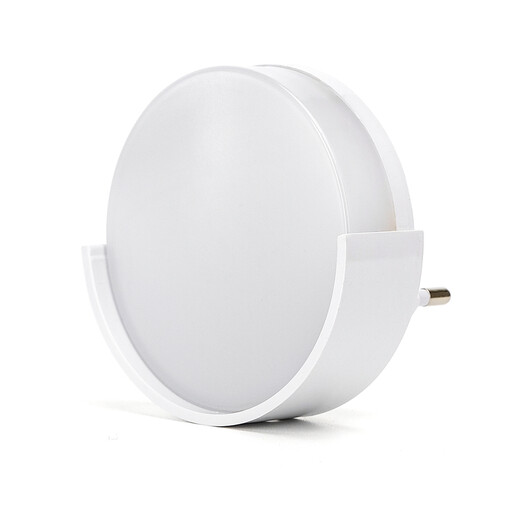
Why This Fits Their Persona: Perfect for homeowners and renters looking for a reliable, maintenance-free orientation light. The "plug-and-play" design requires no installation and provides lasting safety in high-traffic areas.
This model features an integrated dusk-to-dawn sensor (activates below 20 LUX), which prevents the common mistake of activating in daylight. It is a dedicated plug-in solution for guaranteed function.
Extremely low energy consumption of only 1W. The wide 120° beam angle effectively illuminates the floor area and minimises tripping hazards. The housing is made of fire-retardant material.
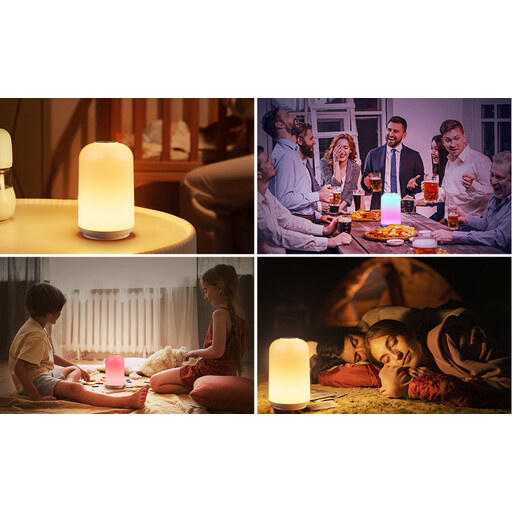
Why This Fits Their Persona: For users who want a versatile mood and orientation light. It works as a calming night light in the bedroom but can also be used as colourful accent lighting in the living room or on the balcony.
This model offers both a continuously dimmable warm white mode and an RGB colour-changing mode. The integrated battery makes it independent of power outlets and therefore extremely adaptable.
Two light modes (Warm White & RGB) in one device. The stepless dimming in warm white mode allows for precise brightness adjustment. The brightness of 40 lumens is sufficient for most applications.
We've compiled a complete, up-to-date list of products that fully meet these strict selection criteria and safety standards.
The running costs are extremely low. A typical LED night light with a power rating of 0.5 to 1 watt consumes very little energy. With 8 hours of daily use and an electricity price of 30 cents per kilowatt-hour (kWh), the annual costs are often less than one euro. Models with a dusk-to-dawn sensor are even more economical as they only light up when needed.
The optimal placement depends on the intended use.
Studies suggest that light with a high blue light content (typical of cool white LEDs) can inhibit the production of the sleep hormone melatonin. Warm white light (around 2700 K) has a lower blue light content and is therefore often perceived as less disruptive to the sleep-wake cycle. For this reason, a warm, dimmable light source is recommended for a soothing baby light or a night light in the bedroom.