
Lieferung heute & morgen

Qualitätsgarantie

Willkommens-Angebote freischalten: KOSTENLOSE Lieferung | Bis zu 80 % RABATT | Kostenlose 30-Tage-JoyPlus-Testphase
App herunterladen
A night light with motion sensor should provide guidance at night without making the room unnecessarily bright. In family homes, it is often used in hallways, children’s bedrooms, bedrooms, bathrooms or on stairs. However, not every model is suitable for every location. Clear, meaningful information about the sensors, light output, power supply and installation matters more than marketing claims.
A motion-sensor night light responds when movement is detected. A night light with dusk sensor, on the other hand, switches on depending on the surrounding light levels. Many models combine both functions: the light only activates when it is dark and movement is detected. If there is no dusk sensor, the LED night light may also switch on when movement occurs during the day. This increases energy consumption and is usually unnecessary in bright rooms.
Therefore, look for clear information about the PIR sensor, detection angle, range and light threshold, for example in lux.
For a hallway or staircase, subtle orientation lighting is often sufficient. Very bright light can be disruptive at night, especially in a bedroom or children’s bedroom. Conversely, a low light output will not be enough if you need to illuminate a longer route or several steps.
A dimmable night light or one with several brightness levels can be a sensible choice. Ratings such as 18 lm, 20 lm or 400 lm should always be considered alongside the beam angle, installation height and room size.
A plug-in night light does not need a rechargeable battery or battery replacement, but it may occupy a power socket. A rechargeable night light can be installed more flexibly, but it must be charged regularly. Battery-powered models involve ongoing costs and additional maintenance.
Check whether the charging port, battery capacity or battery compartment can be conveniently accessed at the intended location. For hallways that remain dark, a low-consumption plug-in night light may be more practical than a rechargeable model.
The range should suit the room. A shorter distance is sufficient for the route from the bed to the door. In a hallway or on a staircase, 3 to 7 m may be useful. A detection angle of, for example, 120° covers a wider area, while a narrower angle provides more targeted detection.
Bear in mind that furniture, doors and the installation height can affect detection. The sensor should not be obscured by curtains or other objects.
A warm white night light of around 2700 to 3000 K usually has a subtle effect in living areas. More neutral light colours of around 4000 to 4500 K may be more suitable for hallways, kitchens or cupboards when you need to see objects more clearly. A colour temperature of 6500 K is described as white or cool and may appear noticeably brighter in a bedroom.
The CRI or Ra value describes colour rendering. A value of Ra ≥ 80 is specified for several of the models available. However, it says nothing about brightness or whether the light is suitable for a particular room.
Product specifications are particularly important for damp areas. Several of the models mentioned here are expressly intended for indoor use only and are rated IP20. This does not mean that they are protected against water. They should therefore not be used in areas exposed to splashing water in the bathroom.
For 220–240-V plug-in models, the socket, mains voltage and connection must be suitable and properly installed. Unplug the light before cleaning it. A night light for a child’s bedroom should also be kept out of the reach of young children unless the manufacturer specifies otherwise for safe use.
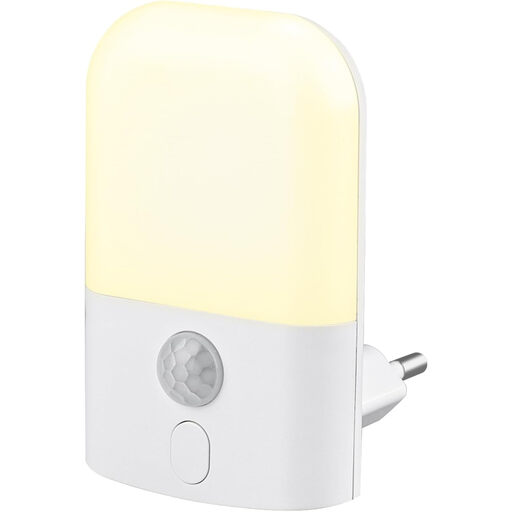
Why this product suits the profile: This plug-in night light is intended for children’s bedrooms, hallways, stairs and other indoor areas. Five brightness levels make it easy to adjust the light to the location.
The motion and dusk sensors are combined. According to the product description, the light switches off after 60 seconds without movement and only activates in the dark.
2700 K warm white light, 0.5 W power consumption, a detection range of up to 3 m and a 120° angle.
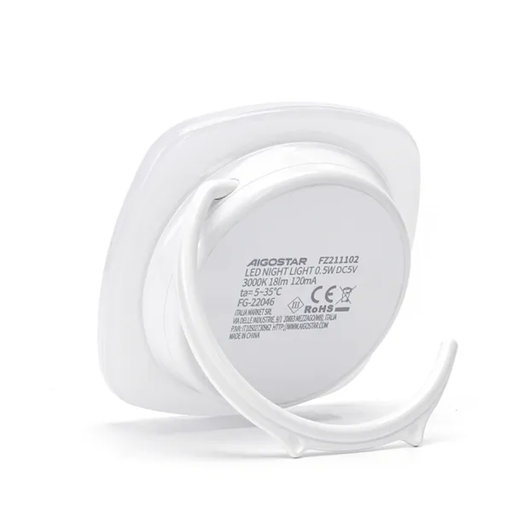
Why this product suits the profile: This rechargeable night light is ideal for people who prefer flexible installation without permanently occupying a power socket.
The technical specifications state both the sensor range and the battery capacity. This makes it easier to assess charging requirements before buying.
500-mAh battery, USB charging, 3000 K, 18 lm, 0.5 W and a sensor range of up to 3.5 m according to the product specifications.
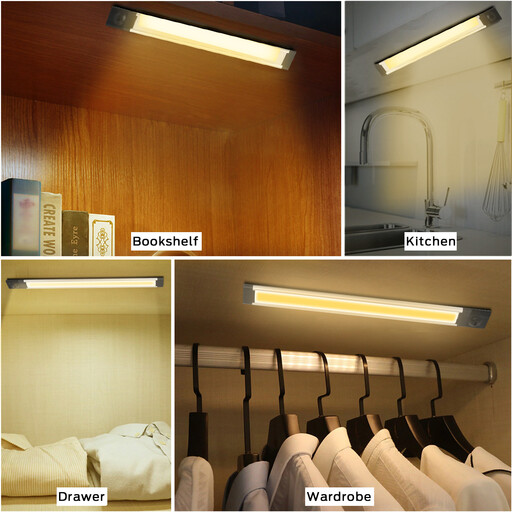
Why this product suits the profile: For cupboards, cellars, workshops, stairs or longer areas, this light offers flexible, drill-free installation.
The product specifications state the mounting method, dimensions and luminous flux. This lets you check in advance whether the light is suitably sized for the intended area.
36 SMD LEDs, 400 lm according to the product specifications, adjustable colour temperature from 2800 to 6500 K, plus magnetic and hook mounting.
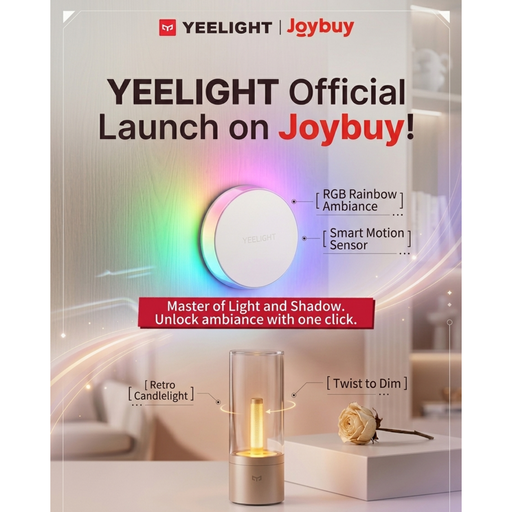
Why this product suits the profile: This model is aimed at households that want to use a night light in the bedroom, living room or playroom as an ambient light as well.
The additional functions are clearly distinguished from the main orientation light: RGB effects do not replace checking the brightness, sensor position and desired light colour.
USB-C charging, magnetic mounting and 11 preset effects according to the product name.
We have put together a complete, regularly updated list of products that fully meet these strict selection criteria and the safety regulations applicable in the EU.
Position the light so that the sensor faces the usual route through the room. Avoid direct obstructions and test the range in the dark. For models with a dusk sensor, make sure that a nearby lamp does not affect the light threshold.
The lifespan depends on the LED, electronics, switching cycles, heat dissipation and usage. Some product specifications state, for example, 10,000 or 25,000 hours. These figures are provided by the manufacturer and are not a guarantee of the actual operating life in a particular household.
Running costs depend on power consumption and operating time. Models using 0.3 W or 0.5 W require comparatively little energy when they are switched on for short periods. With a rechargeable night light, you should also take charging intervals and battery ageing into account. The wattage alone is therefore not the deciding factor; what matters is how often and for how long the light is actually activated.