
Lieferung heute & morgen

Qualitätsgarantie

Willkommens-Angebote freischalten: KOSTENLOSE Lieferung | Bis zu 80 % RABATT | Kostenlose 30-Tage-JoyPlus-Testphase
App herunterladen
A night light with a motion sensor can automatically illuminate hallways, stairs, bedrooms or children’s rooms, so there is no need to search for a light switch during the night. However, the name “sensor light” alone does not tell you everything. Range, light colour, power supply and switch-off behaviour determine whether the LED night light is genuinely suitable for everyday use.
Similar product images often lead to the wrong purchase. Taking a close look at the technical specifications helps you rule out unsuitable models at an early stage.
A motion-sensor night light responds to movement. A dusk-sensor night light, on the other hand, switches on or off depending on the ambient light level. The two functions may be combined, but this is not always the case.
A dusk sensor is often sufficient for a hallway if you want the light to remain on throughout the hours of darkness. For stairs, cupboards or getting around at night, a motion sensor with automatic switch-off is usually more targeted, as the light only comes on when needed.
A high lumen rating is not automatically practical. Very bright light can be disruptive in a bedroom or child’s room, while insufficient illumination on stairs can make it harder to find your way. You should therefore check:
A warm white night light of around 2700 to 3000 Kelvin is often a more subtle choice for sleeping areas. Neutral or cooler light colours may be better suited to helping you find your way around and to work areas.
A battery-powered night light can be fitted flexibly to cupboards, walls or narrow recesses. However, the batteries need to be checked regularly. With a plug-in night light, there is no need to replace batteries, although a socket remains permanently occupied.
Also pay attention to the installation method. Self-adhesive backs are designed for smooth, clean surfaces. On rough walls, or where the light will be removed frequently, screw mounting may be more suitable. Before installation, you should also check whether the sensor actually covers the desired area of movement.
A PIR sensor detects movement within its detection area. Product specifications often include values such as 3 to 7 metres’ range and a detection angle of, for example, 100 to 120 degrees. These details are important when positioning the light: a sensor at the top or bottom of a staircase should detect people approaching, rather than point towards a piece of furniture.
Automatic switch-off saves energy and prevents the light from remaining active all night. Some models specify switch-off after 60 seconds without movement. Their actual suitability depends on whether you want brief illumination to help you find your way or a longer period of lighting.
For a night light in a child’s room or bedroom, warm white light colours between around 2700 and 3000 Kelvin are often a natural choice. Other light colours may also be suitable for hallways and stairs if you want contours to be clearly visible.
A dimmable night light offers greater flexibility. Depending on the model, the setting may be adjusted in stages, continuously using a touch function or through several pre-set brightness levels. A value of 20 lumens is specified for several of the lights on offer; whether this brightness is sufficient depends on the mounting height, room size and beam angle.
The power consumption of the LED models featured ranges from 0.3 to 1 watt. This is an objective indication of low power consumption, but on its own it says nothing about the actual annual cost. For a rough estimate, you can calculate the power consumption, daily operating time and your electricity tariff together.
For plug-in models, details such as the input voltage, indoor-use suitability and protection rating are also relevant. Several products are intended for 220 to 240 volts and indoor use. Instructions such as “do not cover”, “protect from moisture” and “unplug before cleaning” should be followed particularly carefully in households with young children. A night light is not a toy and should be installed out of children’s reach.
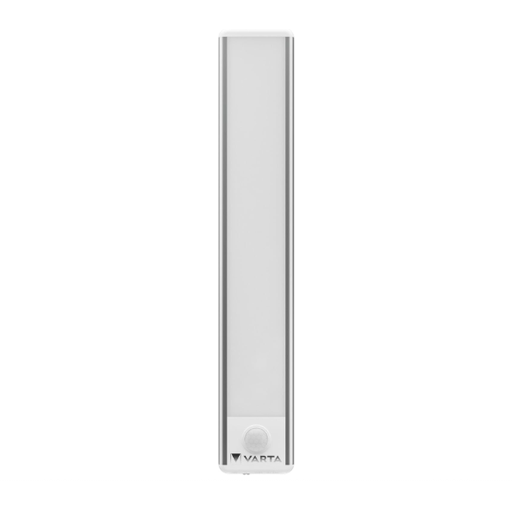
Why this product suits this profile: Its slim, battery-powered design is ideal for cupboards, hallways and small recesses where no socket is available.
The motion sensor and automatic switch-off are clearly specified. It can be installed either with adhesive backing or screws.
Compact dimensions of 24 × 4 × 1,66 cm, a weight of 150 g and battery-powered operation.
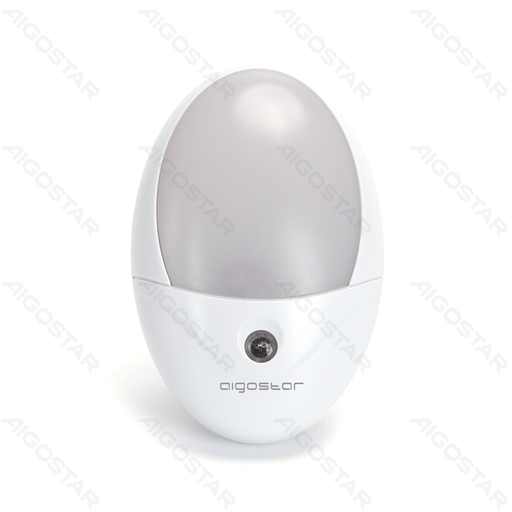
Why this product suits this profile: This plug-in night light combines a PIR motion sensor with warm white light for indoor use in hallways, bedrooms, bathrooms or on stairs.
The specifications state 3000 Kelvin, 20 lumens, a 7-metre range and a 120-degree detection angle, rather than referring to an unexplained sensor function.
No battery replacement, 1 watt power consumption and a housing made from fire-resistant PC material according to the product specifications.
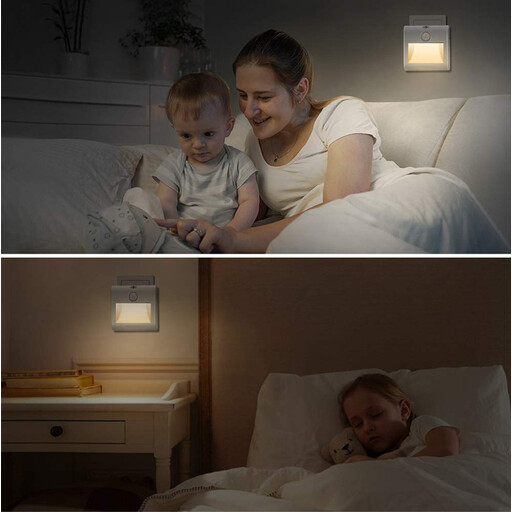
Why this product suits this profile: Two lights with constant-light and automatic modes can be used at the same time in the bedroom, child’s room, hallway or bathroom.
The brightness can be adjusted continuously by touch, and the last setting is saved according to the description. This makes it easier to adapt the light to sleeping and orientation areas.
Pack of 2, 20 lumens, 4000–4500 Kelvin, 1 watt and motion detection at a distance of 3 to 5 metres according to the product data.
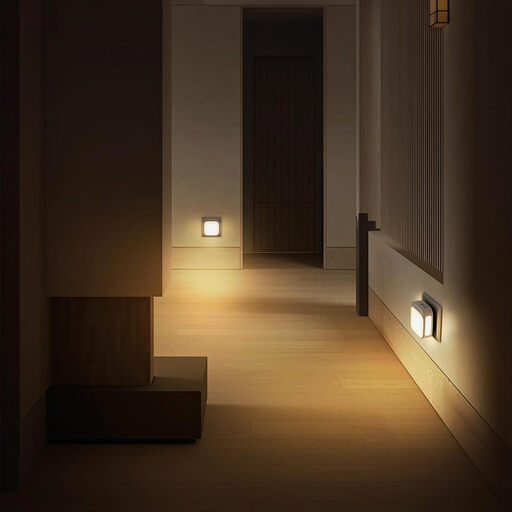
Why this product suits this profile: This set is suitable for areas where automatic background lighting is wanted in the dark, such as a hallway or nursery.
The automatic light sensor is described as having a switching threshold of no more than 20 lux. This makes the sensor type clearer than general advertising claims.
0,3 watts power consumption, 2800–3000 Kelvin, continuous dimming from 10 to 100 per cent and a pack of 2.
We have put together a complete, regularly updated list of products that fully meet these strict selection criteria and the safety regulations applicable in the EU.
Install the light so that the sensor can detect movement from the side or straight on. Furniture, curtains and other objects should not obstruct the sensor. With a plug-in model, the socket should remain easily accessible. After installation, it is advisable to test the light when the ambient light level is low.
Its lifespan depends on the model, usage and operating conditions. Product specifications may include values such as 10,000 to 25,000 hours. These are technical rated values and do not guarantee an identical service life in every household. With battery-powered models, the battery type, how often the sensor is triggered and the switch-off time also affect maintenance requirements.
The cost can be calculated from the power consumption. A 0.3-watt model uses around 0.3 kilowatt hours over 1,000 operating hours, while a 1-watt model uses around 1 kilowatt hour. Multiply this consumption by your electricity tariff. With a motion sensor, actual consumption may be lower if the light is only activated for short periods.