
Lieferung heute & morgen

Qualitätsgarantie

Willkommens-Angebote freischalten: KOSTENLOSE Lieferung | Bis zu 80 % RABATT | Kostenlose 30-Tage-JoyPlus-Testphase
App herunterladen
A gentle light that turns on exactly when you need it – whether for a late-night trip to the bathroom, to soothe a child in their room, or for fall prevention in the hallway. A motion sensor night light promises comfort and safety. Yet, the market is flooded with models whose real-world performance is often called into question only after the purchase. Poorly calibrated sensors, unsuitable light colours, or an impractical power source can quickly lead to frustration.
This guide will help you identify the essential features and navigate common pitfalls, enabling you to make an informed decision.
Many products advertise long feature lists, but the same weaknesses often appear in daily use. Pay attention to these three points to avoid buyer's remorse:
To make the right choice, you should understand three core technical parameters. These largely determine the functionality and comfort of your night light.
The automatic function lives or dies by the quality of its sensors. Most models use a combination of two components:
The choice of power source depends on the location of use and your personal preferences.
The right light atmosphere is crucial for comfort, especially in bedrooms and children's rooms.
Based on the criteria mentioned, we have compiled a few products for specific use cases.

Why This Fits Their Persona: Ideal for parents seeking a safe, child-friendly, and functional lighting solution. The soft silicone is harmless, and the touch controls with dimming function and 30-minute timer are practical aids for the bedtime routine.
It bypasses the trap of unsuitable light with 3-level dimmable brightness that doesn't disturb sleep. The timer also prevents the light from staying on unnecessarily all night.
Made from food-grade, BPA-free silicone; integrated 1200mAh battery with USB-C charging port.
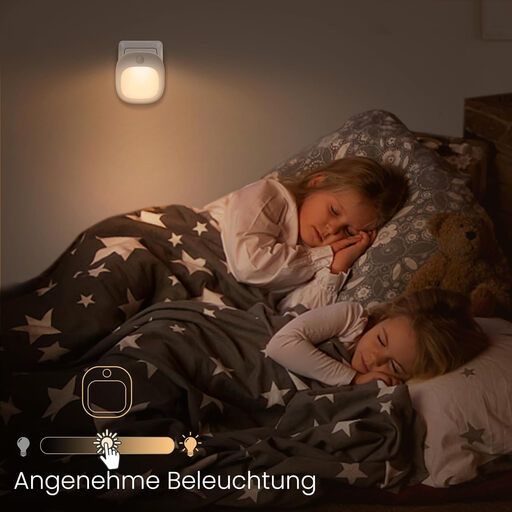
Why This Fits Their Persona: Perfect for homeowners and renters who want to make hallways, stairs, or bathrooms safer. The wireless, rechargeable design allows for flexible placement, and the 2-pack covers multiple critical areas at once.
This model solves the problem of inaccurate sensors with a precise PIR sensor (3–5m range) and a dusk sensor (≤20 LUX) that prevents false triggers in daylight, thus conserving the battery.
Three adjustable colour temperatures (Warm White, Cool White, Mixed) and 5-level dimming; integrated 500mAh battery for up to 10 hours of operation in sensor mode.

Why This Fits Their Persona: For anyone needing discreet yet bright lighting for cabinets, drawers, or kitchen countertops. The ultra-thin profile and drill-free installation make it extremely versatile.
It solves the problem of an impractical power supply with a powerful 1100mAh battery and simple USB charging. The adhesive tape installation also avoids complex mounting work.
Only 10mm thick profile; three selectable colour temperatures (from warm to cool white); 41 LEDs provide bright and even illumination.
We have compiled a complete, up-to-date list of products that fully meet these strict selection criteria and UK safety regulations.
A motion sensor night light typically combines two sensors. A dusk sensor ensures the light only activates in darkness. A Passive Infrared (PIR) sensor then reacts to the body heat of moving people, switching the light on for a preset time. Once no more movement is detected, it automatically switches off again.
The battery life varies depending on the model, battery capacity (mAh), and frequency of use. In sensor-only mode, many models offer a runtime of several weeks to months, as the light only turns on for short intervals. For the models presented here, the operating time in sensor mode is, for example, up to 10 hours of pure illumination time, which corresponds to a very long total operating time with typical nightly use.
A warm light colour is recommended for bedrooms and children's rooms. A colour temperature of 2700 K to 3200 K (Warm White) creates a cosy, calming atmosphere. This light contains less blue light, which can inhibit the production of the sleep hormone melatonin, and thus disrupts the natural sleep cycle less than cooler light.