
Lieferung heute & morgen

Qualitätsgarantie

Willkommens-Angebote freischalten: KOSTENLOSE Lieferung | Bis zu 80 % RABATT | Kostenlose 30-Tage-JoyPlus-Testphase
App herunterladen
Navigating your home at night—whether to the nursery, bathroom, or kitchen—often presents a challenge: how to find your way without turning on the main lights and waking everyone up. A fall on the stairs or bumping into furniture are avoidable risks. A motion-sensor night light offers a practical and safe solution. It activates automatically, providing light exactly when it's needed, and then switches itself off again.
This guide introduces various models and explains the key features to help you find the right lighting solution for your home.
Before you decide on a model, there are a few technical aspects to consider. These criteria will help you find a product that is perfectly tailored to your needs.
The type of power supply determines the light's flexibility and installation effort.
The performance of an automatic orientation light depends heavily on its sensor and light output.
Here is a selection of models that are well-suited for different applications due to their specific features.
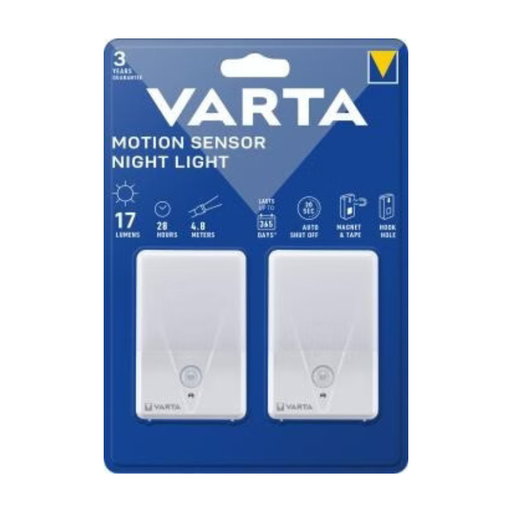
Why It Stands Out: This model from VARTA is a straightforward and reliable solution for basic orientation lighting. It combines a precise motion sensor with highly flexible mounting options. The sensor activates the light in darkness within a range of up to 3 meters and automatically turns it off after 30 seconds of no motion, which conserves battery life.
Benefits:
Who Is It For? Ideal for users looking for a simple, battery-powered, and quickly installed solution for hallways, stair landings, or basements. The set offers excellent value for a basic home setup.

Why It Stands Out: The Tranquil Turtle from Cloud B is more than just a night light; it's a sleep aid for children. It projects calming underwater waves onto the ceiling and plays gentle melodies or ocean sounds. An integrated cry sensor responds to a child's crying and reactivates the program to soothe them.
Benefits:
Who Is It For? An excellent choice for families with babies and young children. It serves less as a classic orientation light for hallways and more as a tool to create a calming atmosphere in the nursery, responding intelligently to the child's needs.
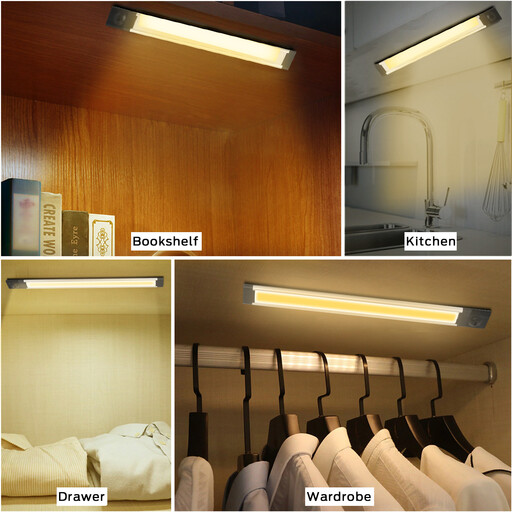
Why It Stands Out: This light bar impresses with its high brightness, modern design, and innovative controls. With 36 LEDs and a light output of 400 lumens, it can illuminate larger areas like workshops or garages. The brightness and light color (from warm to cool white) can be seamlessly adjusted via gesture control.
Benefits:
Who Is It For? Perfect for users who need a powerful and flexible lighting solution for closets, under-cabinet kitchen spaces, garages, or hallways. The dimming function and adjustable light color make it a versatile wireless night light for demanding tasks.
The products featured here cover a wide range of use cases. However, if you haven't found the right model for your specific needs, you can find more alternatives in our broader product category.
Explore Our Full Range of Sensor Night Lights
1. Where is the best place to install a motion-sensor night light? For optimal performance, you should install the light at knee to hip height. Ideal locations include hallways, stairway landings, bedrooms, and bathrooms. Avoid placing it directly opposite mirrors or near heat sources like radiators, as this can interfere with the sensor's function.
2. How does a motion-sensor night light work? Most models use a Passive Infrared (PIR) sensor that reacts to the body heat of people or animals. An additional dusk-to-dawn sensor ensures the light only turns on in darkness. When motion is detected within its range, the light activates for a pre-set duration.
3. Are LED night lights energy-efficient? Yes. LEDs consume very little power by nature. When combined with a motion sensor that only activates the light when needed, they are extremely energy-efficient. A rechargeable LED night light also reduces waste from disposable batteries and further lowers operating costs.