
Lieferung heute & morgen

Qualitätsgarantie

Willkommens-Angebote freischalten: KOSTENLOSE Lieferung | Bis zu 80 % RABATT | Kostenlose 30-Tage-JoyPlus-Testphase
App herunterladen
Dark hallways, poorly lit cabinets, or the nightly trip to the children's room—many areas in your home only need light temporarily. Constantly flipping a switch is impractical, and leaving lights on wastes energy. A motion-sensor LED night light offers a practical and efficient solution. It turns on only when needed, providing guidance and safety without you having to fumble for a light switch.
This article introduces various models and explains the key features to help you find the perfect automatic lighting for your needs—whether it's an under-cabinet light for the kitchen, a closet light, or a guide light for the hallway.
Before you decide on a model, there are a few technical aspects to consider. These factors determine how well the light will fit into your daily life.
The type of power supply is crucial for flexibility. Plug-in models are low-maintenance and ready to use right out of the box. For places without a nearby outlet, like inside cabinets or under shelves, wireless cabinet lighting is the ideal solution. These light strips are often powered by a built-in rechargeable battery. A rechargeable LED strip that can be charged via USB offers exceptional convenience, as it's compatible with standard power adapters or power banks. Installation is usually drill-free, using magnetic strips or adhesive pads.
There are two main types of sensors:
The effect of the light is determined by its brightness (lumens) and colour temperature (Kelvin). A warm white light (approx. 2700K–3300K) creates a cosy atmosphere and is pleasant for living rooms and bedrooms. Neutral or daylight white light (approx. 4000K–6500K) is better suited for task areas like the kitchen, where clear visibility is essential. Models that are dimmable or offer various colour temperatures can be flexibly adapted to different situations.
Here is a selection of products that stand out for their specific features, making them suitable for various applications.
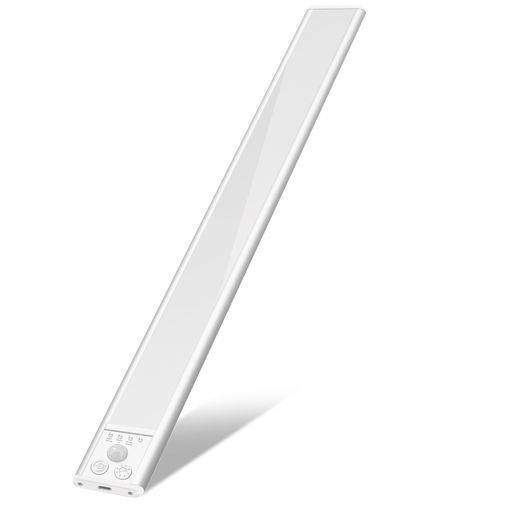
Why It Stands Out: This set is distinguished by its outstanding versatility. With three adjustable colour temperatures (warm, daylight, and cool white), it adapts to any environment—from cosy bedroom lighting to a functional under-cabinet light in the kitchen. Its ultra-thin design and wireless installation make it especially discreet and versatile.
Advantages:
Who Is It For? For those looking for a flexible and discreet lighting solution for cabinets, drawers, or kitchen countertops, and who value customisable light colours.
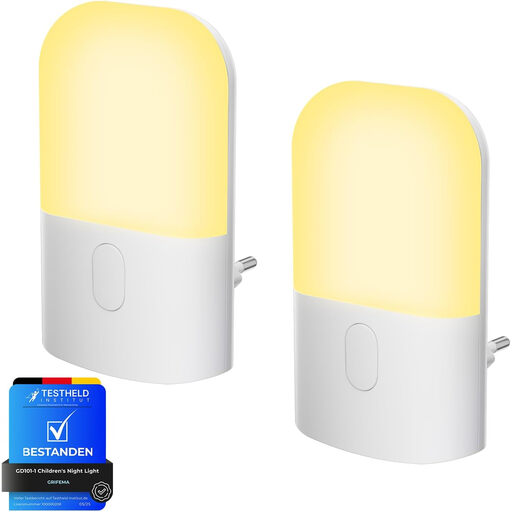
Why It Stands Out: This night light is a hassle-free plug-in solution designed specifically for safety and comfort in living spaces. The integrated dusk-to-dawn sensor controls the light fully automatically, while three brightness levels allow you to customise it to your individual needs.
Advantages:
Who Is It For? For parents who need a safe and simple guide light for children's rooms, hallways, or bathrooms, as well as for anyone who prefers subtle, continuous lighting for dark corners.
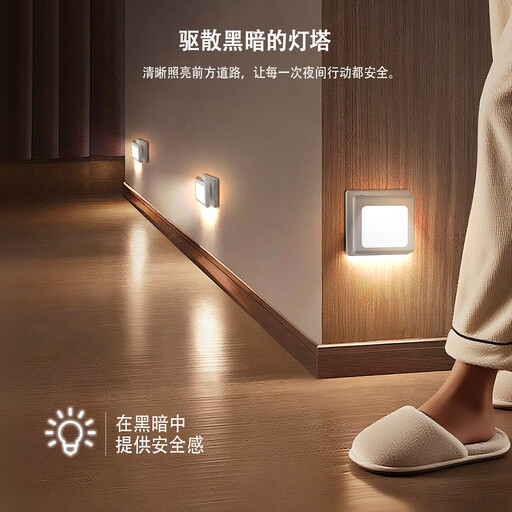
Why It Stands Out: The main advantage of this model is its stepless dimming feature. Unlike models with fixed levels, you can adjust the light intensity to your exact preference. This allows for precise customisation for any situation, from a subtle glow to a brighter guide light.
Advantages:
Who Is It For? For users who want maximum control over light intensity and are looking for finely-tuned lighting for bedrooms, hallways, or children's rooms.
Thoughtful lighting is just one aspect of interior design. If you're looking for more ways to enhance your kitchen's functionality and aesthetic appeal, you'll find more inspiration in our product range.
Discover our selection of Kitchen Decor & Baking to add practical and decorative touches.
1. How does a motion-sensor LED night light work? A night light with a PIR (Passive Infrared) sensor detects the infrared radiation (heat) emitted by moving bodies, such as people or animals. When motion is detected within the sensor's range, the light turns on for a preset amount of time. It then automatically turns off to save energy.
2. Where is the best place to install wireless cabinet lighting? For optimal illumination, it's best to mount the light strip at the front, top section of the cabinet so the light shines downwards and inwards. For an under-cabinet light in the kitchen, the strip should be attached directly beneath the wall cabinet to illuminate the work surface evenly without causing glare.
3. Are rechargeable LED strips energy-efficient? Yes, LED technology is inherently very energy-efficient. A rechargeable guide light with a motion sensor only consumes power when activated. Since it remains off most of the time, its energy consumption is very low compared to a constantly lit lamp. Depending on the frequency of use, the battery may only need to be charged every few weeks or months.